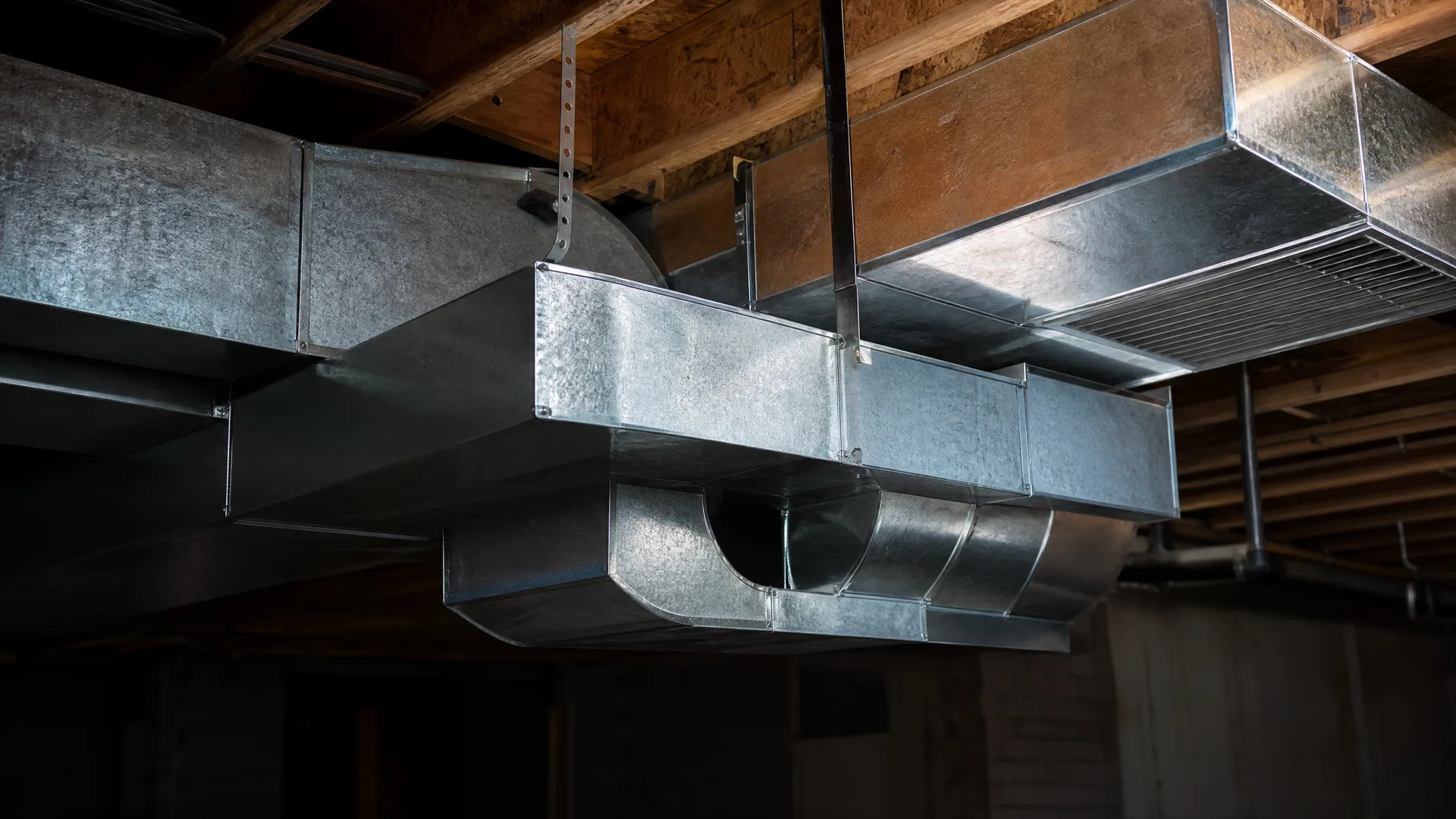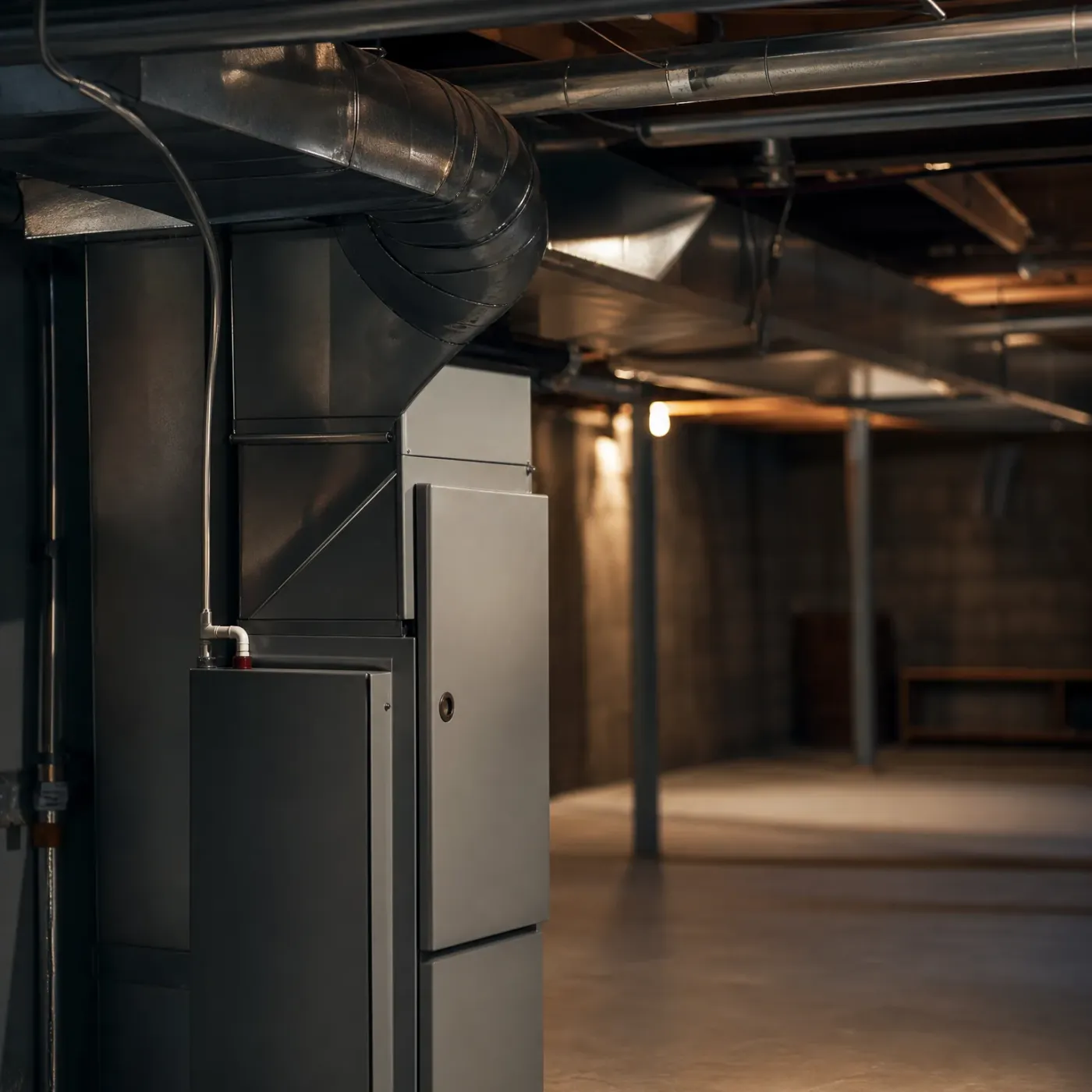
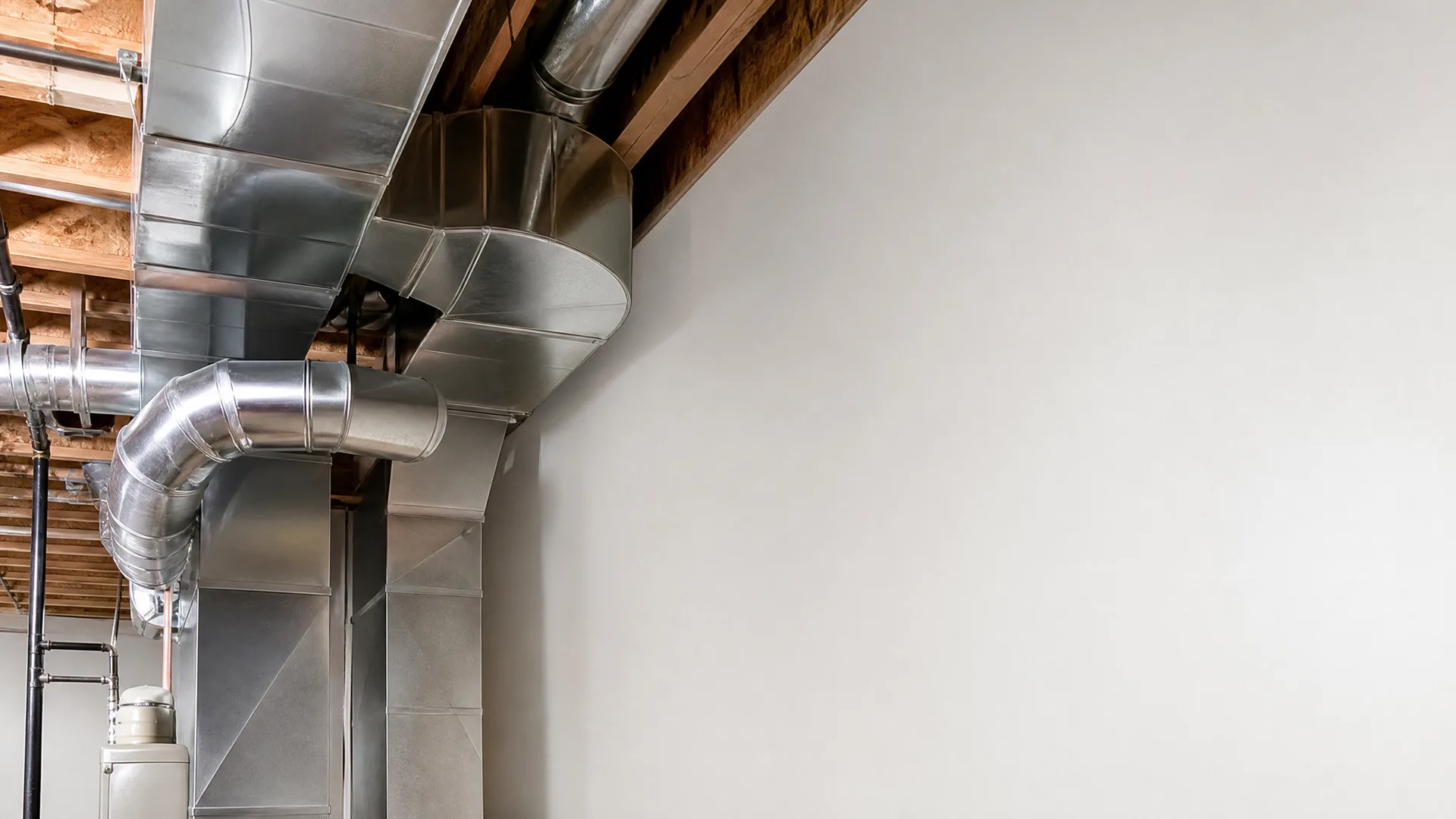

A basement interior with a gray furnace or air handler unit connected to large sheet-metal ductwork running along the exposed joist ceiling, with support posts and a concrete block wall in the dim background.

One request and it's handed off

Signs your ducts need cleaning in Columbia, SC

Dust around the vents, a musty smell when the air kicks on, more sneezing than usual indoors. These are the signs that send Columbia homeowners looking for answers about their ducts. This page walks through what each one actually means and when it points to the ductwork itself. Fill out the form below and skip the part where you track down who to call.

I'm done searching

The clearest sign is dust that comes back fast after you clean, settling on furniture and sills within a day or two of wiping it away. A musty smell when the heat or air turns on points to moisture sitting somewhere in the system, often where condensation collects near the coil. If vents are blowing noticeably less air than they used to, or one room runs warmer or cooler than the rest of the house, debris may be building up inside the ducts themselves. More sneezing or a stuffy feeling indoors, especially right after the system cycles on, suggests dust and allergens are circulating rather than staying put. Columbia homes run the air conditioner for months at a stretch, and all that runtime pulls air through the same ducts again and again, so whatever collects in there gets moved through the house instead of filtered out. None of these signs alone means the ducts need cleaning, but two or three together are worth paying attention to.

Galvanized sheet metal HVAC ductwork and round pipes running along an exposed wood-joist basement ceiling beside a plain white wall.

Why the dust keeps coming back

Your return and supply ducts run the same air through the house over and over, so anything loose in them gets carried into every room, not just one. A few handfuls of dust sitting in a duct run will shed into the airstream every time the blower starts. That is why wiping sills and furniture does not hold for long. The dust has a source upstream, and that source keeps feeding it back into the house.

Galvanized sheet metal HVAC ducts and round pipes installed among wooden joists on a ceiling, beside a large blank white wall.

Where the musty smell starts

Condensation forms on the evaporator coil whenever the AC runs, and that moisture has to drain off. If a duct run sits near that coil or in a crawlspace, humidity can settle in the metal or the insulation lining it. Richland County summers run long and muggy, which gives that moisture more months to sit before winter dries things out. A smell that shows up specifically when the system kicks on, not all the time, usually traces back to a damp spot in that path.

Why does duct buildup catch up with older Richland County homes?

  • Half the homes here were built by 1989

    Half the homes in Richland County were built in 1989 or earlier, which means half the duct systems here have had decades to collect dust nobody has looked at.

  • Heat runs November through March

    Heat runs November through March here, about five months a year, pushing whatever sits in the ducts through the house each winter.

  • Cooling runs May through September

    Cooling runs May through September, another five months, so the same air moves through those ducts most of the year with barely a break.

ACS 2020-2024 · NOAA nClimDiv 1991-2020

You clean and the dust still comes back

You've wiped down every surface and within a day or two it's back on the windowsills and the TV stand. That points at the ducts, not the housekeeping. Air moving through a dirty supply run picks up what's loose in there and drops it in every room it reaches. A duct cleaning removes what's actually feeding the problem, so the dusting you already do starts holding.


The dust is isolated to one room or vent

If one register blows out more dust than the rest, or one room always feels dirtier no matter how often you clean it, that's usually a single duct run or a disconnected section, not the whole system. A contractor can check that one line before recommending a full cleaning. Sometimes the fix is sealing a gap or clearing a blockage in that run, and the rest of the ductwork never needed the work at all.

A smiling man in a blue denim shirt over a white tee sits at a light stone kitchen counter with a grey mug and a bowl of oranges and bananas, with pendant lights and shelving behind him.
A smiling bearded man in a grey long-sleeved shirt sits at a kitchen counter with a dark mug, with a dining table, pendant light and glass doors onto greenery behind him.
A bearded man in a dark green knit sweater smiles and looks off to the side while standing at a kitchen counter with a white mug of coffee, with open shelving, a potted tree, and a dining table near large windows behind him.
A man with dark curly hair in a dark green sweater stands smiling and looking to the side in a kitchen with white cabinets, a potted plant, a stone countertop with a ceramic mug, and a dining area with framed art in the background.

Running the system through a dirty duct run all winter and all summer gives dust and whatever else is in there two seasons a year to settle back into your house, not one.

That is why wiping the same shelf twice a week never fixes it. The air doing the redepositing runs every time the heat or the AC comes on.

A smiling bearded man in a green t-shirt sits on a gray sofa, looking down toward a device at the bottom of the frame, with a bookshelf and a green plant blurred behind him.
A bearded man in a plaid flannel shirt stands indoors looking out a window at snow-covered conifers, with a ceramic mug on the wooden sill and wooden cabinets behind him.

Done looking for a duct system pro

Skip searching for someone who cleans ducts in Richland County.

You're not committing to anything by asking.

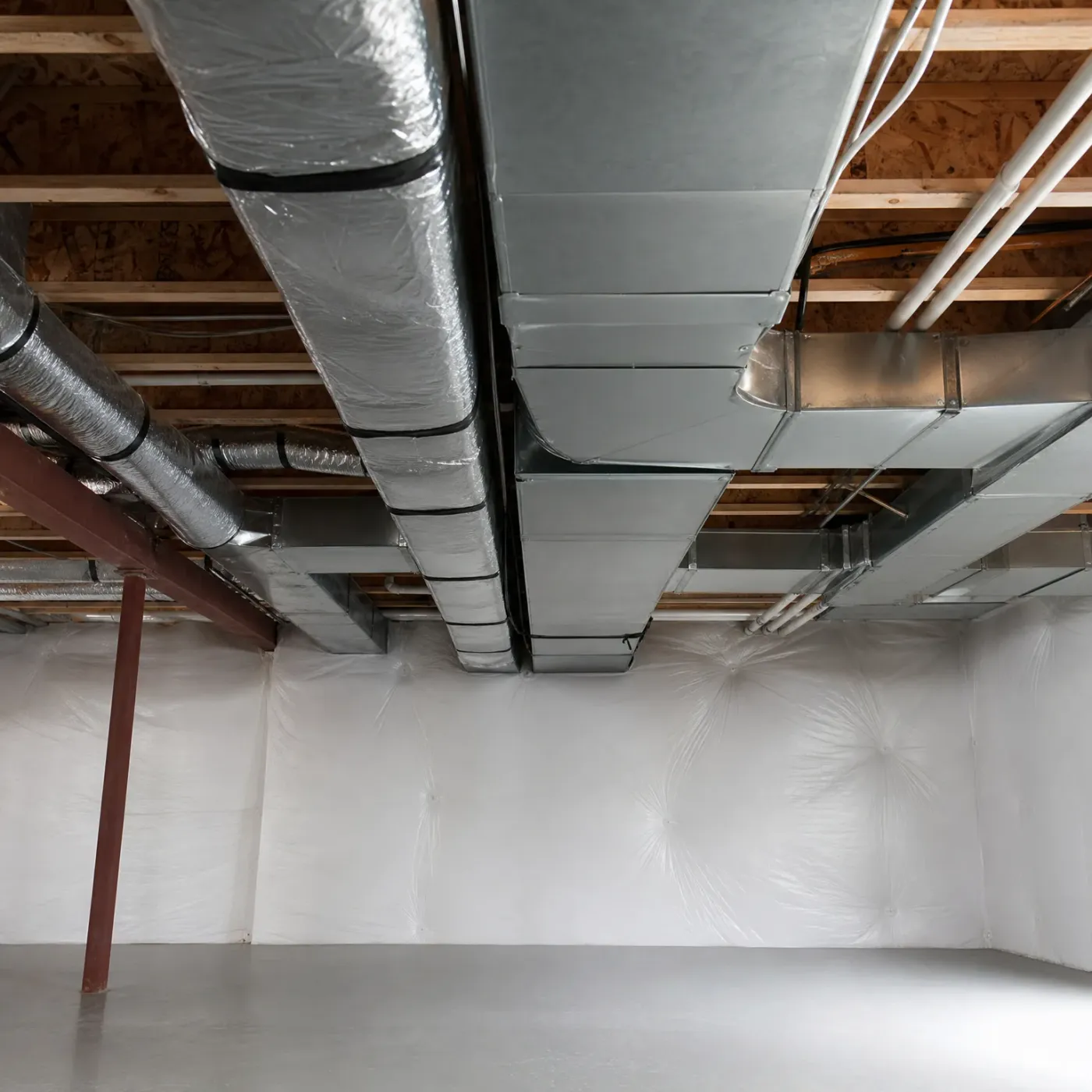
Unfinished basement with exposed wood joists, sheet metal and insulated flexible ductwork, white pipes, a steel support post, plastic-covered walls, and a bare concrete floor.

Ducts running clean

This is what a duct system looks like when it isn't the problem. Metal trunk lines and flex runs carry air to every room without adding anything to it. No dust ring at the seams, no film on the insulation, no smell when the blower kicks on.

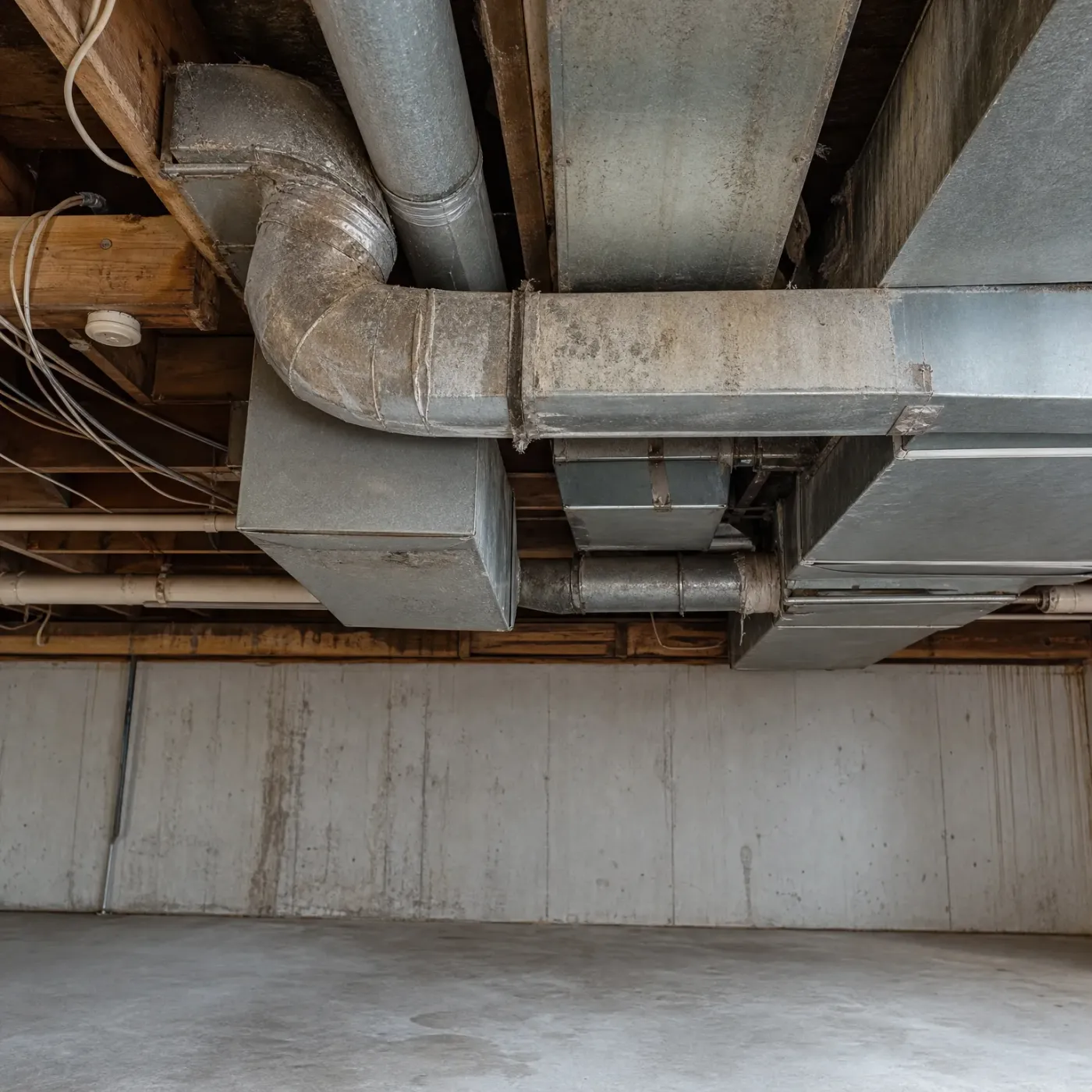
Galvanized sheet-metal ductwork and round pipes run beneath wooden floor joists in a basement with concrete walls and floor.

Ducts in trouble

Here the duct run itself has become the source. Dust collects along the seams of the trunk line and inside the flex elbow, and the blower pushes a little of it into the house every time the system runs. This is the kind of buildup a cleaning addresses directly.

Why does your house feel dustier than it used to?

You notice it on the register covers first, a gray ring building up around the edges even right after you've dusted. Then it shows up on the vents themselves, the supply ones blowing a faint haze when the system first kicks on. Some households notice a change in how they feel indoors before they notice anything visual, more sneezing or a stuffy nose that eases up once they leave the house. A musty or stale smell when the furnace or AC starts is worth paying attention to, since it usually means something sitting in the ducts is getting stirred into the air you breathe. None of this is cosmetic. Air moving through a system that's collecting debris carries that debris into every room it reaches, every time it runs.

  1. Dust and debris settle inside the supply and return runs over months of use.

  2. The blower pushes air through those runs every time the system cycles on.

  3. Air moving past loose dust and debris picks some of it up.

  4. That air carries the dust through the vents and into each room.

Cleaning It Yourself or Calling a Contractor

Clean the ducts yourself

  • A vacuum with a hose attachment reaches the first foot or two inside a register, no further into the trunk line.
  • Wiping down register covers and grilles gets rid of the dust you can see, not what is sitting further back in the run.
  • You can replace the filter yourself, and should, since a clogged one adds to what settles in the ducts over time.
  • There is no way to check a return or supply run beyond what you can reach by hand, so most of the system stays untouched.
  • Doing this keeps dust down for a few days, not for a season, because the buildup causing it is still there.

Have the system cleaned

  • A contractor can access the full run of trunk lines and flex ducts, not just what is reachable from a register.
  • Equipment made for this pulls dust and debris loose from inside the metal and flex runs rather than just the openings.
  • A contractor can check for moisture or a musty smell at its source, inside the ducts, not just where you notice it in the house.
  • This addresses the dust that keeps coming back within a day or two of cleaning, since it deals with what is shedding it.
  • A contractor can tell you whether what is in the ducts is normal buildup or something that points to a bigger problem.
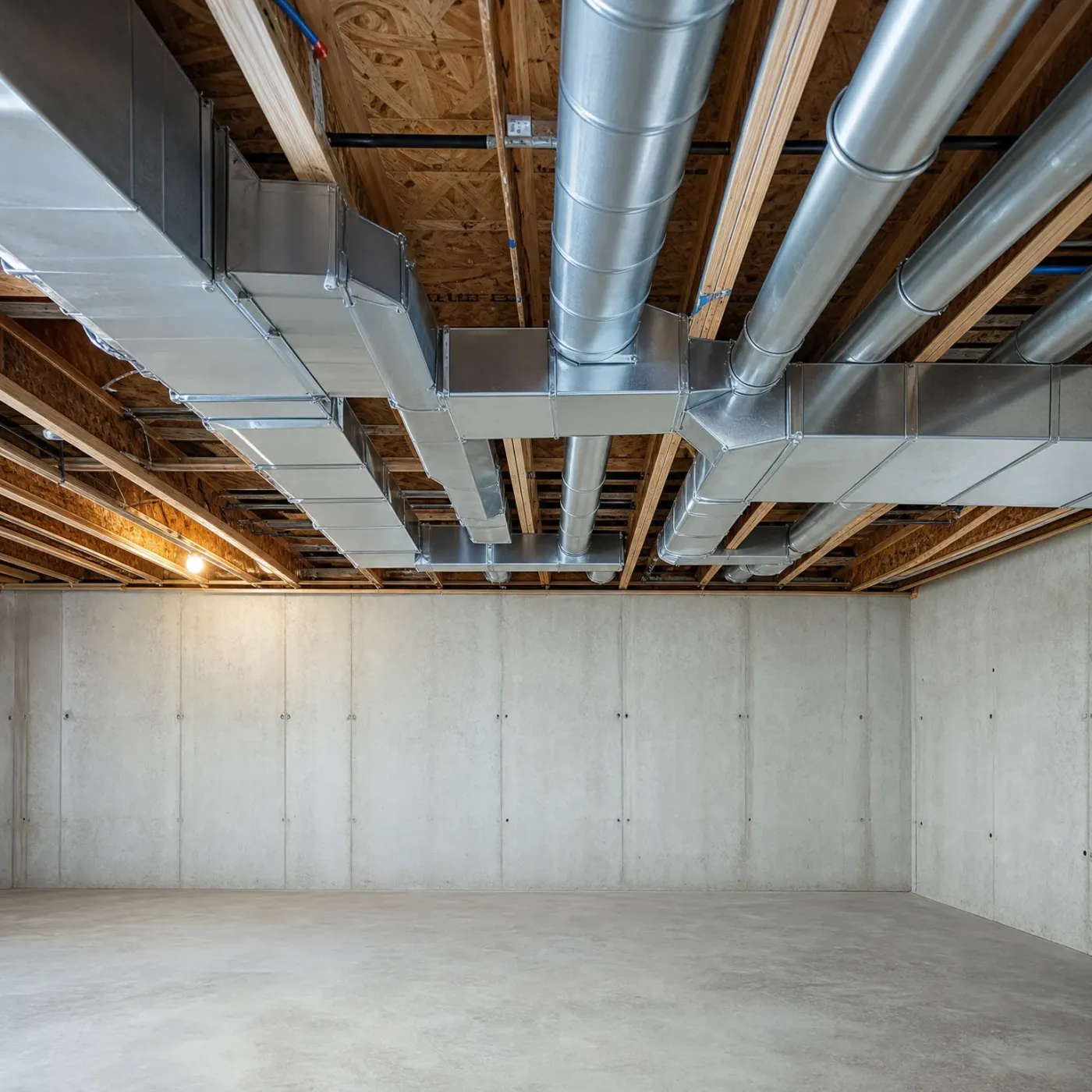
Empty concrete-walled basement room with bare floor and an exposed wood-joist ceiling carrying galvanized rectangular and round sheet-metal ducts, black pipes, and wiring.
Galvanized trunk lines and round branch ducts run clean between the joists, with no dust ring where the seams meet.
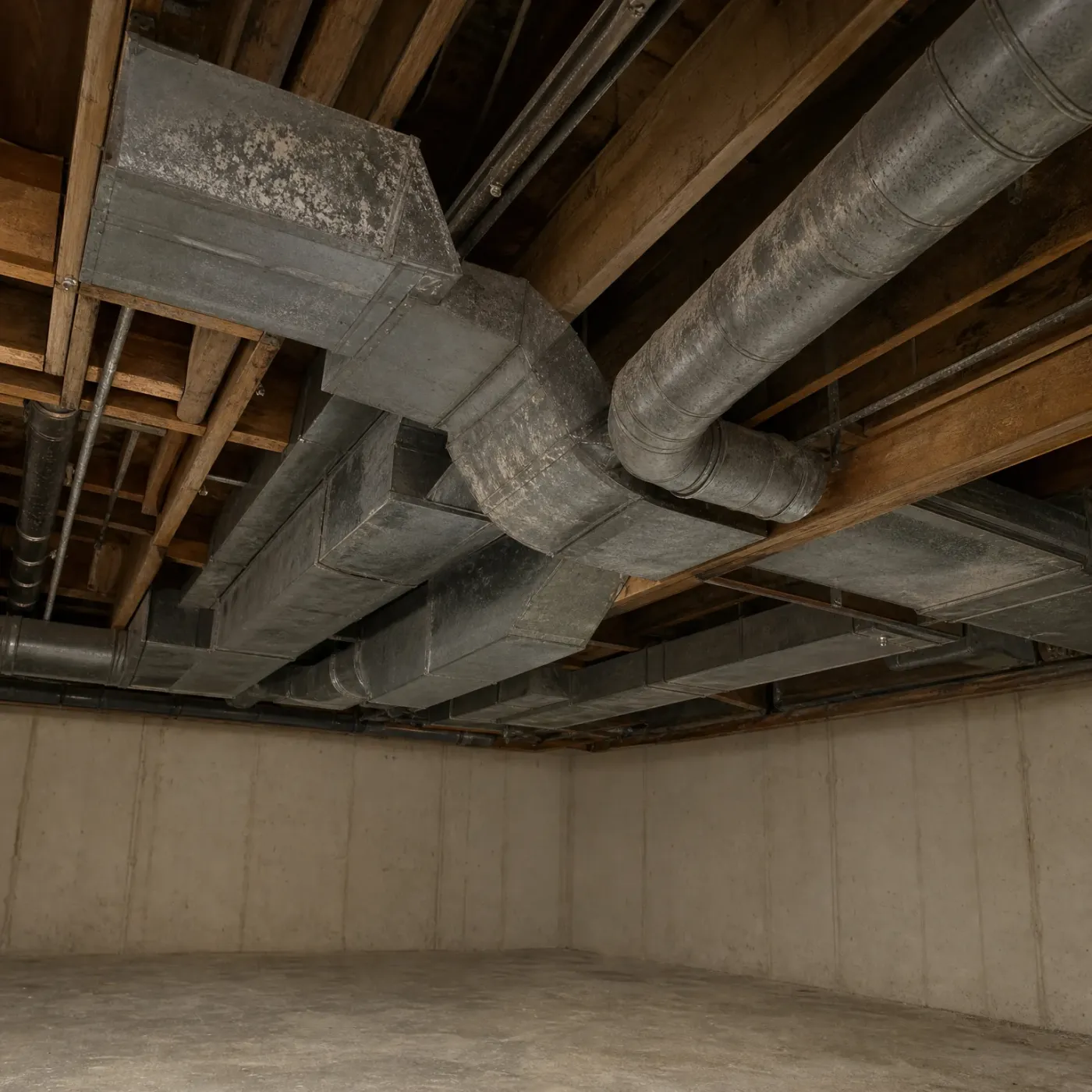
Empty concrete-walled basement room with exposed wooden joists and galvanized rectangular and round ductwork plus pipes running across the ceiling.
Years of buildup have darkened the metal and left a film of oxidation along the same ducts shown on the other side.

Power here costs 16.47 cents per kilowatt-hour

Electricity here runs 16.47 cents per kilowatt-hour, and a system laboring to push air through dirty ducts draws more of it just to hold the same temperature. Clean ducts move air with less resistance, which is the difference you'd feel on the bill.

EIA-861 2025

What the signs add up to

  • Dust that resettles within a day or two, a musty smell at startup, and more sneezing indoors all point back to the same ducts.
  • Half of Richland County's homes were built in 1989 or earlier, giving that many duct systems decades to collect what nobody has checked.
  • Heat and air both run through the same ducts most of the year here, so whatever is sitting in them gets two full seasons to work its way into your rooms.
  • A vacuum hose or a wipe-down of the register covers only reaches the first foot or two of duct, not the buildup further back in the trunk line.
  • A system pushing air through dirty ducts works harder to hold the same temperature, and that shows up on a power bill already running 16.47 cents per kilowatt-hour.
  • Once you can name which signs you're seeing, the next step is finding someone qualified to look at the ducts themselves.

Dust back on the sills a day after you wipe them, a musty smell when the system kicks on, more sneezing in the house than outside it. None of those are separate problems. They're the same ducts, carrying the same air through the same rooms, over and over. In a lot of Richland County houses, built in 1989 or earlier, that air has been running through the same unchecked runs for decades. Here it isn't a one-season issue either. Heat runs most of the fall and winter, air conditioning most of the spring and summer, so whatever is sitting in the trunk line gets pushed into your rooms almost year round. A vacuum hose reaches a foot or two past the register. Wiping the covers handles what you can see. Neither touches what's built up further back, which is why the dust keeps returning no matter how often you clean. There's also a cost to leaving it, one you can feel before you ever see a repair bill: a system working harder to push air through dirty ducts pulls more power to do it, and at 16.47 cents per kilowatt-hour that difference shows up. None of this requires guessing. The signs are specific, and so is what they point to. What's left is matching them to someone who can look at the ducts directly, rather than spending time calling around, explaining the same symptoms twice, and sorting through quotes to find someone who'll actually come out and check.

Galvanized sheet metal HVAC ductwork with rectangular trunks and round takeoffs suspended from wooden floor joists in an unfinished basement ceiling.

It's off your list after this

Duct and vent cleaningDucts or ventsRichland County, SC
Step 1 of 2

What ZIP code is the job in?