
How often to clean air ducts in South Carolina
Most homes in South Carolina should have their air ducts cleaned every 3 to 5 years. Humidity is the reason the lower end of that range matters here. Muggy summers push moisture into the ductwork, and that moisture lets dust and mold build up faster than it would in a drier climate. If anyone in the house has allergies, or if you can see dust blowing out of the vents or notice a musty smell when the system kicks on, it's worth having the ducts checked sooner rather than waiting out the full five years. Homes with pets or a recent renovation also tend to need cleaning more often, since both add extra dust and debris to the system. A duct system that's been neglected for years longer than that is usually circulating more than it should, and the furnace or air handler ends up working through air that's dirtier than it needs to be.


A technician works the system in a set order, not at random. A brush or air whip travels through each duct run first, loosening what has caked onto the walls, and a vacuum unit pulls it out as it goes. The supply side usually needs more attention, since that's the air that passed through the coil and filter and picked up fibers along the way. Return runs get checked too, since they pull in whatever the house stirs up, lint and pet hair mostly. Near the air handler, the technician looks at the coil housing itself. South Carolina's humidity means moisture can sit there, and mold needs a damp surface more than anything else. The duct material changes the approach: flex duct has a liner that tears if the brush is too stiff for it, so sheet metal and flex get handled differently. Once the cleaning is done, any panel the technician cut into for access gets sealed back up. Left open, that gap pulls in air from the attic or crawlspace that never went through a filter.
What actually happens during cleaning
- A duct cleaning sends a brush or air whip through each run to knock debris loose before a vacuum pulls it to a collection unit.
- The supply side carries the most buildup because it pushes conditioned air past every coil and filter edge that sheds fibers over time.
- Return runs pull in whatever the house kicks up, so dust mixed with lint and pet hair collects there first.
- A technician checks the air handler and coil housing for mold growth, since moisture sitting near the evaporator coil gives it a place to start.
- Flex duct and sheet metal get cleaned differently, because flex duct can tear if a brush is too stiff for its inner liner.
- The job isn't finished until the technician reseals any access panels cut into the duct, since a gap there lets unfiltered attic or crawlspace air back in.


Why does humidity make my ducts dirty faster?
You keep the air conditioning running most of the summer here, and you have noticed the vents look darker than they used to, or there is a musty smell when the system first kicks on. It makes sense to wonder if the humidity itself is doing something to the ducts, not just the dust that blows through them.
Humidity gives dust something to stick to and mold something to grow on
Dry dust blows through a duct and mostly keeps moving. Add moisture and it sticks to the metal instead, building a layer that catches the next pass of dust on top of it. South Carolina summers push that moisture into the system for months at a time, especially anywhere condensation forms near the coil or a duct run sits in a crawlspace or attic that doesn't stay dry. Once that damp layer is there, mold spores that would otherwise pass through harmlessly have something to settle on and feed on. That's why a duct system here can look and smell worse at the same age than one in a drier state, and why the shorter end of a cleaning schedule tends to fit homes that run the AC hard all summer.


Finding a pro stops being your job

Your duct cleaning request goes to one local pro.
Asking costs nothing, and the choice to hire stays yours.
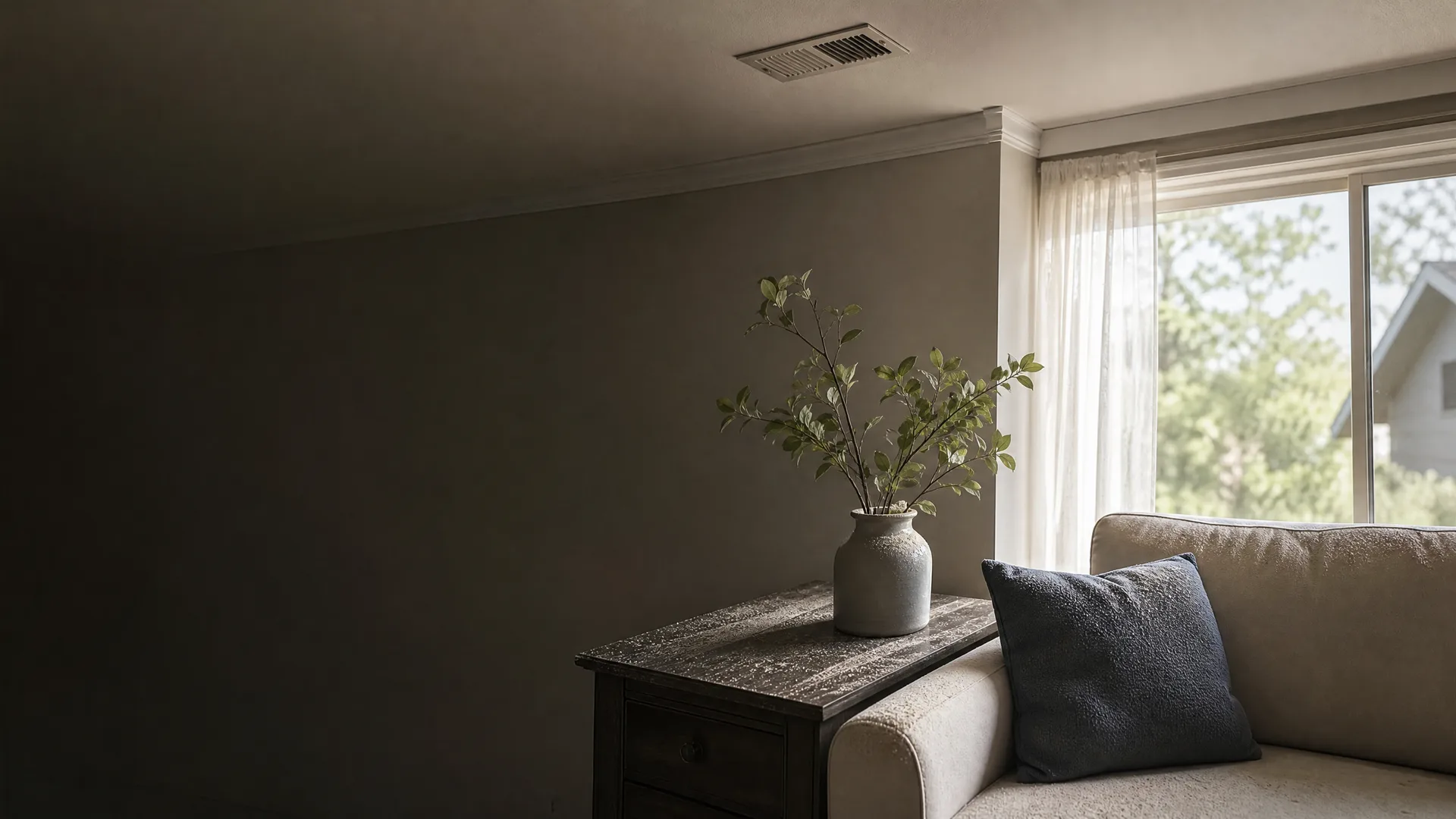
It's a Saturday morning in April, warm enough that the windows are open. You're vacuuming the living room before company comes over, and you catch the light hitting the ceiling vent grille just right. The slats are gray with dust, thicker than you remembered, and a thin line of it has settled on the bookshelf underneath, the kind you have to wipe twice to get off. You run your finger along the grille and it comes away dark. The air conditioning hasn't even kicked on for the season yet. You make a mental note to deal with it before the humidity sets in and the system starts running all day.
Power costs 15.12 cents per kilowatt-hour statewide
Most homes here heat with electric systems, and at 15.12 cents a kilowatt-hour, every hour your blower runs costs the same whether the air moving through it is clean or loaded with dust. Dirty ducts make the system push harder to move the same air, and that's time on the meter you don't get back.
EIA-861 2025 statewide residential average
Where That Leaves You
- Every 3 to 5 years is the right interval for most South Carolina homes, with the lower end fitting houses that run the air conditioner hard all summer.
- Humidity pushes moisture into the ductwork and that moisture is what lets dust and mold build up faster than it would in a drier climate.
- Gray, thickened dust on the vent grilles or a musty smell at startup are signs the interval has already passed.
- Water staining near the ducts means moisture has been sitting there long enough to leave a mark, not just passing through.
- A blower moving dust-loaded air works harder than one moving clean air, and electric heat here means that extra work shows up on the bill.
- Clean ducts run flat along the joists with no staining or hanging debris, which is the plain way to check the job was done right.
Three to five years holds up for most houses in South Carolina, and the humidity here is why you shouldn't stretch past that. The air conditioner runs hard all summer, moisture works its way into the ductwork, and that moisture is what turns ordinary dust into the gray, caked buildup that shows up on the vent grilles. A musty smell when the system kicks on is the same problem announcing itself a different way. Water staining near the ducts tells you something past that. It means moisture sat there long enough to leave a mark, not that it passed through once and dried. None of this is just a cleanliness question either. A blower pushing air through dust-loaded ducts works harder than one moving clean air, and with electric heat running the system here, that extra work is on the bill whether you notice it or not. Once the cleaning is done, checking it is simple. Ducts should run flat along the joists, no staining, nothing hanging loose, nothing you can see from below that looks out of place. If your ducts show the gray buildup, the musty smell, or the staining, the interval has already passed for your house, whatever the calendar says. If they don't, you're still inside the window, and the next check is just keeping an eye on the vents as the summers go by.




Let someone else find the pro
A local contractor who cleans ducts in South Carolina homes all summer knows what muggy air does to a system over three to five years, and what it looks like when it's gone longer than that. Send the request through and it goes to one licensed contractor near you, not a handful competing for your callback. That's the part you can stop managing once the form is in.
Your request goes to one pro, not a list of companies.
No fee to send it, and nothing to sign.