

Does duct cleaning help allergies in South Carolina

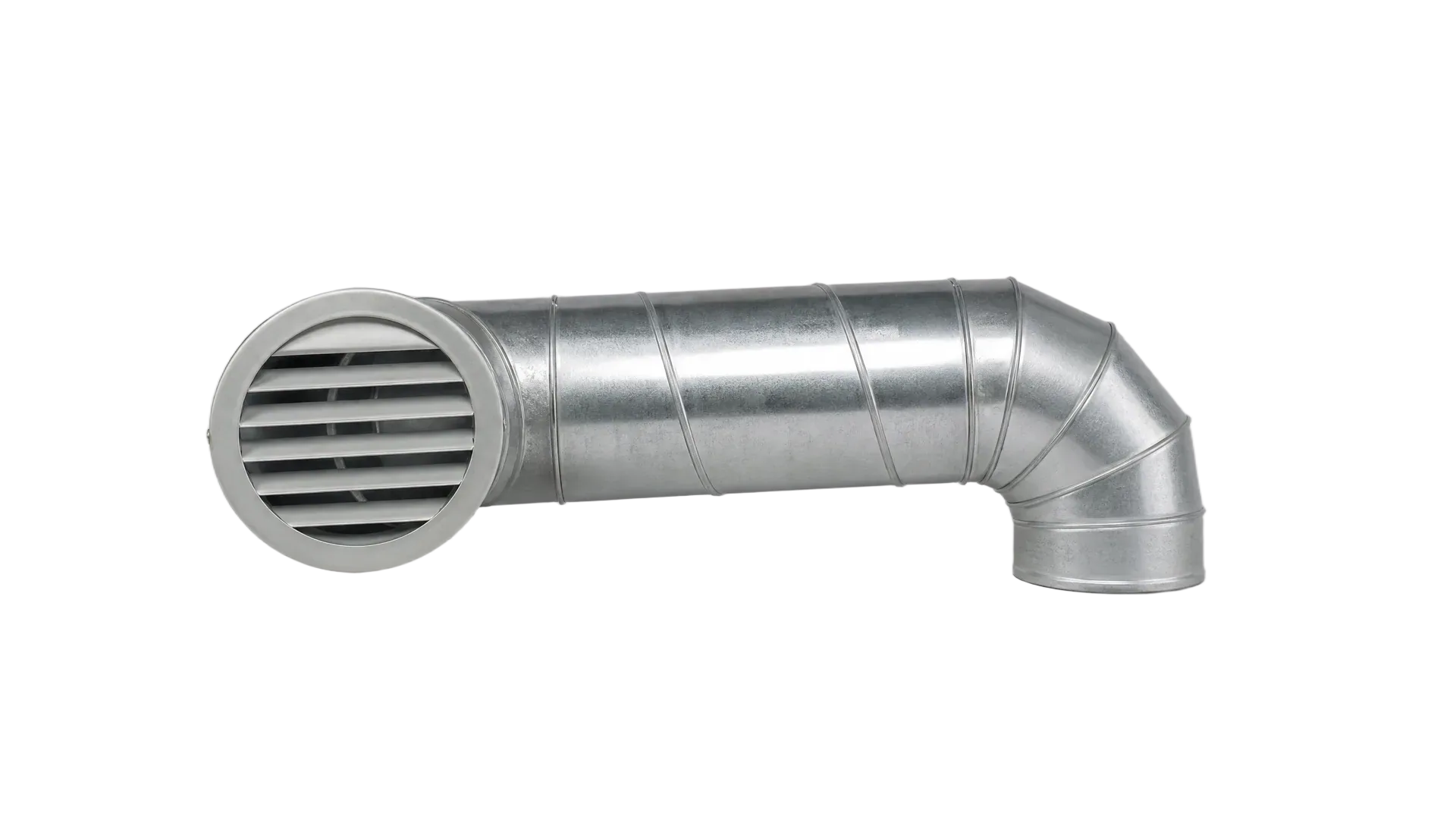
A galvanized steel round duct section with a 90-degree elbow at one end and a louvered vent grille at the other, photographed against a plain gray background.
I'm done searching

Does duct cleaning help with allergies in South Carolina?

South Carolina summers run long and muggy, and a lot of homes keep the windows shut and the AC running from spring into fall. If you or someone in the house is sneezing, stuffy, or dealing with itchy eyes more than seems normal, it's fair to wonder whether what's sitting in the ductwork is part of the problem, and whether getting it cleaned out would actually change anything.

Yes, if the dust and dander built up in your ducts is what's triggering the reaction

Dust, pollen, pet dander and mold spores settle inside ductwork over time, and every time the system runs, some of that gets pushed back into the air you breathe. In a humid climate like South Carolina's, ducts can also hold onto moisture, which gives mold a place to grow. Clearing that buildup out can cut down on what's circulating through the house, especially if allergy symptoms seem to track with the AC running. It won't help if the real source is something else, like a pet in the house, pollen coming in through doors and windows, or carpet and bedding that need attention. For most households, cleaner ducts mean cleaner air moving through every vent, which is worth something during the stretch of the year when the system barely shuts off.

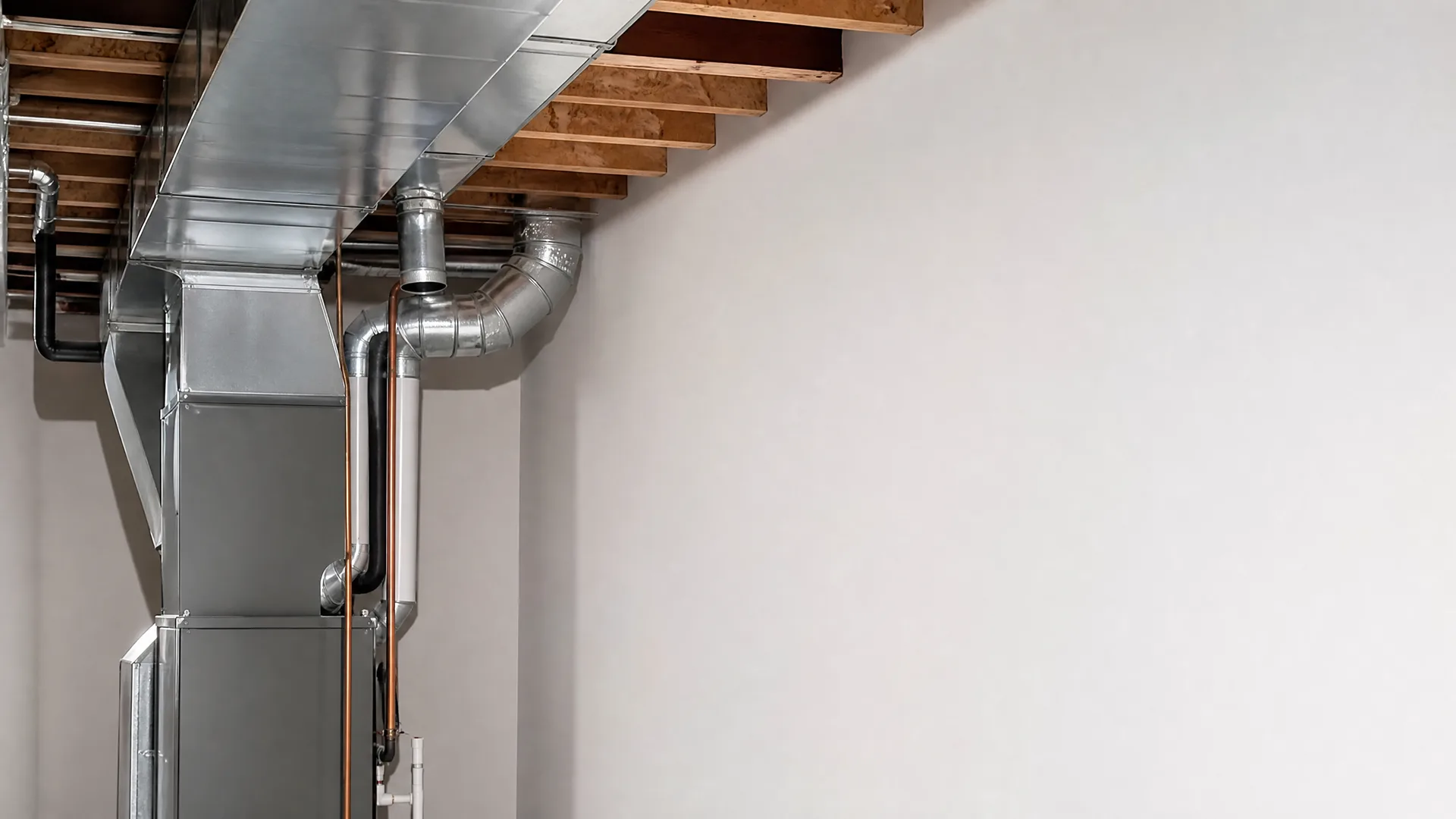
Basement interior showing a furnace with sheet-metal ductwork, a round flue pipe and copper lines running beneath exposed wooden floor joists next to a plain light-colored wall.

Where the dust settles

Ductwork has long horizontal runs and bends where dust, pollen, and pet hair drop out of the airstream and sit. Every time the system cycles on, some of what's loose in there gets pulled back into the air you breathe. In a house that stays shut up with the AC running most of the year, that buildup has months to collect before anyone sees it.

Interior corner of a building with a large blank white wall beside an unfinished ceiling showing wood joists, galvanized sheet-metal ductwork, and white and copper pipes.

What the filter doesn't catch

The filter cleans air passing through it, but it does nothing for what's already settled inside the ducts themselves. Fine dust, mold spores from humid crawlspaces, and pollen tracked in on clothes and shoes can build up along duct walls regardless of filter grade. Cleaning the ducts removes that reservoir directly instead of waiting for a filter to catch it on the next pass.

Why does everyone's allergies flare up indoors here

With the AC running most of the day from spring into fall, your house is breathing the same air over and over. You might notice it most in the evenings, once everyone's home and the system has been cycling all day: a stuffy feeling in the bedrooms, dust that settles back on the furniture within a day of wiping it down, or a musty smell when the air first kicks on. Somebody in the house waking up congested, even though nobody's sick, is another sign. None of that means your AC is broken. It means the ducts are feeding the same dust and pollen back through the house every time the system runs, and with the windows shut most of the year, that air isn't getting much chance to clear out on its own.

Unfinished basement with bare concrete walls and floor, showing exposed wood floor joists overhead with sheet-metal rectangular ductwork, insulated flexible ducts, and pipes.

Ducts moving clean air

This is what a duct system looks like when it's not working against you. Air moves through the trunk lines and flex runs without kicking dust back into the house. Less settles on the furniture, less turns up on the filter, and there's less in the air for anyone with allergies to react to.


Basement ceiling with galvanized sheet metal rectangular ducts and round pipes running between wooden joists above a bare concrete wall and floor.

Ducts holding onto dust

Same kind of system, but years of pollen, pet hair, and dust have built up along the metal and inside the flex runs. Every time the blower kicks on, some of it gets carried back into the rooms upstairs. That's the air moving through your house all summer with the windows shut.

A smiling man with dark curly hair in a dark green henley shirt sits on a light sofa in a living room with large windows, a lamp, shelving, a stone fireplace, and a bowl of popcorn in the foreground.
A smiling man in a dark long-sleeved henley shirt sits on a beige sofa in a living room, with a bowl of popcorn and a remote on the table in the foreground and shelves, a lamp, and a doorway behind him.
A smiling man with graying hair and stubble in a blue henley shirt sits on a gray sofa with cushions in a living room, with a bowl of popcorn on a wooden table in the foreground.
A smiling man in a dark green long-sleeve shirt reclines on a sofa in a dimly lit living room, with a bowl of popcorn on a side table in the foreground and a bookshelf, lamp, and houseplant behind him.
Galvanized sheet metal trunk ductwork with a round branch and register running beneath wood floor joists in an unfinished basement, alongside pipes, wiring, a steel beam and concrete walls.

One request and it's handed off

Skip searching for a duct system pro and answer a few questions instead.

Send the request and finding a pro stops being your problem.

Hand it over

It costs nothing to send, and you don't have to hire anyone.

A closed dark laptop and a ceramic mug of coffee on a wooden dining table, with wooden chairs, a dark kitchen cabinet with cutting boards and a potted plant, and a leafy plant by a window in the background.

What actually happens during a cleaning

A contractor runs a brush or air whip through each duct run while a vacuum unit hooked to the trunk line pulls everything loose out of the system and into a sealed container. They pull the supply and return grilles first, so every opening gets reached, not just the ones you can see. The coil and blower housing get checked too, since that's where moist air and fine dust tend to cake together inside a South Carolina system that runs most of the year. A return drop that's never been opened is usually where the biggest buildup turns up.

You don't have to find out which part of that a given company actually covers, or call three of them to compare what's included before you pick one. Send the form once and that work of sorting out who does a full job and who skips the coil is off your plate. Someone licensed for this gets in touch, and you stop being the one chasing it down.

Interior corner of a dining room with a round wooden table, a ceramic vase holding olive branches, a dark spindle-back chair near a curtained window, and a sideboard with a lamp against beige walls.
  1. A contractor seals the return vents so the system holds negative pressure.

  2. A vacuum unit connects to the trunk line to pull debris out.

  3. A brush or air whip knocks dust loose inside each duct run.

  4. Supply and return grilles are wiped down and set back in place.

Unfinished basement with galvanized sheet-metal ductwork and pipes beneath wood joists, a gray furnace unit at left, insulated plastic-covered walls over a concrete foundation, and a bare concrete floor.
Ductwork like this moves air through the joists without adding to what's floating around the house.
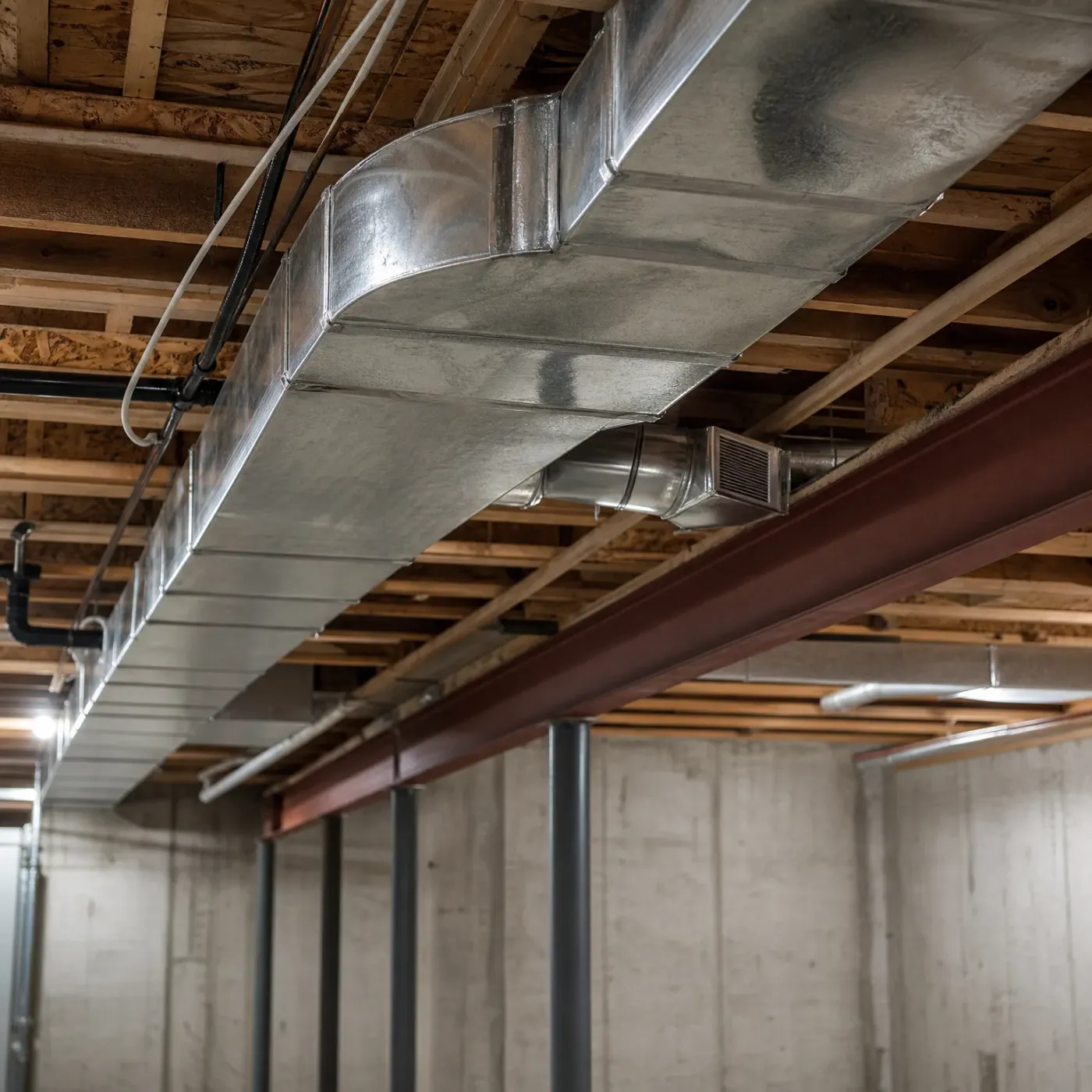
Empty concrete-walled basement room with galvanized rectangular and round HVAC ducts and pipes running along the exposed wood-joist ceiling.
Dust and debris sitting in runs like these get stirred up and pushed back into the rooms every time the system kicks on.

A contractor doing this right looks past the ducts themselves. The coil and drain pan get checked too, because standing water sitting in there grows mold that no amount of duct cleaning will reach. The return grille is usually where the buildup is worst, since it pulls air from every room in the house before any of it hits the filter. Speaking of the filter, swapping a thin one-inch for something rated MERV 8 or higher catches more of what's circulating than what a lot of systems came with from the builder. The type of ductwork matters too. Duct board and flex duct hold dust differently than metal trunk lines, so part of the job is figuring out what's actually running through the attic or under the house. Gaps where those return ducts pass through unconditioned space are worth sealing while someone's already in there, since they let in dust and insulation fiber between cleanings. And a cleaning that only touches the return side, skipping the supply runs, leaves half the system still working against you.

What a thorough cleaning actually covers

  • A contractor checks the coil and the drain pan too, since standing water in there grows mold that a duct cleaning alone won't touch.
  • The return grille usually has the worst buildup, because it pulls air from the whole house before anything reaches the filter.
  • A filter rated MERV 8 or higher catches more of what's floating around than the thin one-inch filter a lot of systems came with.
  • Duct board and flex duct hold onto dust differently than metal trunk lines, so a contractor checks what kind of ducts a house has before cleaning.
  • Sealing gaps where return ducts run through the attic or crawlspace keeps the system from pulling in dust and insulation fiber between cleanings.
  • A cleaning that skips the supply side and only does the returns leaves half the system still shedding dust into the rooms.
A woman in a dark knit turtleneck sweater reclines on a couch under a cream knit blanket, looking down at an open book, with a lit table lamp and framed pictures behind her.
A smiling middle-aged man in a dark green sweater sits at a candlelit table with wine glasses and a plate of greens in a dimly lit interior.

Power costs 15.12 cents per kilowatt-hour statewide

At 15.12 cents per kilowatt-hour, running the AC most of the day through a South Carolina summer already adds up on its own. A system fighting dusty, clogged ducts has to work harder to push air through the house, so that rate applies to more hours of runtime than it needs to.

EIA-861 2025 statewide residential average

Duct cleaning will not cure allergies, but it takes one source of indoor dust and pollen out of the air you're breathing every time the system cycles on. For a house running the AC most of the day through a muggy South Carolina summer, that matters more than it would somewhere the windows stay open half the year. Pair it with a clean coil and drain pan and a filter that's actually doing its job, and you've addressed what's in your control. The part that usually drags is finding someone who'll show up, explain what they're seeing in your ducts, and do the work right instead of a quick pass with a shop vac. You'd otherwise spend evenings searching for contractors, calling around, describing the same sneezing and stuffy mornings to each one, then sorting through quotes that are hard to compare without seeing the ductwork yourself. Once you send the form, that search is no longer something you have to carry. You'll know where things stand without having to chase it down.

Dim interior with a dark gray wall, exposed wood joist ceiling, sheet-metal ductwork, conduit, pipes and a sprinkler head.

Done looking for a duct system pro

One form replaces the calls you'd make to find a duct system pro.

Duct and vent cleaningDucts or ventsSouth Carolina
Step 1 of 2

What ZIP code is the job in?