Send the form and finding a duct cleaner is handled.
You noticed a smell when the air handler kicks on, or you saw something dark around a vent cover, and now you're wondering what's actually living in your ducts. In Charleston, with the air as muggy as it is for most of the year, that worry is worth taking seriously. Mold needs moisture to grow, and a duct system that's humid inside, from a cooling coil that doesn't drain right or a duct run sweating in a hot attic, gives it exactly that.
You can't see most of your ductwork, and you can't clean it yourself even where you can reach it. This is a job for someone who opens the system up, looks at what's actually in there, and cleans it the right way without damaging the ducts or spreading spores through the rest of the house while they work.
Finding that person is the part most homeowners put off, because it usually means a string of phone calls and quotes before anyone shows up. That's not how this works. Send the form once, and a local contractor who works on duct systems in this area every season takes it from there. Someone who knows how the humidity here affects ductwork, and what to check first when mold shows up in a Charleston home, gets matched to you directly. Not three companies competing for your callback. One contractor, already familiar with what homes around here deal with.
Once you send it, this stops being something you have to chase down. You don't need to know which company to call or what to ask them. That part is handled. You just wait to hear back about getting your ducts looked at and cleaned.
If you're seeing visible growth, smelling something musty through the vents, or just want to know for certain what's going on inside your system, the next step is below.
Is there really mold growing in my air ducts?
You keep catching that musty smell right when the air handler kicks on, or you've pulled a vent cover and seen dark spots on the inside. Charleston air stays heavy with moisture most of the year, and that dampness has to go somewhere once it meets the cool metal inside your ductwork. You're not imagining the smell, and you want to know if it's actually mold or something else.
Yes, it can, especially where moisture collects inside the ducts
Mold needs moisture and something to feed on, and ductwork gives it both. Dust and skin cells settle on the inside walls of the ducts, and when humid air moves through and meets a cool duct surface, that moisture condenses right there on the dust. In a place like Charleston, where the air stays thick with humidity for most of the year, that condensation happens more often and dries out slower than it would somewhere drier. A musty smell when the system runs, or dark spotting around a vent cover, usually means mold has already taken hold somewhere in the system, not that it might start eventually.
Why ducts here stay damp
Humid air moving through metal or flex duct hits the cool surface near the evaporator coil and leaves moisture behind, the same way a cold glass sweats on a porch table. Most AC systems here run from April into October, so that cycle repeats for months at a stretch. A duct run that sits in a hot attic or crawlspace never fully dries between cycles, and that's the spot mold tends to take hold first.
What a dark vent cover tells you
Dark specks around a supply or return vent usually mean moisture has been sitting on that metal longer than a day or two. Mold needs a damp surface and something to feed on, and dust buildup inside a duct gives it that. If the staining is only at the vent and not spreading past the cover, it's worth having someone look at the duct behind it before it gets further in.
Is this why your house has smelled off lately
You might notice it most in a bedroom that stays stuffier than the rest of the house, or a musty smell that fades after a few minutes and comes back the next time the system runs. Dust that resettles on furniture within a day of cleaning is another sign, since it means the ducts are feeding it back into the room instead of the system filtering it out. Anyone in the house with allergies or asthma may notice symptoms are worse indoors than outside, which is a clue worth paying attention to. Left alone, mold in the ducts keeps circulating through every room on that system, not just the one where you first noticed the smell.
Ducts running clean
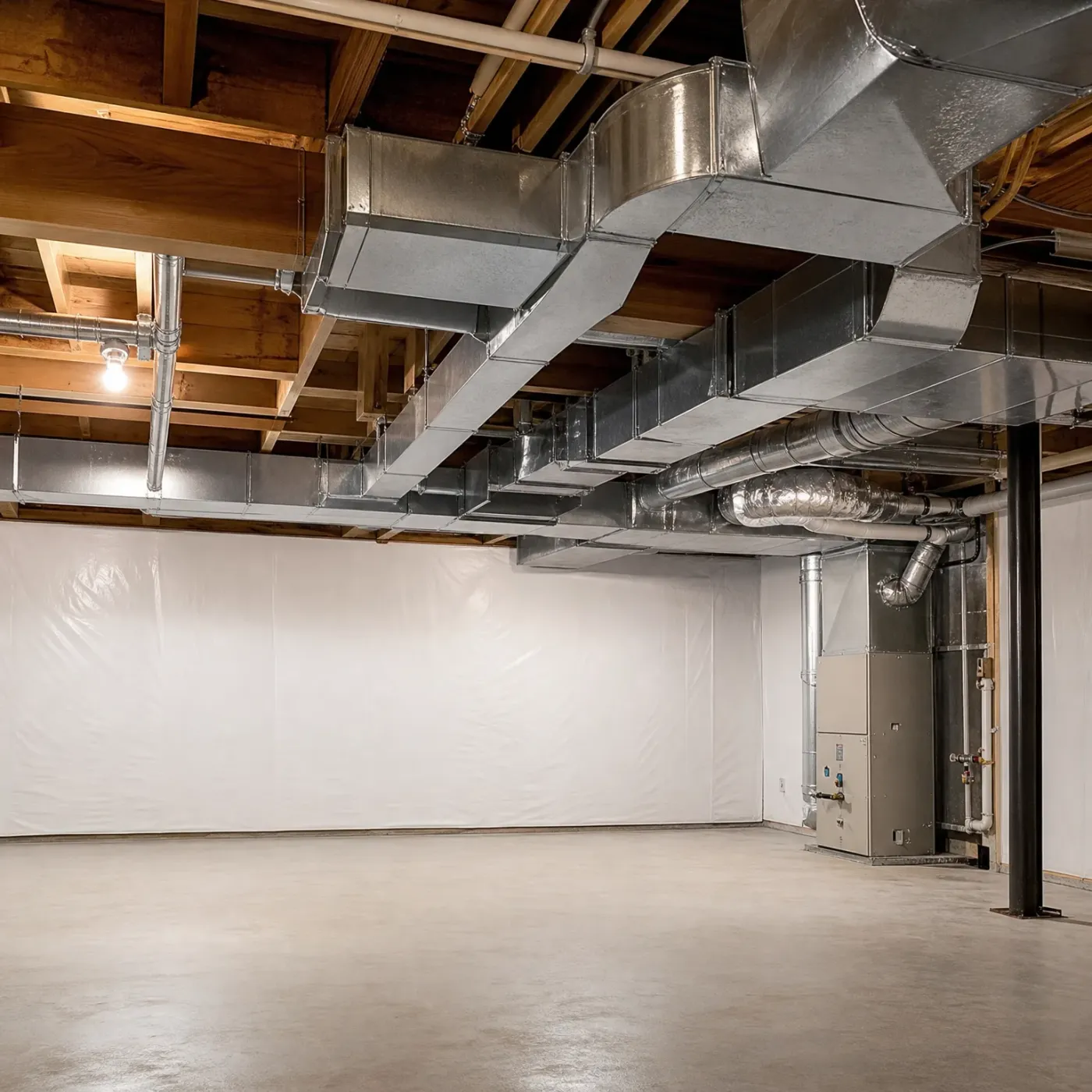
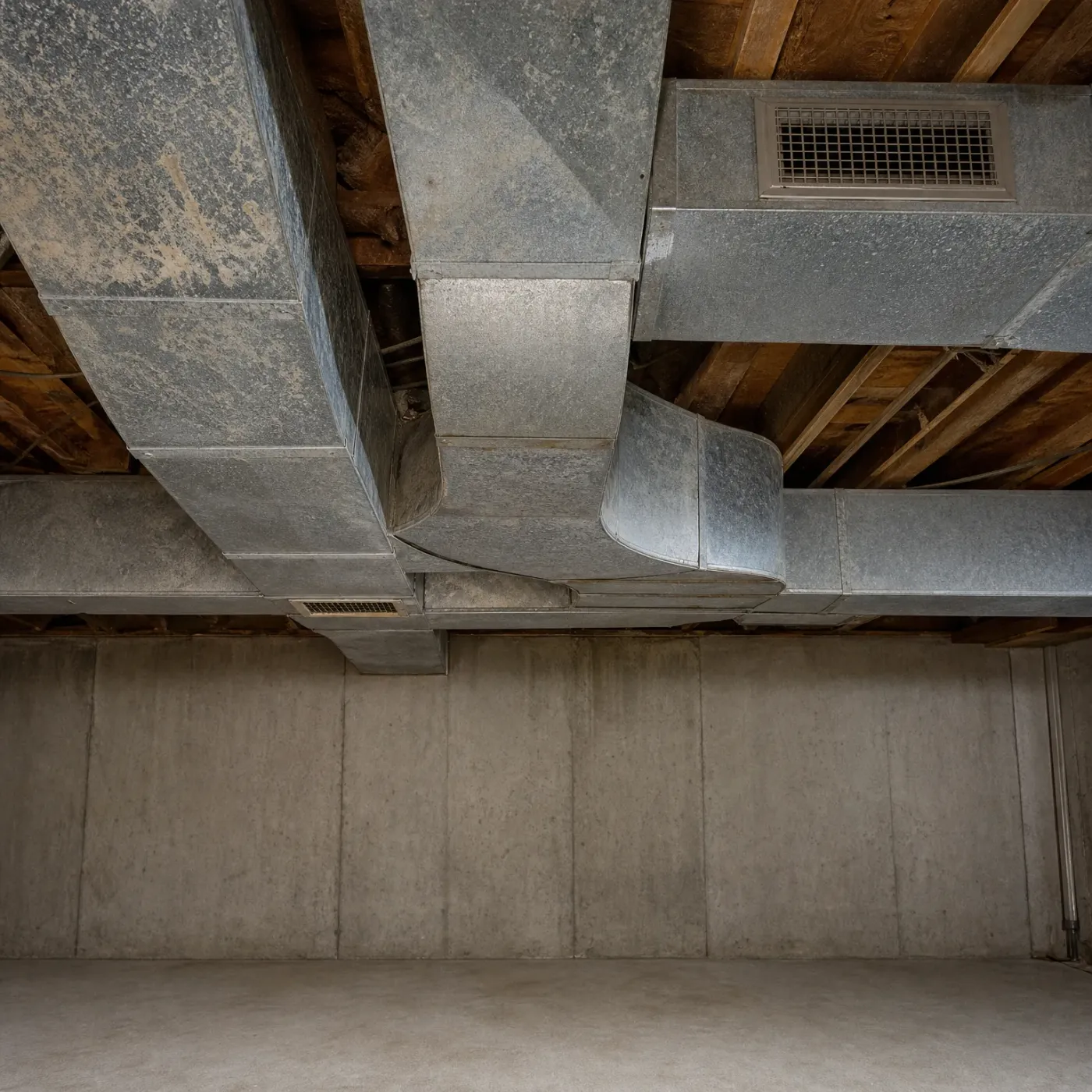
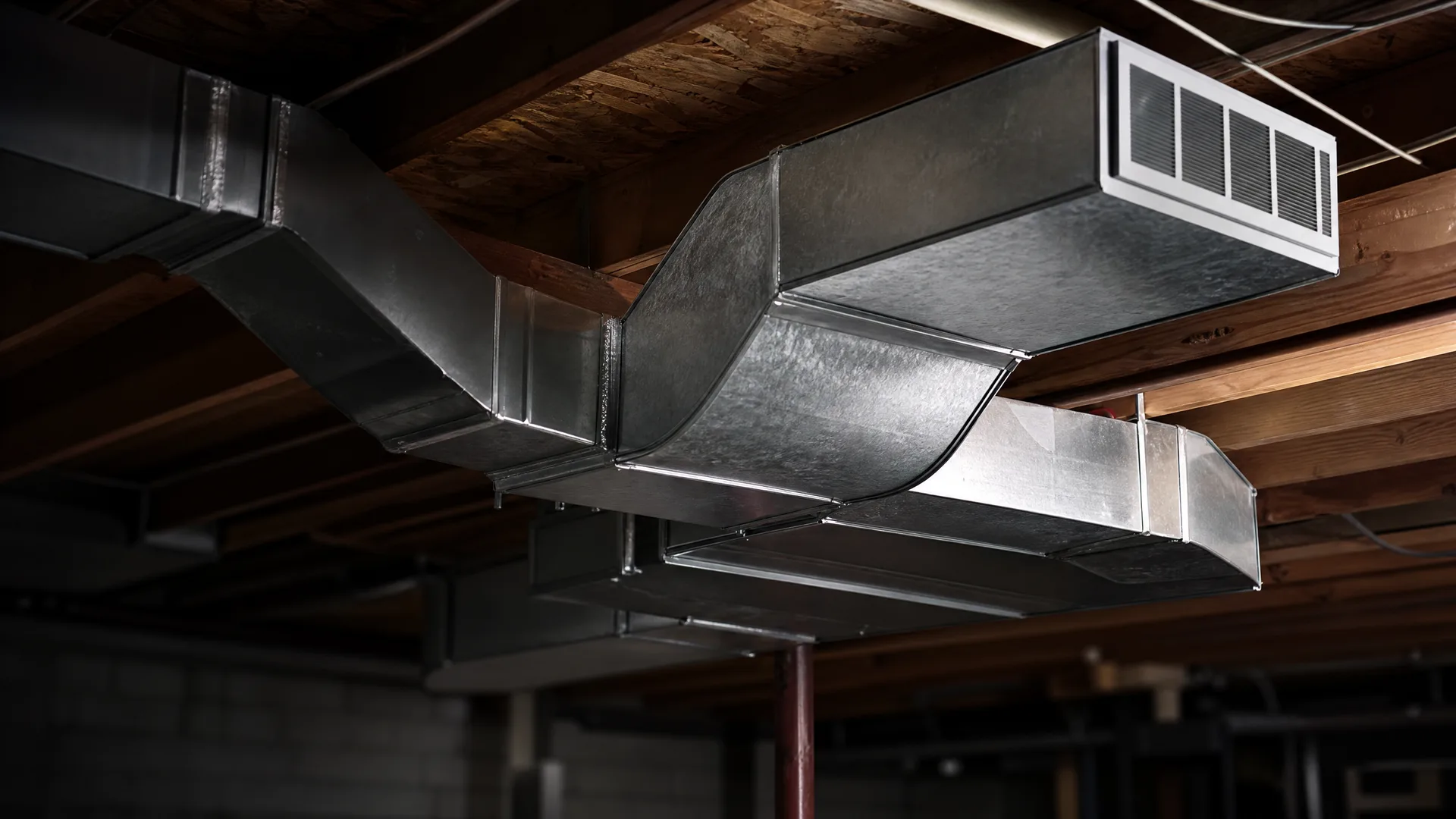
This is what a duct system looks like when it's doing its job. Metal runs stay dry, registers push air without any smell riding along with it, and nothing dark shows up around the seams. Humidity stays outside the ductwork where it belongs.
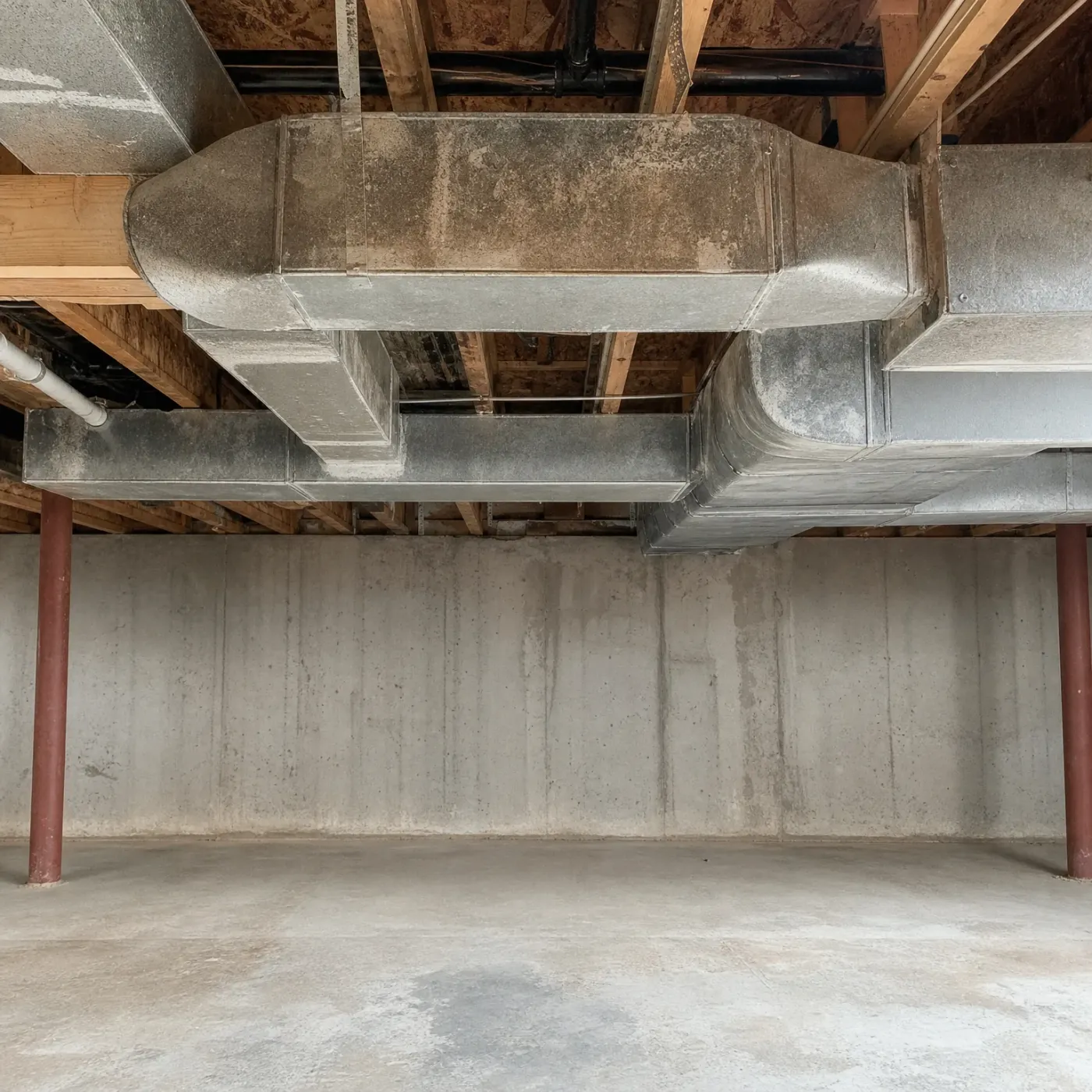
Ducts holding moisture
Here the same runs sit lower in a damp basement, closer to bare concrete and less airflow to dry them out. Branches and turns like these are where condensation collects first. That's where a musty smell starts, and where dark spots show up on the metal if you open a seam.
What does your home tell you about duct mold risk?
Half the homes here were built by 1991
Half the homes in Charleston County were built in 1991 or earlier, so if yours is one of them, the ductwork and seals have had more years for gaps to open up.
Heat runs November through March
Cooling runs May through October here, about six months straight of the coil sweating and that moisture passing right through the ducts on its way to your rooms.
Cooling runs May through October
Heat only runs November through March, so for most of the year the system is in cooling mode, the exact condition that lets mold take hold in the first place.
ACS 2020-2024 · NOAA nClimDiv 1991-2020
Metal runs stay dry here because the basement around them stays dry too, with sealed concrete overhead and underfoot.
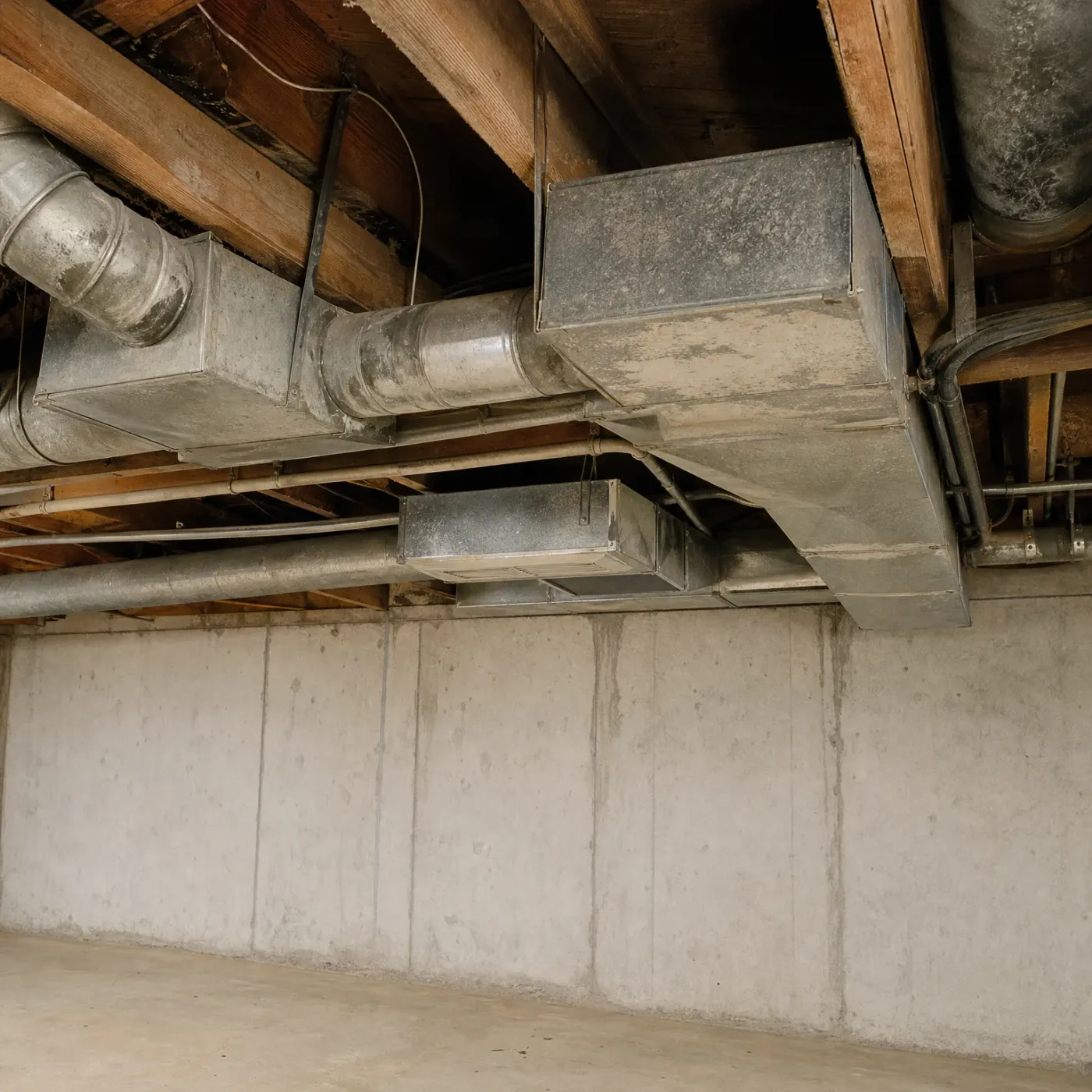
Ducts hung bare between joists pick up every bit of moisture sitting in a crawlspace or unfinished basement around them.
You've read enough by now to know whether this is your house. A musty smell that comes back every time the air handler kicks on, dark spots around a vent cover, a bedroom that never quite feels dry even with the AC running. None of that clears up on its own, and running the system harder just moves the same damp air through the same ducts. A contractor who works on duct systems around Charleston every summer has seen what that humidity does to metal runs and flex duct after a few seasons, and knows what to check first. Send the request and it goes to one local, licensed contractor who takes it from here, so you're not stuck comparing strangers or waiting on callbacks from five different companies. You've already done the hard part, which was noticing. Let the next part be someone else's job for a while.
Before you get your ductwork cleaningAfter you get your ductwork cleaning
How a duct cleaning actually works
A technician runs a borescope camera through the main trunk line before touching anything, so the cleaning plan matches what's actually in there.
Duct cleaning works the runs from both ends, pushing agitation tools down each branch while a vacuum unit holds negative pressure at the trunk.
The vacuum connects at the air handler or a cut access point, so loosened debris and mold spores pull out of the house instead of settling back into another room.
Flex duct gets brushed or air-whipped rather than scraped, since the inner liner tears if a rigid tool catches it.
Metal runs can take a stiffer brush, and that's usually where the heaviest buildup sits near the coil end of the system.
A sealed system stays negative pressure the whole time, which is the only way to be sure what gets knocked loose actually leaves the ductwork.
A cleaning starts with a camera, not a brush. A technician feeds a borescope into the main trunk line first, because what's sitting in a Charleston duct after a few humid summers is not the same in every house, and the plan should match what the camera actually finds rather than a standard routine. Once the layout and the buildup are clear, the work happens from both ends of each run at the same time. Agitation tools go in from the supply or return side to knock loose what's clinging to the walls of the duct, while a vacuum unit holds negative pressure at the trunk so none of that debris has anywhere to go but out. That vacuum connects at the air handler or at an access point cut into the ductwork, and it has to stay sealed and running the entire time. Without that negative pressure, loosened dust and mold spores just drift to the next bend in the duct or blow out a register into a bedroom, which defeats the point of doing the work at all. The tool changes with the material. Flex duct has a thin inner liner that a stiff brush will tear, so that gets cleaned with brushes or air-whipped agitation instead. Metal duct can handle a stiffer brush, and that's usually where a technician finds the heaviest buildup, especially near the coil end where moisture collects first.
Power here costs 16.39 cents per kilowatt-hour
At 16.39 cents per kilowatt-hour, every hour your AC fights mold-damp ducts for airflow shows up on the bill. A system pushing air through runs coated in moisture and buildup works harder to cool the same rooms, and that extra draw costs you all summer long.
EIA-861 2025
1
Technician runs a borescope camera through the main trunk line first.
2
Vacuum unit connects to the trunk and pulls a negative pressure seal.
3
Agitation tools knock loose buildup inside each branch run.
4
Technician works each register from the room side inward.
A musty smell that returns every time the air handler kicks on, or dark spots around a vent cover, means moisture has settled somewhere in the duct system, and cleaning is what clears it out. That's the whole answer. Charleston's humidity gives the ducts in this county more chances to hold onto moisture than ducts in a dry climate ever would, and a system built in 1991 has had a lot more years for gaps and buildup than one installed last year. A local contractor who works on duct systems through a full Charleston summer has seen this exact problem in homes like yours, knows which runs tend to hold moisture and which seals tend to open up first, and can tell you what's actually going on once they're in your attic or crawlspace. You'll hear from one contractor, not a handful of them competing for your call. Send the request, and the question you started with stops being something you have to figure out on your own.