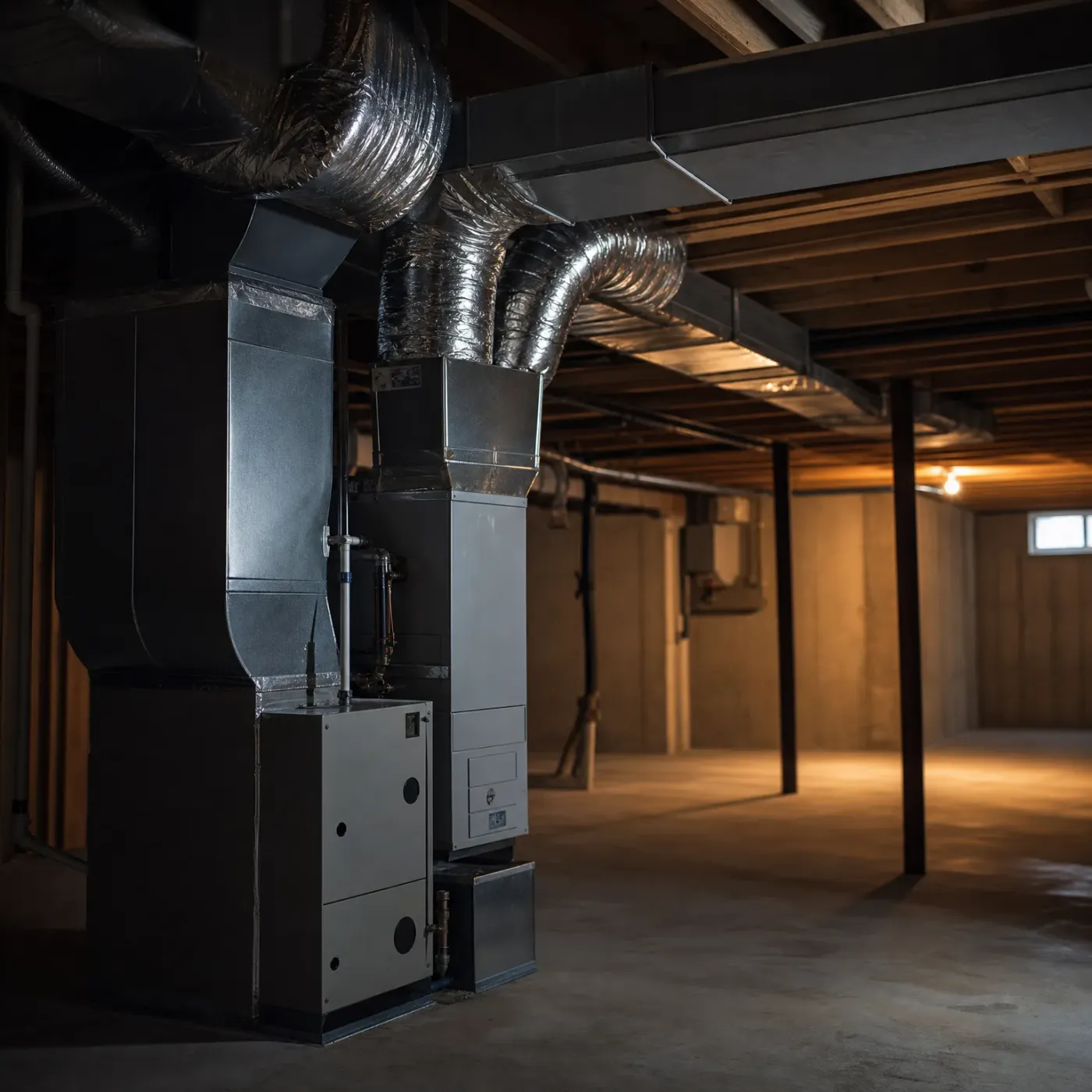

Unfinished basement with concrete floor and walls, exposed wood joists, steel support columns, and two furnace-type units connected to sheet-metal and flexible insulated ducts.

A pro who works on ducts

Signs of mold in your air ducts in South Carolina

A musty smell when the air handler kicks on, dusty streaks around the vents, a stuffy room that never quite dries out. Those are the clues homeowners in South Carolina notice first, and this page walks through what they mean and what to check before you decide the ducts are the problem. Once you've got the answer, you can get matched with a contractor who'll look at your system and follow up directly.

Find a pro near me

A musty smell is the first sign, but look at the vent covers too. Dark speckling around the edges, or streaks running down the wall below a supply vent, usually means mold is growing somewhere in the duct behind it. South Carolina summers stay muggy for months, and that moisture gets pulled into the ductwork every time the air handler runs. If the ducts run through a crawlspace or attic that holds humidity, condensation can sit on the duct walls long enough for mold to take hold. You might also notice one room in the house feels more stuffy or smells different than the rest, even with the air running. That usually means the problem is local to the ducts feeding that room, not the whole system. None of this means the air handler itself is failing. It means the ducts are holding moisture they shouldn't, and that air is what fills the house every time the system cycles on.

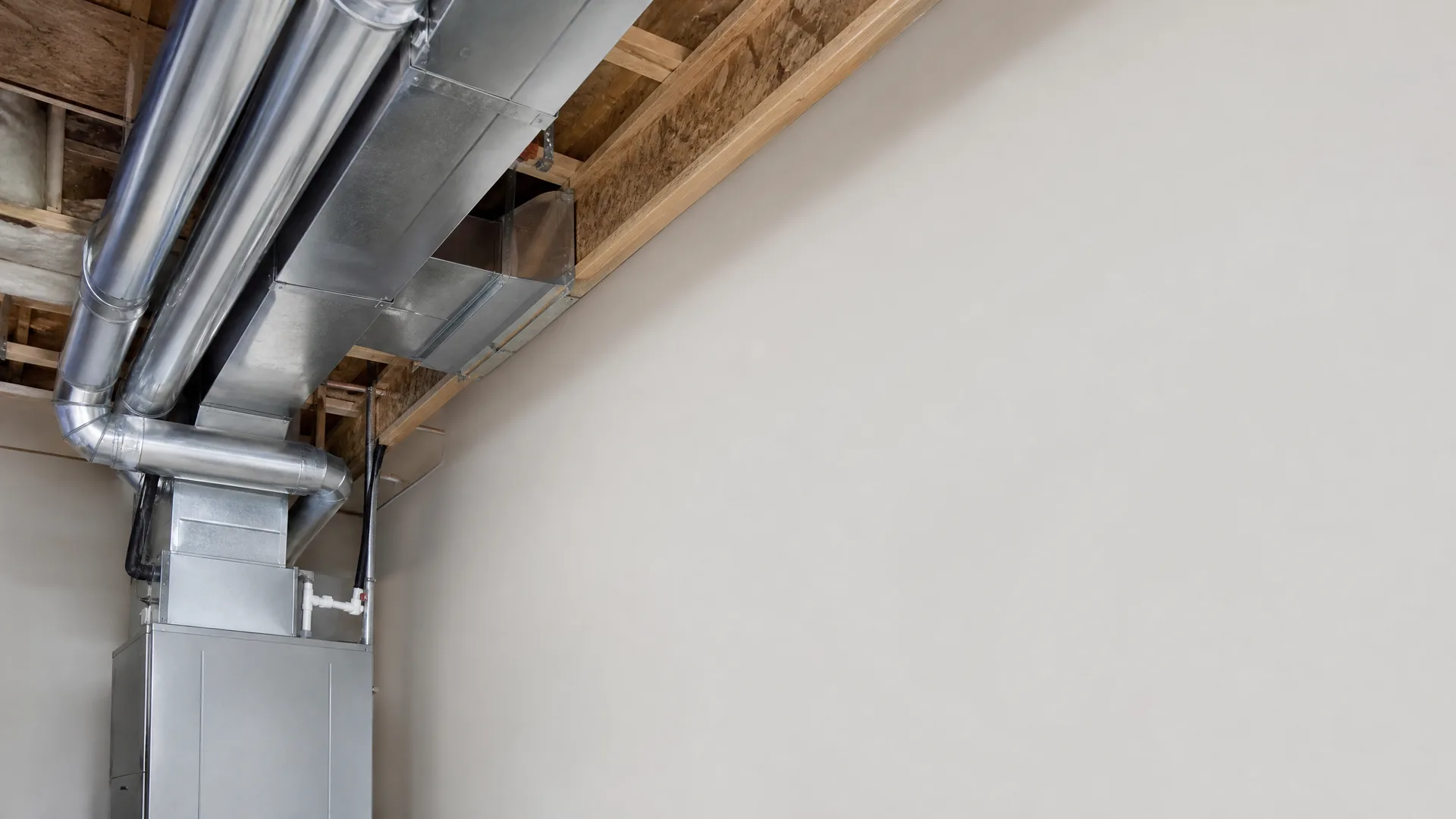
Galvanized sheet-metal ductwork and round pipes running along an exposed wood-joist ceiling with insulation, above a furnace unit beside a blank painted wall.

Why the moisture stays put

Ductwork that runs through a crawlspace or attic picks up whatever moisture sits in that space. In South Carolina, a supply run carrying cooled air through a hot, damp attic will sweat on the outside if the insulation wrapping it has worn thin or gapped at a seam. That moisture doesn't dry out between cooling cycles the way it might somewhere drier. It sits against the metal or the duct board, and that's what mold needs to take hold and keep growing.

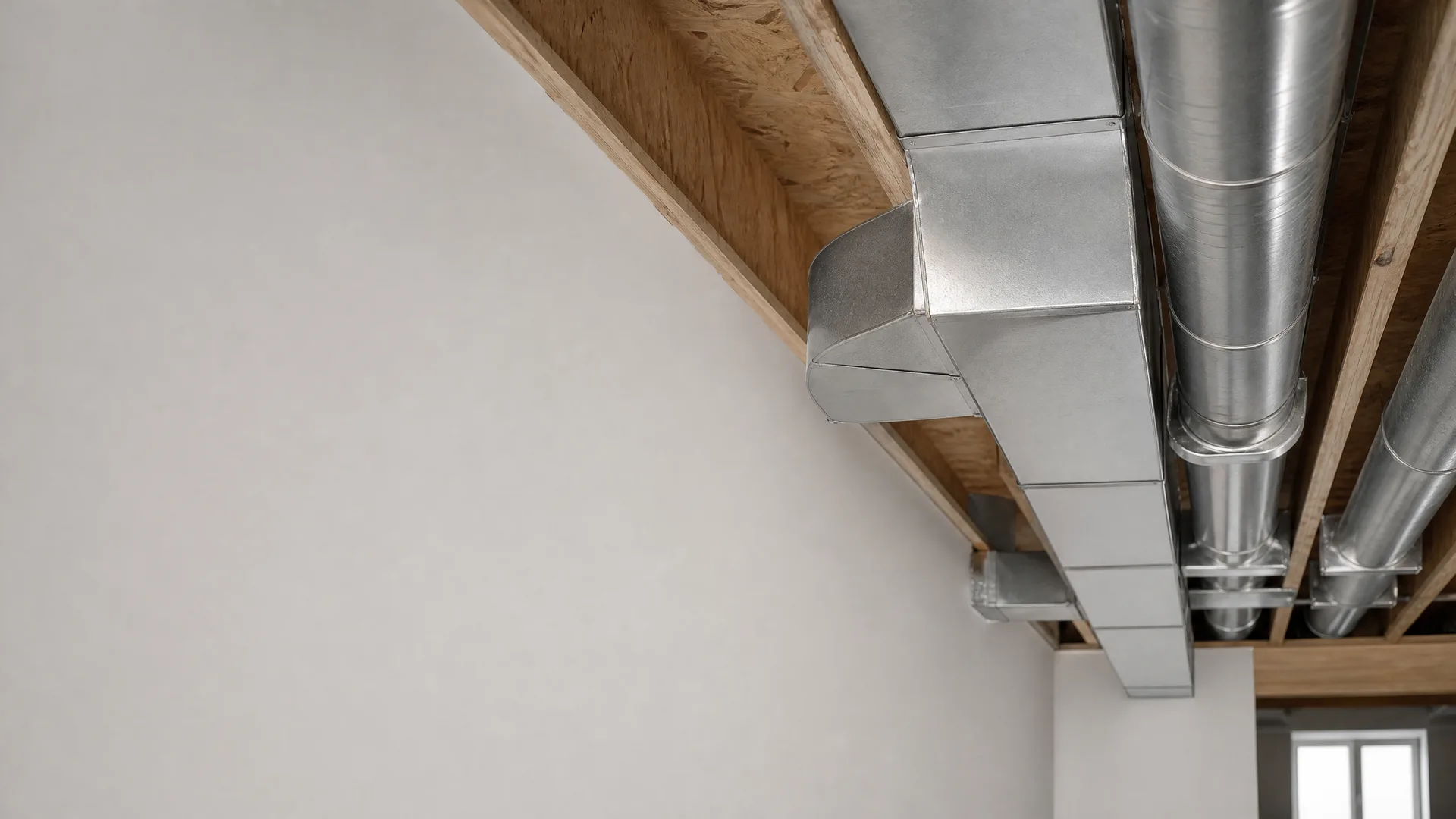
Galvanized rectangular and round sheet-metal ductwork mounted beneath an exposed wooden joist and OSB ceiling, next to a plain white wall and a window at lower right.

What a contractor checks first

A contractor inspecting for duct mold starts at the air handler, since that's where moisture collects around the cooling coil and drain pan. From there they'll check the first few feet of duct attached to it, then work out toward the vents you've flagged. Flexible duct with a damaged inner liner is harder to clean than sheet metal, and that difference usually decides whether the fix is a cleaning or a section of duct replaced.

Duct Mold or Something Else

Mold in the ducts

  • The smell comes back within a day or two of running the system, even right after you've aired the house out.
  • Speckling sits inside the duct or right at the vent boot, not spread across the drywall or ceiling around it.
  • It tracks with the AC cycle, worse when the system has been running a while and fainter when it's been off.
  • A vent cover wiped clean shows new spotting again within a week or two.
  • Registers in rooms that stay closed up or run cooler than the rest of the house are usually the worst ones.

Mold somewhere else

  • A musty smell shows up in one room regardless of whether the vent there is open or closed.
  • Staining spreads across the ceiling or wall itself, not just at the edges of the vent cover.
  • A bathroom, closet, or room near plumbing holds the smell even with the AC off for a day.
  • The spotting shows up near a window, an exterior wall, or a spot where a roof or pipe has leaked before.
  • Cleaning the surface gets rid of it for good, since nothing is feeding it from behind the wall or in the duct.
Empty basement with bare concrete walls and floor, a small window at left, and exposed wood joists with galvanized sheet metal ductwork and pipes overhead.

Clean ductwork, dry basement

This is what a duct run should look like: bare metal, maybe a little dust on top, nothing growing on it. Air moves through without picking up a smell. If your basement or crawlspace looks like this, mold in the ducts isn't what's behind that musty air.


Dusty sheet-metal HVAC ducts with a rectangular vent register run beneath wooden floor joists above an empty concrete-walled basement.

Ductwork coated in grime

This is what a problem run looks like. The dark film coating the metal isn't just dust, it builds up where moisture sits against the duct for weeks at a time. If a run near you looks like this, that's where the smell is coming from.

A woman wrapped in a cream textured blanket sits in an armchair beside a lit lamp and a dark window, with an open book in the foreground.
A smiling older woman with gray hair in a cream knit sweater stands in a dimly lit kitchen beside a window showing snow outside, with a round loaf of bread on the counter in the foreground.

Get your ductwork to the right pro

A musty smell that keeps coming back and speckling inside the vent boot are not something to wait out. Mold growing in a duct stays there every time the system runs, feeding on the moisture your attic or crawlspace keeps supplying all summer. It does not dry out on its own, because the duct is already sealed up and dark, and South Carolina air outside isn't going to help. Running the system less doesn't solve it either, since the humidity that's feeding it is already inside the ductwork. What changes this is someone getting into the duct itself, finding where the moisture is getting in, and cleaning out what has already grown. That's a job for a contractor who deals with this in homes like yours, not a filter change or a few days with the windows open. Once you send the request, you are done chasing it down. Someone who handles this work in South Carolina takes it from here.

A basement with a gray furnace on a concrete pad connected to large sheet-metal ducts running along an exposed wood joist ceiling, with PVC pipes and plastic sheeting on the walls.

Ductwork running clean

This is a normal basement duct run. The metal stays bare, the plenum and branch lines show no staining, and the joists overhead are dry. Nothing on the duct surface or the wood around it means moisture isn't collecting there.

Galvanized sheet metal HVAC ductwork with a vent grille running along a wooden joist ceiling above a bare concrete wall.

Ductwork under stress

Here the duct runs through the same kind of joist bay, but check where metal meets wood. Dark marks on the duct seams, damp wood on the joists above it, or a register vent that stays wet to the touch all point to moisture sitting in that space longer than it should.

Why does my house feel stuffy even with the AC running

A room that stays heavy and damp no matter how long the air conditioner runs is worth paying attention to. So is a smell that fades when you open a window and comes right back once the system cycles on again. Some households notice it more in a bedroom far from the return, or in a room that was always a little stuffier than the rest of the house. That unevenness is normal for duct problems, since mold tends to sit in one section rather than spread through the whole run. Left alone through a South Carolina summer, it gives the mold months of warm, damp air to keep growing on, and anyone in the house with allergies or breathing trouble tends to notice it first.

An older man with gray hair, a dark coat and scarf dusted with snow stands in a warmly lit entryway with an open wooden door, a table lamp, framed pictures, and a plant in a vase.
An older man with gray hair and a beard wearing a dark snow-dusted coat stands in a home entryway, with a lamp-lit living room and a wooden staircase behind him.
An older man with gray hair and a beard, wearing a dark snow-dusted coat, stands in a warmly lit home entryway with a hallway, console table with lamp, patterned rug, and living room visible behind him.
A gray-haired bearded man in a dark snow-dusted coat and scarf stands inside a dimly lit home entryway, with a hallway, framed picture, lit table lamp and staircase behind him.
Unfinished basement with galvanized sheet-metal rectangular and round ductwork running along a wood-joist ceiling, two steel support columns, a small window, and a furnace unit against the far right wall.
A basement duct run with clean galvanized metal and dry joists overhead, air moving through without a smell.
An unfinished basement with bare concrete walls and floor, showing exposed wooden floor joists, pipes, wiring, and metal HVAC ducts with a vent grille overhead.
A duct run where rust streaks and dark staining spread along the seams, a sign moisture is sitting where it shouldn't.

Power costs 15.12 cents per kilowatt-hour statewide

At 15.12 cents a kilowatt-hour, running the blower longer than it needs to costs you something every month. A duct system fighting mold usually means the air handler cycles more to push air through, and that extra runtime shows up on your bill before you ever see the mold itself.

EIA-861 2025 statewide residential average

What the signs add up to

  • A musty smell that returns within a day of airing out the house points to mold growing inside the duct, not just a passing odor.
  • Dark speckling at the vent boot or streaks below a supply vent usually means moisture has been sitting in that duct for a while.
  • Rust and staining along duct seams in a crawlspace or attic show where condensation has been collecting on the metal.
  • A room that stays damp and heavy no matter how long the AC runs often means the air moving through it is coming from a contaminated duct.
  • Clean galvanized metal with dry joists overhead is what a duct run should look like, with no smell carried along with the air.
  • Mold in a duct does not clear up on its own, since the moisture feeding it keeps coming back all summer.

Put together, the clues point to one of two things. Either the duct is dry and clean and whatever smell or dampness you're noticing has another cause, or moisture has been sitting somewhere in that system long enough for mold to take hold. The checks are straightforward: does the smell come back once the air handler cycles again, is there speckling or staining at the vent boot or along the seams, do the joists and metal in the crawlspace or attic stay dry or show rust. None of that requires taking anything apart to look at.

What it doesn't do is resolve itself. South Carolina summers keep the attic hot and the crawlspace damp for months, and that moisture keeps feeding whatever is already growing in the duct every time the system runs. Waiting through another cooling cycle doesn't give it a chance to dry out the way a damp towel might. It just means another few months of the air handler pushing that smell through the house.

If what you're seeing matches the mold side of things rather than the clean, dry duct run, the next step is getting someone in to look at the actual duct, not just guess from the vent cover. Once you send the form, you're done hunting for who does this kind of work. That part gets handed off, and a contractor who handles duct cleaning in your area follows up with you directly. You don't have to spend the next week calling around to find out who's available or qualified to deal with it.

Dimly lit interior showing galvanized sheet-metal HVAC ductwork running below a wooden joist ceiling above a dark gray wall.

The right pro for this job

Once you send the form, finding a pro is off your list.

Duct and vent cleaningDucts or ventsSouth Carolina
Step 1 of 2

What ZIP code is the job in?









