Mini Split Installation in Charleston, SC
A new system here will heat from November through March and cool from May through October every year. Tell us about the house, and a licensed contractor who covers Charleston County will get in touch.
Tell us about the job
It takes about a minute.

Eleven months of work for a Charleston mini-split
A mini-split in Charleston County runs almost year round. Cooling from May through October, heat from November through March, that's 11 months of the year the system is doing something. Summer afternoons averaging 89°F push the cooling side hard for a full six months. Winter is milder, with nights averaging 41°F over December through February, but the heat pump side still carries five months of demand.
Any mini-split installed new has to meet the federal minimum for a split-system heat pump, 14.3 SEER2 for cooling and 7.5 HSPF2 for heating. With this much of the year spent heating or cooling, sizing the unit correctly for the space matters as much as meeting that minimum.
- 5 months
- November through March, your system heats
- 6 months
- May through October, it cools
- 41°F
- the average winter night it heats against
- 89°F
- the average summer afternoon it cools against
NOAA nClimDiv, 1991–2020 normals
- Is a mini split worth it?
- For most homes here, yes, especially in a room that never stays comfortable on the main system. A mini split gives you a heat pump dedicated to that space, so it heats through the cold nights from November to March and cools through the summer afternoons that hit 89°F. Because it runs on electricity like most heating here already does, it fits into a house without new gas lines or ductwork. The one to talk to a contractor about is sizing, since a unit that's too big or too small for the room won't hold temperature well.
- How many rooms can a mini split cover?
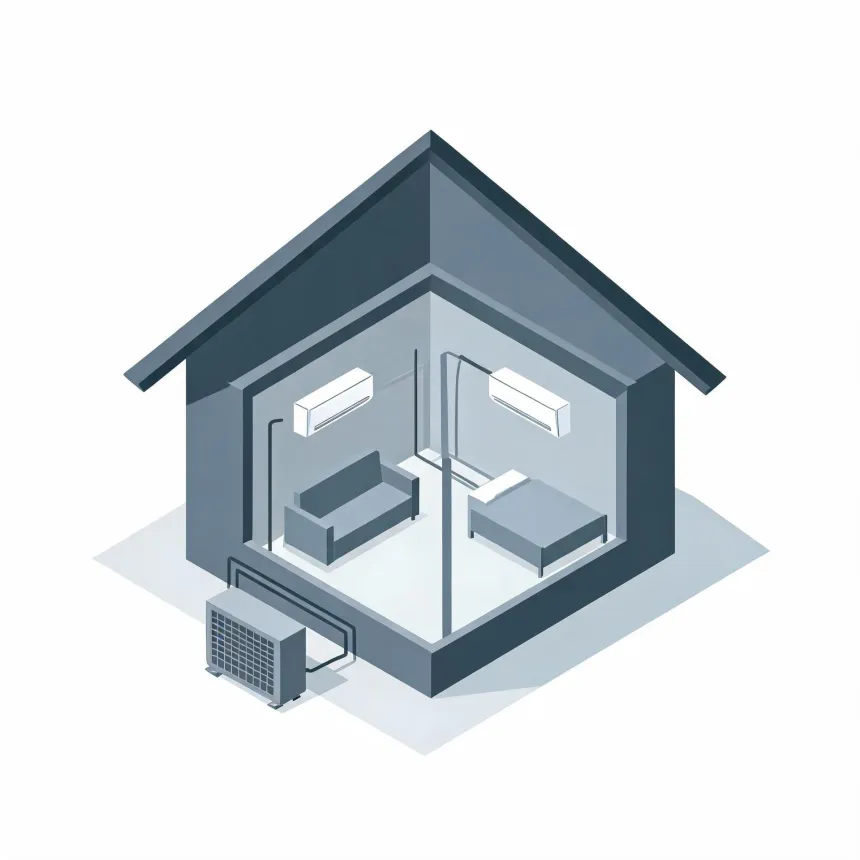
- A single outdoor unit can run one indoor head or several, depending on which system a contractor installs. A single-zone system covers one room. A multi-zone system splits its capacity across several indoor heads, each with its own thermostat, so a bedroom and a living room can run at different temperatures at once. How many rooms makes sense on one outdoor unit depends on the size and layout of each room, which is something a contractor works out room by room.
- Can a mini split heat a whole house?
- It can, if enough zones are installed to reach every room, but most homes use it to cover the rooms that need help rather than replace a whole-house system outright. A mini split is a heat pump, so it keeps working through the winter nights here that average 41°F from December through February. Whether it makes sense as the only heat source for the whole house depends on the layout and how many zones that would take, which a contractor can work out from the floor plan.