
HVAC Installation in Lexington, SC
A new system here will heat from November through March and cool from May through September every year. Tell us about the house, and a licensed contractor who covers Lexington County will get in touch.
Tell us about the job
It takes about a minute.

Ten months of work a year, in Lexington County heat and cold
Summer afternoons here average 91°F from May through September, five months of the compressor running most of the day. Winter is shorter but real, with nights averaging 36°F from November through March. Between the two, a system here is heating or cooling ten months out of the year.
Most homes in Lexington County heat with electricity, so a new system has to handle both jobs well, not just cooling. Storms are part of the picture too. This area has logged 325 damaging wind events over the past ten years, and 45% of South Carolina households lost power for at least a day at some point in 2024. Whatever gets installed should come back on by itself once the power does.
- 5 months
- November through March, your system heats
- 5 months
- May through September, it cools
- 36°F
- the average winter night it heats against
- 91°F
- the average summer afternoon it cools against
NOAA nClimDiv, 1991–2020 normals
- When should I replace my HVAC system?
- Replace it when repairs start happening every year, or when a breakdown would leave you without heat or air conditioning for days. Homes here need working heat from November through March and cooling from May through September, so most of the year a failure hits hard. If a technician tells you the heat exchanger or compressor is failing, that is usually the point where replacing costs less trouble than repairing. An aging system is also more likely to fail on a cold winter night or a hot summer afternoon, which is exactly when you need it most.
- Should I replace my furnace and air conditioner at the same time?
- If both are old, replacing them together is often worth considering, but it depends on the condition of each one. A furnace and air conditioner installed years apart can still work fine together as long as both are sized correctly for the home. The main reason to replace them together is matching, since a new air conditioner paired with an old furnace will not perform as well as a matched system. A contractor can look at the age and condition of both and tell you whether one needs attention now or if it makes sense to wait.
- What happens during an HVAC installation?
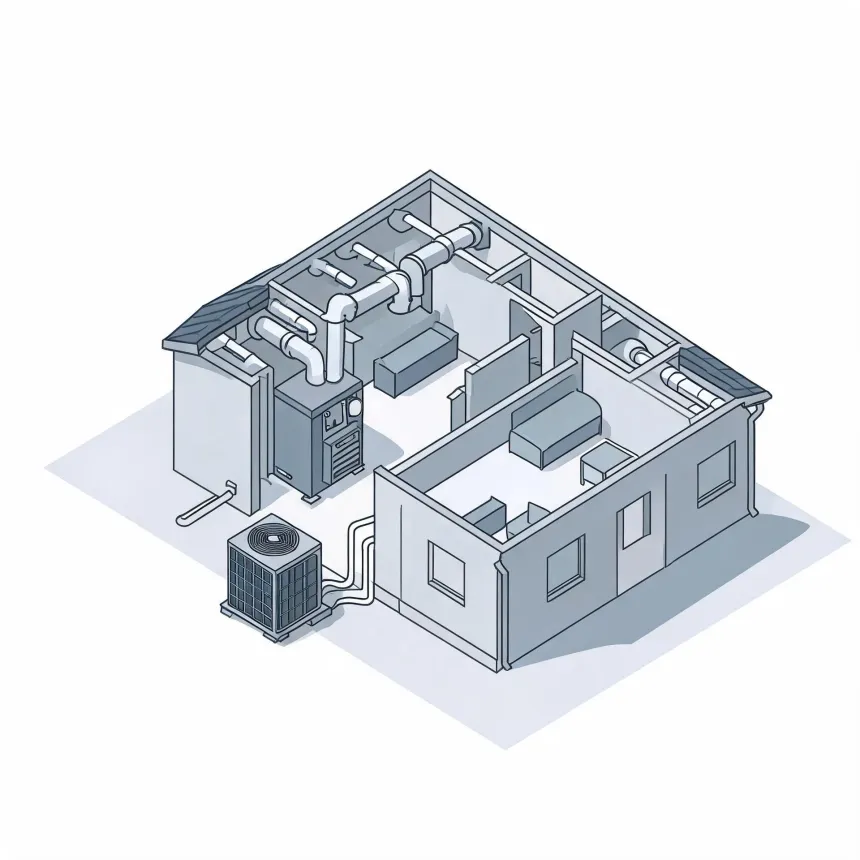
- A contractor removes the old furnace or air conditioner, then sets the new equipment in place and connects it to the ductwork, gas line or electrical circuit, and the condensate drain. For a furnace, that means connecting the vent, gas supply, and thermostat wiring. For an air conditioner, it means connecting the refrigerant lines between the outdoor unit and the indoor coil and checking the charge is correct. Once everything is connected, the contractor tests the system to make sure it is heating or cooling properly and that the safety controls are working before leaving.