
Duct Cleaning in Lexington, SC
Tell us about your home, and a licensed contractor who covers Lexington County will get in touch.
Tell us about the job
It takes about a minute.

What five months of heat does to ductwork that's sat all year
Lexington County homes only need heat from November through March, five months a year. The rest of the time, the ducts sit closed up, and dust settles in them undisturbed. When the furnace starts cycling on cold nights that average 36°F, that first rush of air stirs up what's collected and pushes it through the house.
Power matters here too. Close to half of South Carolina households went at least 24 hours without power in 2024, and the county has logged 325 damaging wind events over the past ten years. Every time the power drops and comes back, the blower stops and restarts, and that stop-start cycle disturbs the dust sitting in the ducts just as much as the seasonal switch does.
- 5 months
- November through March, your furnace pushes air through your ducts
- 5 months
- May through September, your air conditioner does the same
NOAA nClimDiv, 1991–2020 normals
- How often should air ducts be cleaned?
- There's no fixed schedule that fits every home. A contractor looks for visible dust buildup, debris in the return vents, or signs of pests before recommending cleaning. If anyone in the house has allergies, or there are pets in the home, checking the ducts more often makes sense than waiting for a problem to show up.
- Is air duct cleaning worth it?
- It depends on what's actually in the ducts. If there's visible dust coming from the vents, a musty smell when the furnace or AC runs, or someone in the house has allergy symptoms that ease up when they leave home, cleaning is worth doing. If none of that is happening, the ducts are probably fine. Ducts carry air, they do not filter it, so cleaning them will not fix an air quality problem that's coming from a bad filter or something else in the house.
- What does air duct cleaning involve?
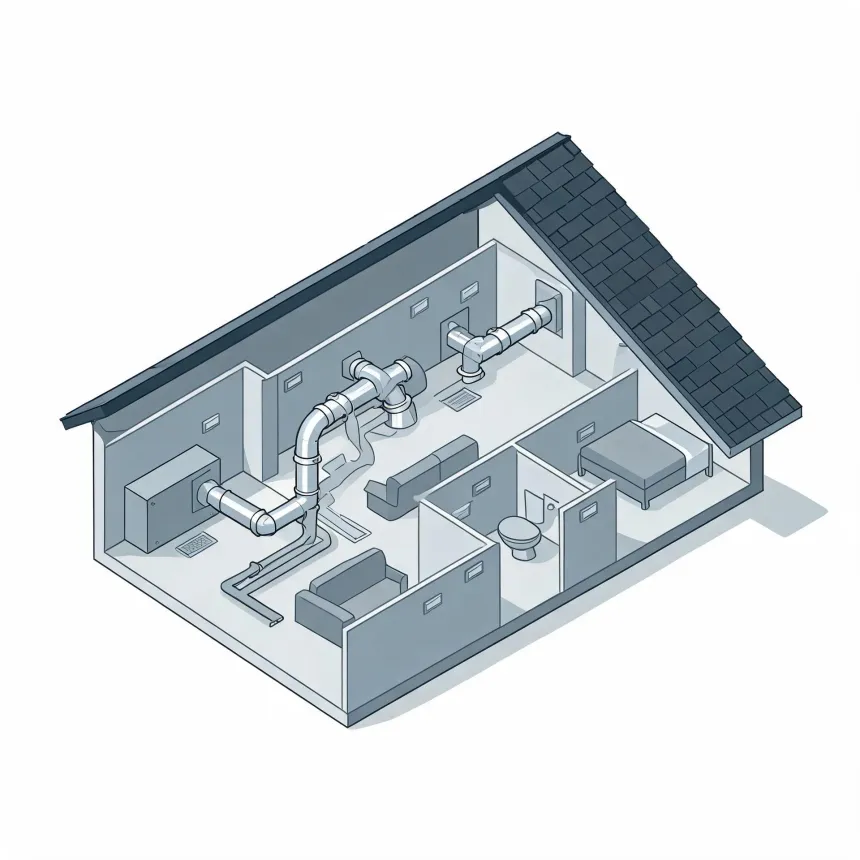
- A contractor uses specialized equipment to loosen dust and debris built up inside the ductwork, then pulls it out with a high-powered vacuum system connected at the vents. The supply and return ducts, the grilles, and the coils near the furnace or air handler usually get checked too, since dust settles there as well. The system is put under negative pressure during the process so what gets loosened goes into the vacuum instead of back into the house.