Heat Pump Installation in Lexington, SC
A new system here will heat from November through March and cool from May through September every year. Tell us about the house, and a licensed contractor who covers Lexington County will get in touch.
Tell us about the job
It takes about a minute.
Ten months of work a year for a Lexington County heat pump
Winter lows here average 36°F, so the heat pump isn't fighting deep freezes, but it still runs from November through March. Then it switches straight to cooling for summer afternoons that average 91°F, from May through September. Only two months a year, the system gets to sit idle.
A new split-system heat pump has to meet federal minimums of 14.3 SEER2 for cooling and 7.5 HSPF2 for heating. Most homes here heat with electricity, so when the power goes out, the heat goes with it. Lexington County sees far more damaging wind than winter storms, and in 2024 nearly half of South Carolina households lost power for at least 24 hours. Worth asking how the system you install comes back on when the power does.
- 5 months
- November through March, your system heats
- 5 months
- May through September, it cools
- 36°F
- the average winter night it heats against
- 91°F
- the average summer afternoon it cools against
NOAA nClimDiv, 1991–2020 normals
- Is a heat pump better than a furnace?
- A heat pump does something a furnace cannot. It cools your home in summer and heats it in winter, all from one system. A furnace only burns gas or uses resistance heat, so you would still need a separate air conditioner alongside it. Homes here need heat from November through March and cooling from May through September, so a system that covers both jobs is working most of the year. Whether it fits your house better than a furnace and AC setup depends on your ductwork and your current setup, and a contractor can walk through that with you.
- What's the difference between a heat pump and an air conditioner?
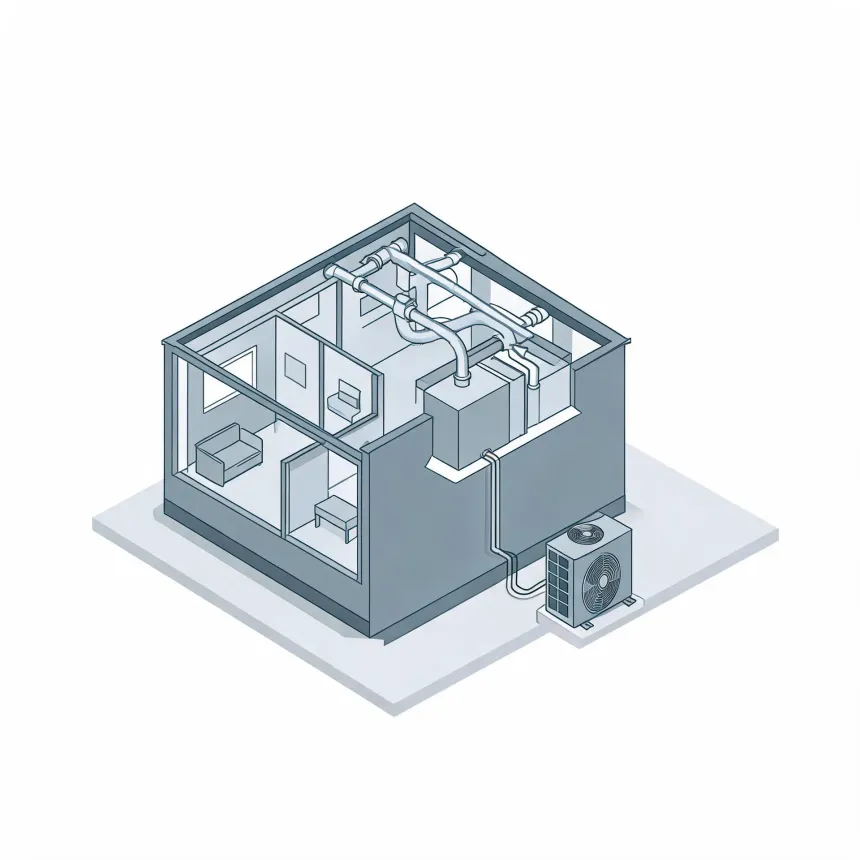
- An air conditioner only moves heat out of your home. A heat pump does that too, but it can also run in reverse and move heat into your home, which is how it heats in winter. Mechanically they share most of the same parts, a compressor, a coil outside, a coil inside. The difference is the reversing valve that lets a heat pump switch directions.
- Does a heat pump work in cold weather?
- Yes, a heat pump pulls heat from outdoor air even when it's cold, down to well below freezing. Winter nights here average 36°F, which is well within the range a heat pump handles without trouble. As outdoor air gets colder there is less heat to pull, so the heat pump has to run longer to keep up. Any heat pump sold new today has to meet a federal minimum of 7.5 HSPF2 for heating efficiency, so this is accounted for in how the equipment is rated and sized for a home.