Describe your dryer vent job, and a local pro who handles it gets in touch.
A dryer vent that runs long or has a lot of turns catches lint faster than a short, straight one. Most homes in Charleston County need that vent cleaned once a year. If yours vents up through two floors, or ties into a shared chase, check it twice a year instead.
You'll notice the signs before you know the cause. Clothes coming out hot to the touch but still damp. The laundry room warmer than it should be. The dryer running a second cycle just to finish what the first one should have handled. Each of those costs you time and runs up a power bill that's already high here.
A clogged vent does more than slow down laundry day. Lint buildup is the main reason dryers catch fire, and a vent that can't push air out pushes heat back into the machine instead, which wears out the parts faster than they should.
Finding out whether your vent needs attention now, or whether a year is still safe, means someone actually looking at the run you have. Not every house in Charleston or North Charleston or Mount Pleasant is built the same way, and the vent length and routing make the real difference, not the calendar alone.
Once you answer a few questions about your home, you're matched with a contractor who handles vent cleaning in your area. They'll reach out to you directly. From there, the question of how often your vent needs cleaning gets answered by somebody standing in your laundry room, not by a general rule. You don't have to track down who's available or who covers your part of the county. That part is done once you send the form.
How often should I clean my dryer vent in Charleston, SC?
You notice the top of the dryer feels warm, or a load takes longer than it used to, and you start wondering if the vent needs attention before it becomes a fire risk or a repair bill. You're not looking for a sales pitch, just a straight answer about how often this actually needs doing for a house like yours in the Charleston area.
Once a year, for most houses
Lint builds up inside the vent every time you dry a load. Over a year that adds up enough to slow the airflow, and a dryer that can't push air out properly runs hotter and takes longer to finish a load. That's true everywhere, but Charleston's heavy humidity gives lint more reason to clump and stick to the inside of the duct instead of blowing straight through. A short, straight vent run clears itself out more easily than a long one with several bends. If your dryer sits on an interior wall with a vent that travels a distance to reach outside, lint has more surface to catch on along the way, and once a year is the baseline to work from.
Vent clear and venting
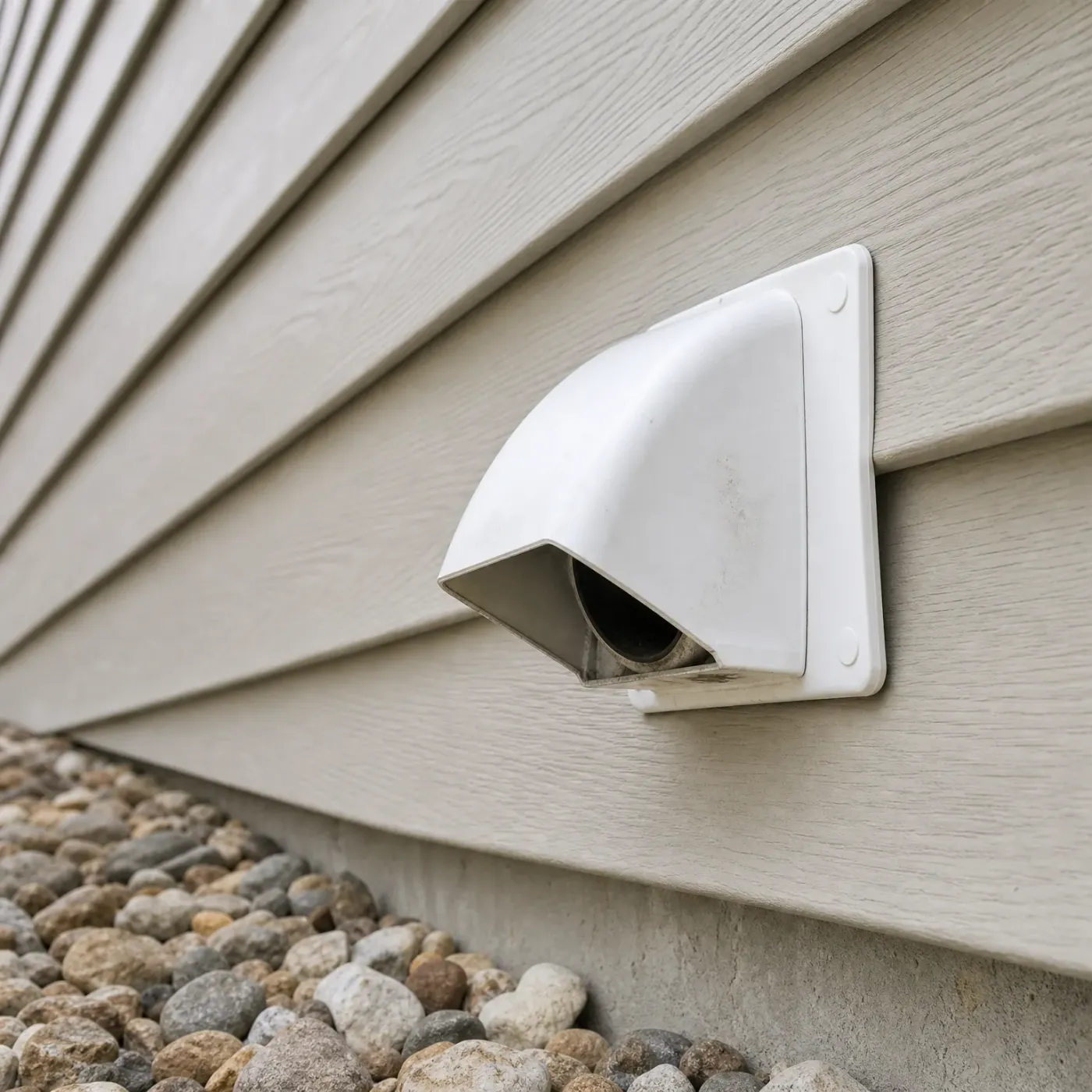
The cap sits flush against the siding and the flap hangs loose, ready to swing open with airflow. Air and moist heat push out fast, so a load dries in one cycle. Lint passes through the duct instead of building up behind the wall.
Vent clogged with lint
Lint has packed in around the flap, and the cap stays propped open instead of swinging shut between loads. Air barely escapes, so the dryer runs hotter and longer to finish the same load. That buildup is what a yearly cleaning clears out before it gets this bad.
What does your household mean for your dryer vent?
2.29 people per household on average
Charleston County households run 2.29 people on average, so most dryers here are working through several loads a week, not one or two.
Half the homes here were built by 1991
Half the homes in Charleston County were built in 1991 or earlier, which means the vent run was likely designed for a different dryer than the one you own now.
Power here costs 16.39 cents per kilowatt-hour
Power here runs 16.39 cents per kilowatt-hour, and a dryer pushing against a clogged vent pulls more of it to finish the same load.
ACS 2020-2024 · EIA-861 2025
The flap swings open on its own and sits loose when the dryer isn't running, letting air pass without resistance.
Lint has packed the hood solid and the flap can't fall shut, so the vent sits open to the weather year round.
The right pro for this job
Send the form and finding a dryer vent cleaner is handled.
Get matched with a pro who works on dryer vents in Charleston County.
A dryer that can't push air out pushes heat and moisture back into the room instead. In Charleston's humidity, that moisture has nowhere good to go. It sits in the laundry closet, it feeds the mildew smell a lot of homes here already fight in summer, and it runs up the power bill because the dryer cycles longer to get clothes dry. Lint packed behind the wall is the part you don't see, and it's the part that matters most. It's the fuel if heat builds up near the motor.
If you've kept up with cleaning and the warm top or the long cycle is new, that's worth a look sooner rather than later. Once you send the request, finding someone to look at it isn't on you anymore. A contractor who covers Charleston County gets your details and reaches out, matched to what your vent run and your house actually need.
Why lint catches so fast here
Lint is drier and lighter than it looks, and it moves with the airflow until it hits a bend. Every turn in the vent slows the air down a little, and that's where the first layer sticks. A straight shot to the outside wall stays clearer longer. A run that climbs through an attic or turns twice before it reaches the siding builds a lint layer in the elbows well before the rest of the duct shows any buildup.
What the airflow is supposed to do
A dryer pushes heated, damp air through the duct fast enough to carry lint along with it and out the hood. That only works if the path stays open. Once lint narrows the duct, the air moves slower, drops more lint as it goes, and the narrowing feeds on itself. A duct that's part blocked doesn't fail all at once. It loses airflow a little at a time until a load that used to take one cycle needs two.
Once a year for most vents in Charleston County, twice if yours runs long, climbs through two floors, or ties into a shared chase. That's the line to work from. A warm top panel, a load that takes two cycles instead of one, a musty smell in the laundry closet, any of those means don't wait for the next date on the calendar. The vent is one of the few things in the house where checking costs you ten minutes and ignoring it costs a lot more, in a slower dryer, a higher power bill, or worse. You don't have to figure out on your own whether what you're seeing is normal wear or something that needs attention now. Send the details through and a contractor who knows Charleston County vents, the long runs, the two-story stacks, the shared chases, will reach out and take it from there. That's one less thing on your list, not one more call to make.
Matched to your dryer vent job
One request and the dryer vent cleaning stops waiting on you.