



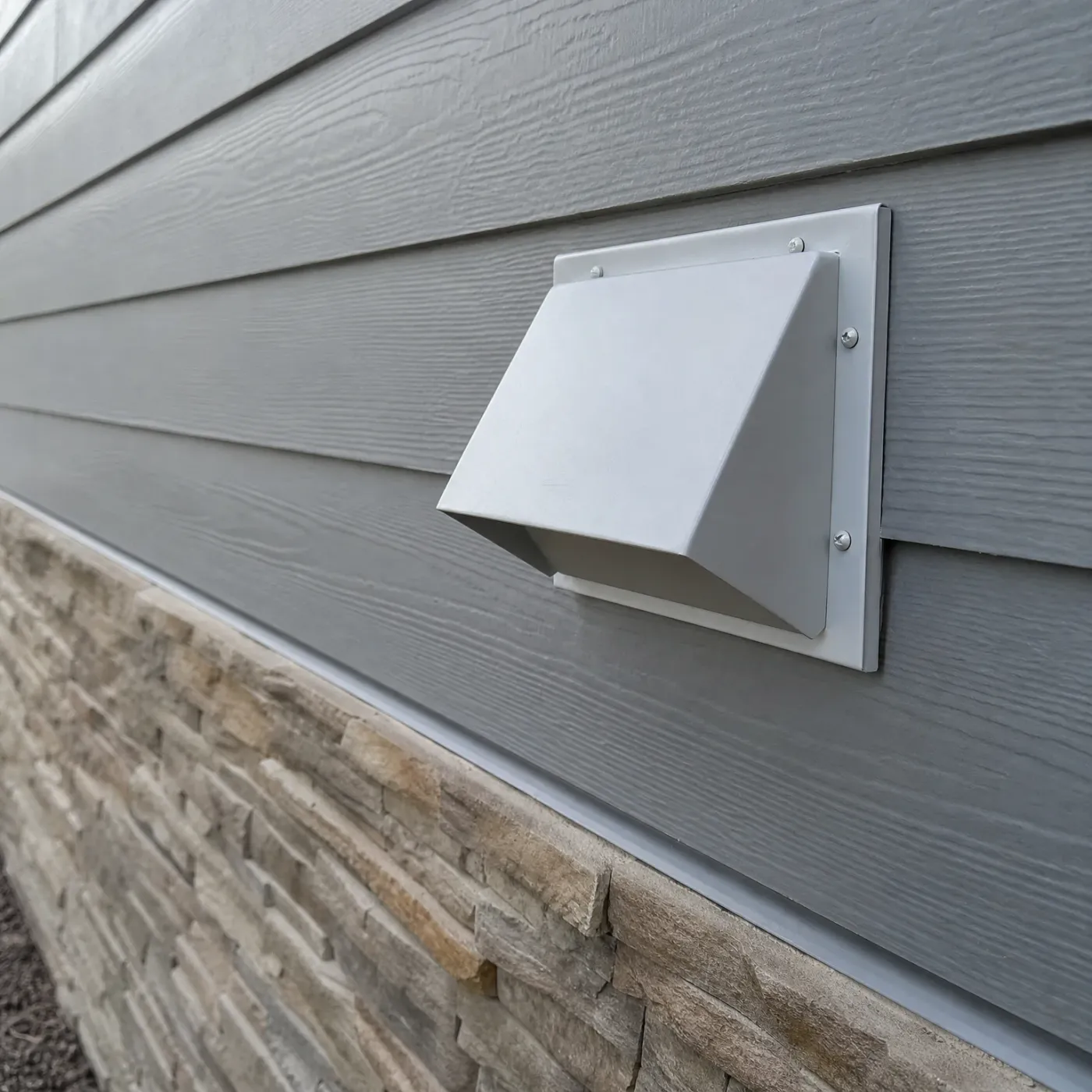
Vent hood clear
This is what a clear vent hood looks like. The louvers open when the dryer runs and close when it's off, and air and lint blow straight out to the siding, not back into the line. A hood like this is doing its job.
Skip searching for someone who cleans dryer vents in Richland County.
Fill out one formYes, a clogged dryer vent is a fire risk, and it's one of the more common causes of house fires tied to home appliances. Lint builds up inside the vent line every time you dry a load, and if the vent isn't clear, that lint can't escape outside the way it's supposed to. Heat from the dryer has nowhere to go either, so the air inside the vent gets hotter than it should. Lint catches easily, and a buildup near the dryer's heat source is what starts the fire. A clogged vent also makes your dryer run longer and work harder to get clothes dry, which adds more heat and more strain over time. If it's taking two or three cycles to dry a load that used to take one, or the outside vent flap barely moves when the dryer's running, that's a sign the line is restricted. Clearing it out removes the fuel and the heat buildup at the same time.




2.35 people per household on average
A household of 2.35 people here means loads most days of the week, and every load pushes more lint through a line that needs to stay clear.
Half the homes here were built by 1989
Half the homes in Richland County were built in 1989 or earlier. A vent that old has had three decades or more to collect lint in its bends and joints.
Power here costs 16.47 cents per kilowatt-hour
Power here runs 16.47 cents per kilowatt-hour. A dryer forcing air through a clogged vent uses more of it to finish the same load.
ACS 2020-2024 · EIA-861 2025
Lint sheds off wet clothes every time the dryer tumbles a load.
Airflow carries loose lint down the vent line toward the outside wall.
Lint catches on bends, screws, and seams instead of blowing clear.
Buildup narrows the line and traps more lint behind it.
You run a load and the clothes come out warm but not dry, so you run it again. The top of the dryer feels hot to the touch. The laundry room holds onto heat and a faint burnt-dust smell after a cycle. Lint turns up around the outside vent hood, or you notice barely any air coming out of it when the dryer's running. Any one of these means lint has built up somewhere between the dryer and the outside wall. Left alone, that lint is fuel sitting next to a heat source every time you do laundry, and it's how dryer vent fires start.


A dryer's whole job is to push hot air through wet clothes and send that heat back outside. When the vent line is clear, it does that in one pass. When it's restricted, the heat has nowhere to go, so it builds up inside the line and inside the dryer itself. Lint is the problem because of what it is: thin, dry fiber that catches a spark at a lower temperature than the wood, drywall, or fabric around it. The trap behind the dryer door catches some of it, but not all. The rest rides the airflow down the vent, and wherever it catches, on a bend, a screw, a seam, it starts to build. Gas dryers carry a second concern alongside the heat. A blocked vent doesn't just trap warm air, it can push combustion exhaust back into the house rather than out through the wall. And the motor turning the drum sits right next to that heat source, so a dryer running hotter than it should, for longer than it should, is working harder than it was built to.


The pro who gets in touch is licensed in South Carolina and works in Richland County.
Answer a few questions about the dryer vent cleaning and skip the search.
Asking costs nothing, and the choice to hire stays yours.
This is what a clear vent hood looks like. The louvers open when the dryer runs and close when it's off, and air and lint blow straight out to the siding, not back into the line. A hood like this is doing its job.

This is what stops a fire from having anywhere to go. Lint has packed the cover solid, so the louvers can't open and the dryer has nowhere to push the heat it makes. That buildup sits right at the opening, catching whatever heat and gas the dryer is trying to vent outside.
It sounds like a stretch until you picture it. The dryer keeps running, keeps heating, and all that heat is supposed to leave through the vent. If it can't, you want to know what actually happens inside that line, not just that it's possible.
A clogged vent traps heat that normally escapes outside, so the dryer runs hotter than it was built to run. Lint sitting in that heat doesn't need an open flame. It's thin and dry and catches at a lower temperature than a sheet of paper. Once it ignites inside the line, the fire has a straight path of more lint to burn through, and it's hidden behind a wall, where nobody sees it start. That's what separates a dryer vent fire from most appliance fires: the fuel is already packed into the line before the heat ever gets high enough to light it.

Air passes straight through the mesh and out past the siding. The louvers aren't fighting anything behind them, so heat and moisture clear the wall every time the dryer runs a load.

Lint and what looks like nesting material have sealed this opening. Nothing is leaving through here anymore, so the heat from every load has to go somewhere else in the line.
With 2.35 people in the average Richland County household, that dryer isn't sitting idle. Towels, work clothes, school clothes, sheets. Each load sends more lint down the same line, so a vent that's slow to clear now only gets worse from here.
ACS 2020-2024

It's almost nine on a Tuesday and you still haven't moved the towels. You ran them through twice already, and they're still damp enough to feel cold against your arm when you pull them out. The dryer top is warm under your hand, warmer than it should be after just two cycles. You leave the heap sitting there on the lid and crack the laundry room door open, because the air in there feels thick, warmer than the rest of the house, with that faint scorched smell that wasn't there last month. Tomorrow's another load. Right now you just want to go to bed and deal with it after work.

A clogged dryer vent is a fire risk, not a maybe. Lint builds up in the line, the dryer runs hotter than it should, and lint catches fire at a low temperature. That's true in any house in Richland County that runs a dryer, and with 2.35 people in the average household here, that dryer runs most days.
Finding someone to clear that line shouldn't mean another evening on the phone. You'd have to search around, call a few places, explain the same thing about the warm dryer top and the longer dry times more than once, then sit with a stack of quotes trying to figure out who's actually worth calling back. This page sends the job to one licensed contractor local to Columbia, someone who clears vents like yours all year and knows what a packed hood looks like before they get up on the ladder. You get one call, not five.


A licensed pro who works in Richland County gets your request.