
Air moving freely
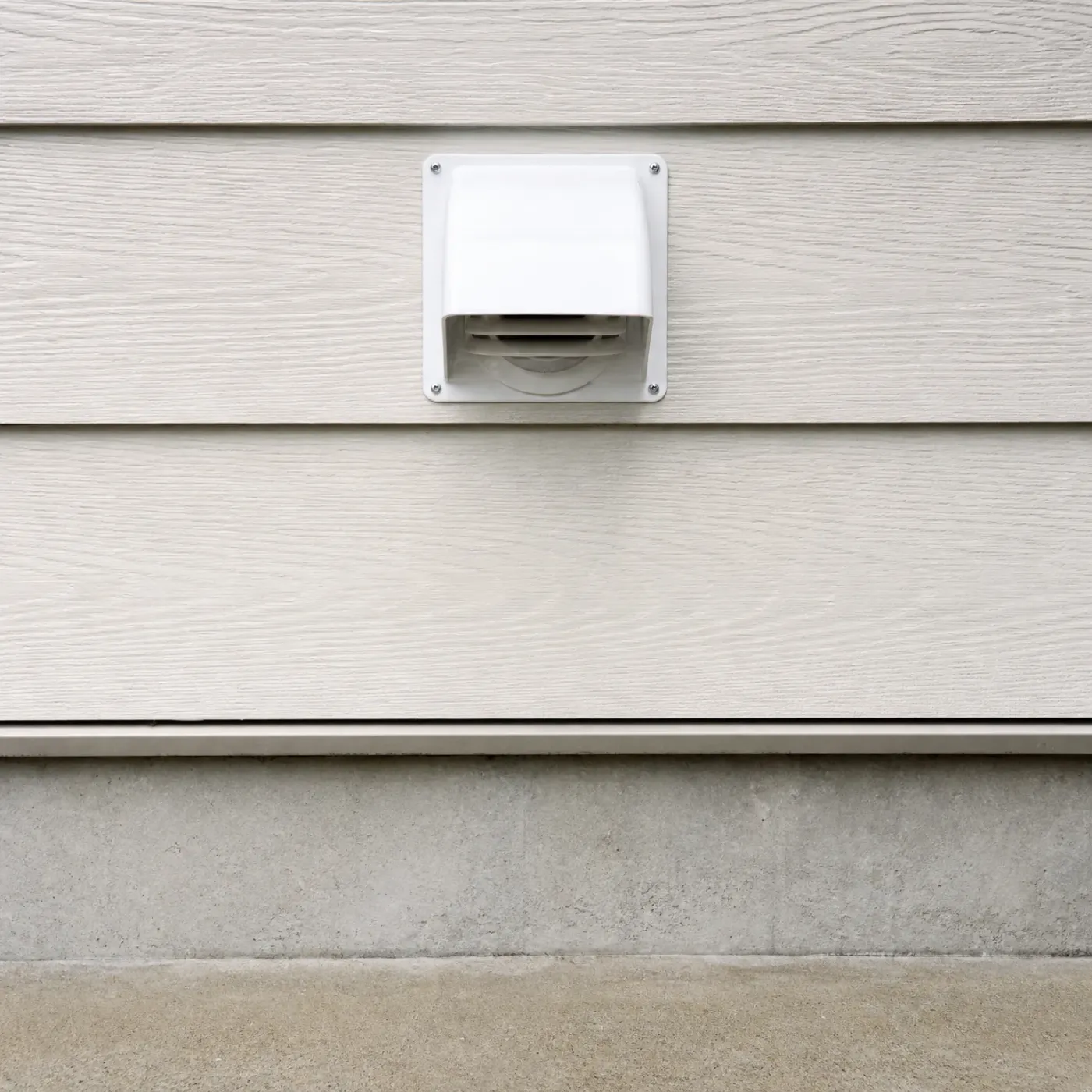
The cap sits flush against the siding and the louvers swing open as soon as the dryer starts. Air pushes out in a steady stream and the flap falls shut again once the cycle ends. Nothing slows the exhaust down on its way outside.
A dryer that runs two or three cycles to get clothes dry is almost always short on airflow, not heat. Lint builds up inside the vent run, in the duct behind the machine, or in the hood flap outside, and the dryer ends up pushing hot, damp air against a wall instead of out of the house. In Columbia's humidity, that trapped moisture has less room to escape than it would somewhere dry, so a vent that's half blocked shows up faster as longer dry times. A full vent also makes the dryer run hotter and longer than it should, which wears the heating element and the motor and raises your power bill, and power here isn't cheap. Check the outside hood while the dryer runs. If the flap barely opens or the airflow feels weak, that's your answer. A vent cleaning clears the path so the dryer can push air through in one cycle again, the way it did when it was new.
2.35 people per household on average
With 2.35 people in the average Richland County household, laundry runs often enough that a blocked vent turns into three cycles a week, not one.
Half the homes here were built by 1989
Half the homes in Richland County were built in 1989 or earlier, and a vent run that old has had decades to pack with lint before anyone checks it.
Power here costs 16.47 cents per kilowatt-hour
At 16.47 cents per kilowatt-hour, a dryer running a second or third cycle to finish one load adds up fast on the power bill.
ACS 2020-2024 · EIA-861 2025

It's a Tuesday night, almost eight, and you've run the same load three times now. The towels on top of the dryer are still warm but not dry, heavy in your hands when you pick one up to check. Outside it's thick and humid, the kind of Columbia evening where the air barely moves, and the laundry room feels the same way. You press the towel to your cheek, damp still, and look at the dryer like it owes you an explanation. The light above the washer hums. Somewhere behind the machine, lint is doing the work your exhaust vent should be doing. You start the load again anyway, because it's late and the towels need to be dry by morning.
You've felt it already. The dryer runs its full cycle and shuts off, and the clothes inside are warm but not dry, so you set it going again. The top of the machine gets hot to the touch and the room warms up faster than it used to, almost like a space heater is running next to the laundry basket. Open the door partway through and the air that comes out is heavier and wetter than it should be this late in a cycle. Check the outside vent hood while a load is running. If you barely feel air moving against your hand, the exhaust isn't leaving the house, it's backing up into the duct and into the drum. Run that way long enough and the lint sitting in the line is a fire risk, not just a slow dryer.
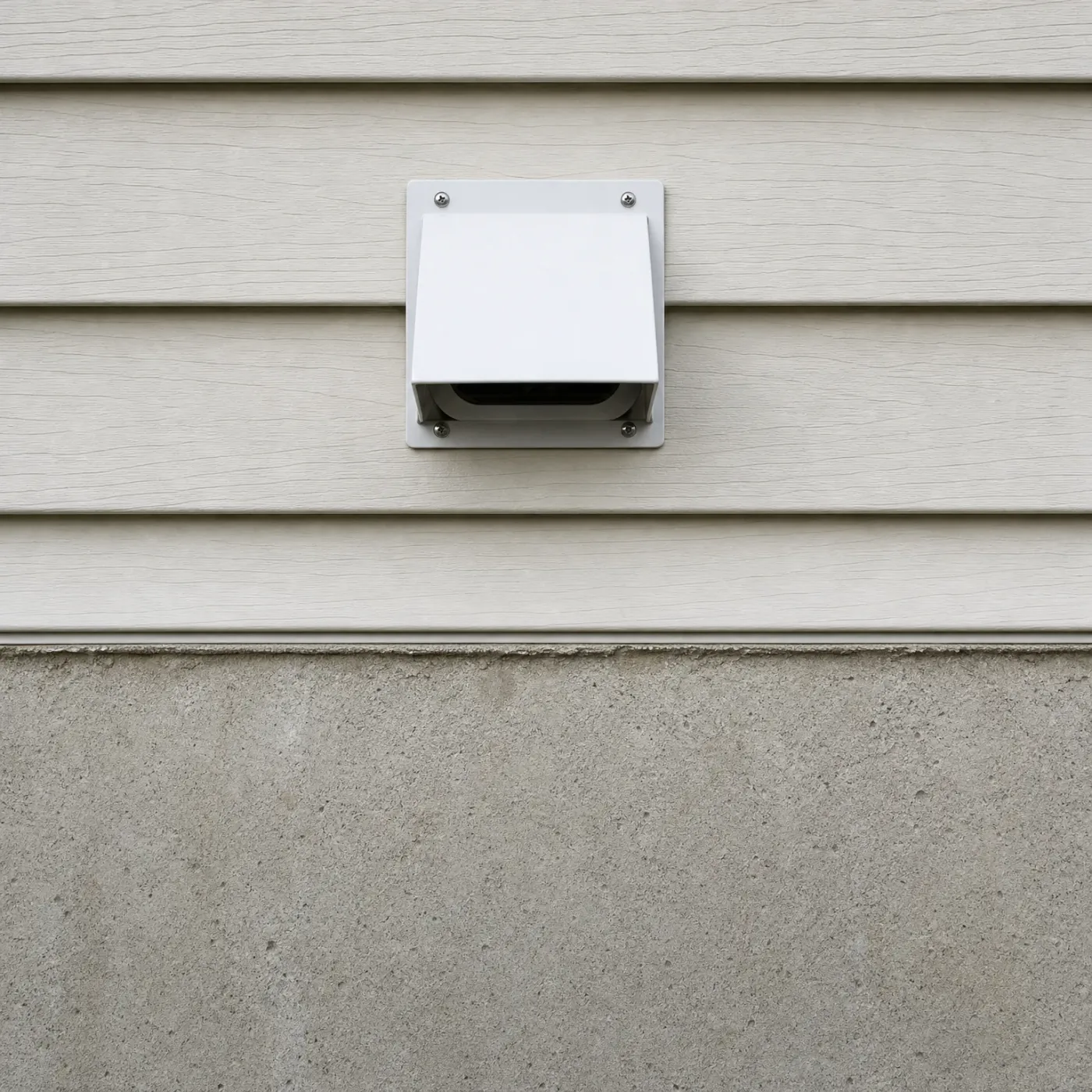
The cap sits flush against the siding and the louvers swing open as soon as the dryer starts. Air pushes out in a steady stream and the flap falls shut again once the cycle ends. Nothing slows the exhaust down on its way outside.
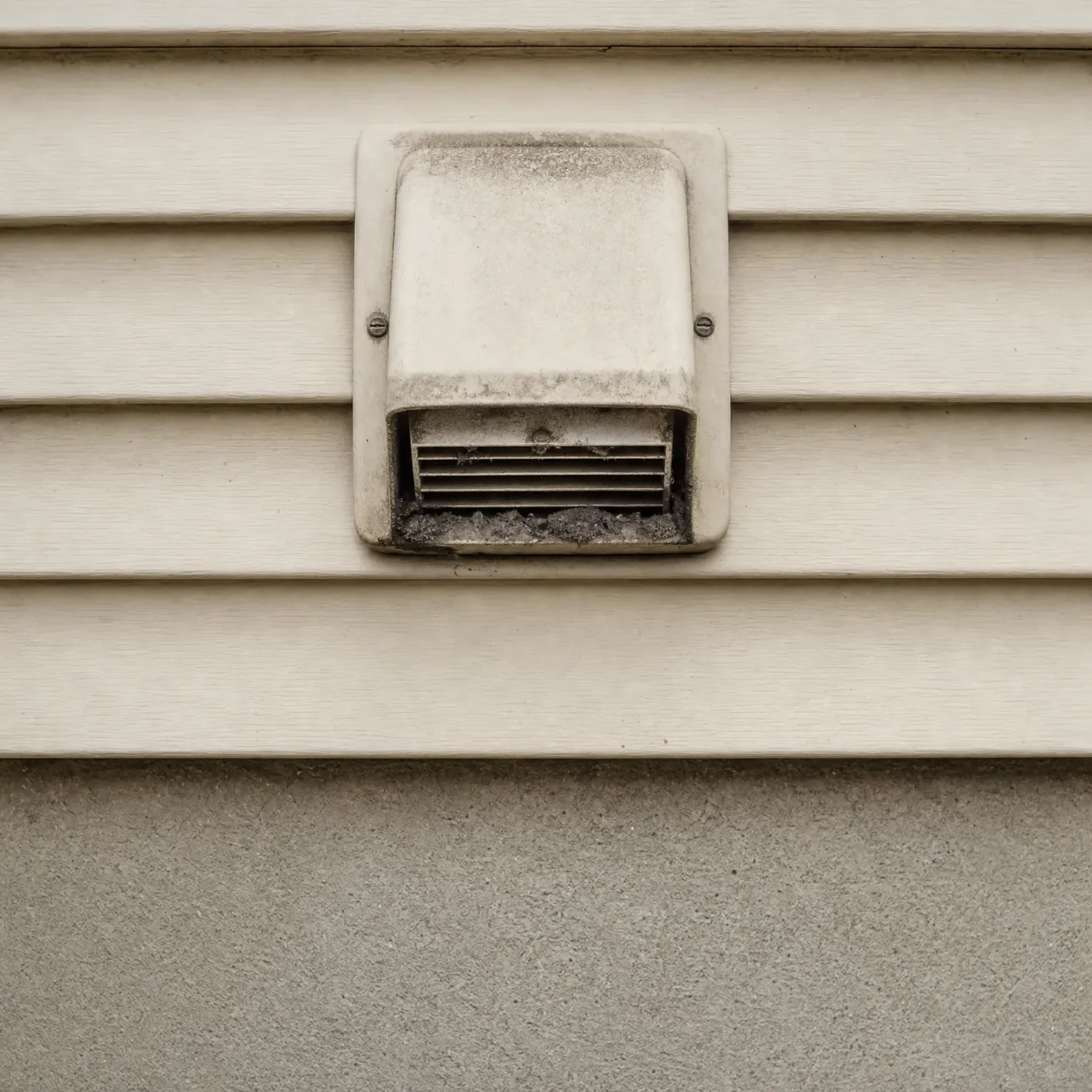
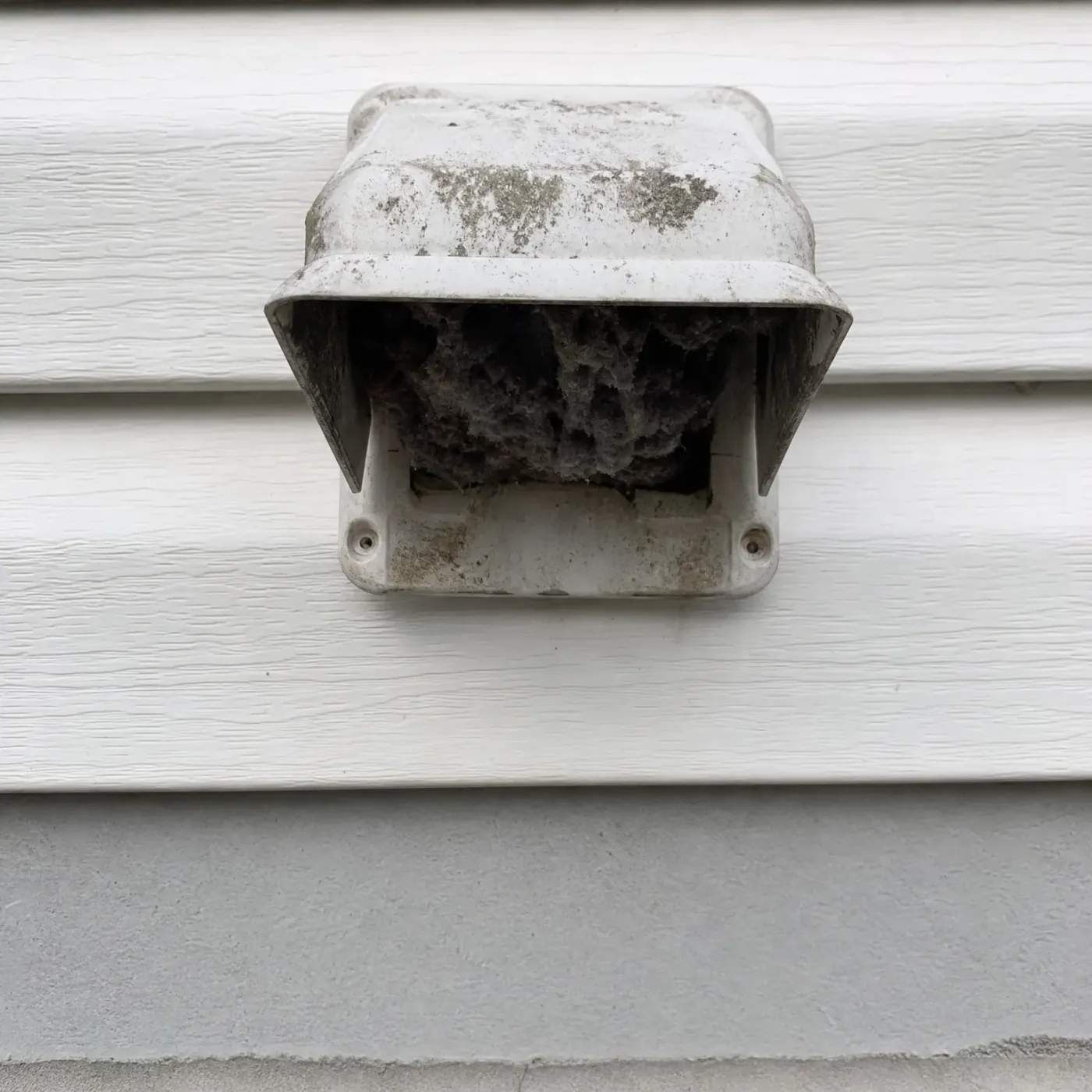
The louvers are packed shut with lint and dust, flat against the hood instead of swinging open. Exhaust air has nowhere to go, so it backs up into the duct and the dryer runs longer trying to push past it. The buildup you see outside is a sign of what's caked inside the vent.
You've cleaned the lint trap every single time, so it doesn't make sense that the vent would still fill up with lint. But the trap only catches what passes through it while clothes are tumbling, and a lot of lint never makes it that far. It rides the exhaust air out of the drum and settles along the way, especially anywhere the duct bends or runs flat instead of sloping down toward the outside wall.
The lint trap catches maybe three quarters of what comes off a load, and the rest travels down the duct with the hot air. Every bend in the run gives it a place to slow down and stick to the metal, and if the duct runs flat for any stretch instead of angling down, lint settles there instead of riding the airflow out. It keeps building in thin layers, cycle after cycle, until the duct is narrower than it was and the dryer has to push harder to move the same air. In a house where laundry runs several times a week, that buildup doesn't take long to turn into a real blockage.




A dryer running three cycles a night costs you time you don't have, and the heat it throws into the laundry room while it fights a clogged vent runs the power bill up in a house that already heats and cools on electricity. Finding someone to clear it out means calling around, explaining the same thing to each one, and sorting through quotes that are hard to compare because you don't know what a clean vent is even supposed to look like. That's the part worth handing off. You already know what's wrong, the airflow is blocked somewhere between the machine and the outside wall, and what you need now is someone licensed to get in the duct and the hood and clear it properly. Submit the request and a contractor who works on vents in your area takes it from there. The towels stay warm and heavy in the meantime, but that part ends once the vent is actually clear.
A dryer moves a few hundred cubic feet of air a minute through the drum and out the vent. That airflow is what carries moisture out of the house. It isn't the heating element drying your clothes by itself; it's the heat combined with that air exchange, pulling humid air out and pulling in replacement air. Block the path with lint and the drum fills with hot, damp air that has nowhere to go. The heating element keeps firing, the drum keeps turning, and the moisture just sits there. That's why a clogged vent shows up as a long cycle before it shows up as anything else.
A dryer fighting a blocked vent runs its heating element far longer than it was built to, cycle after cycle. The motor and belt keep working against the trapped heat too, since the drum never gets the chance to shed it. Over months of three-cycle loads, that extra strain shows up as a thermal fuse that trips, a belt that wears thin, or a motor that burns out early. The lint causing all of it sits behind the wall or inside the vent hood outside, not in the trap you clean every load. Clearing it is what gets the dryer back to drying clothes in one cycle instead of three.
With 2.35 people in most Richland County households, there's a load in the dryer most days of the week. A vent that's already slow to clear has to handle that pace, and the lint behind it builds faster than a once-a-week wash would ever cause.
ACS 2020-2024
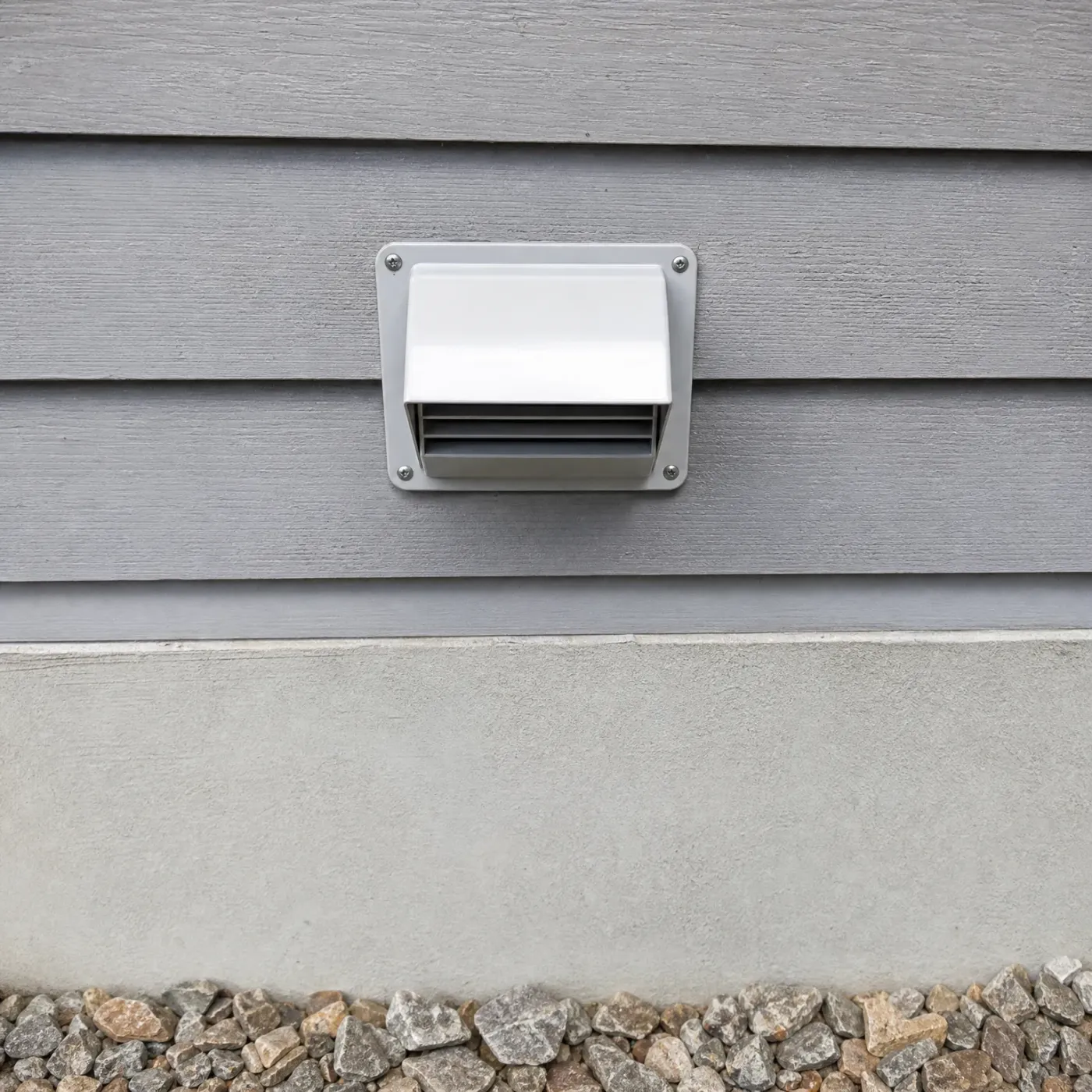
The cap sits flush against the siding and the louvers hang open while the dryer runs. Exhaust pushes out steady and the flap drops shut again once the cycle ends. A load dries in one pass because the air has somewhere to go.
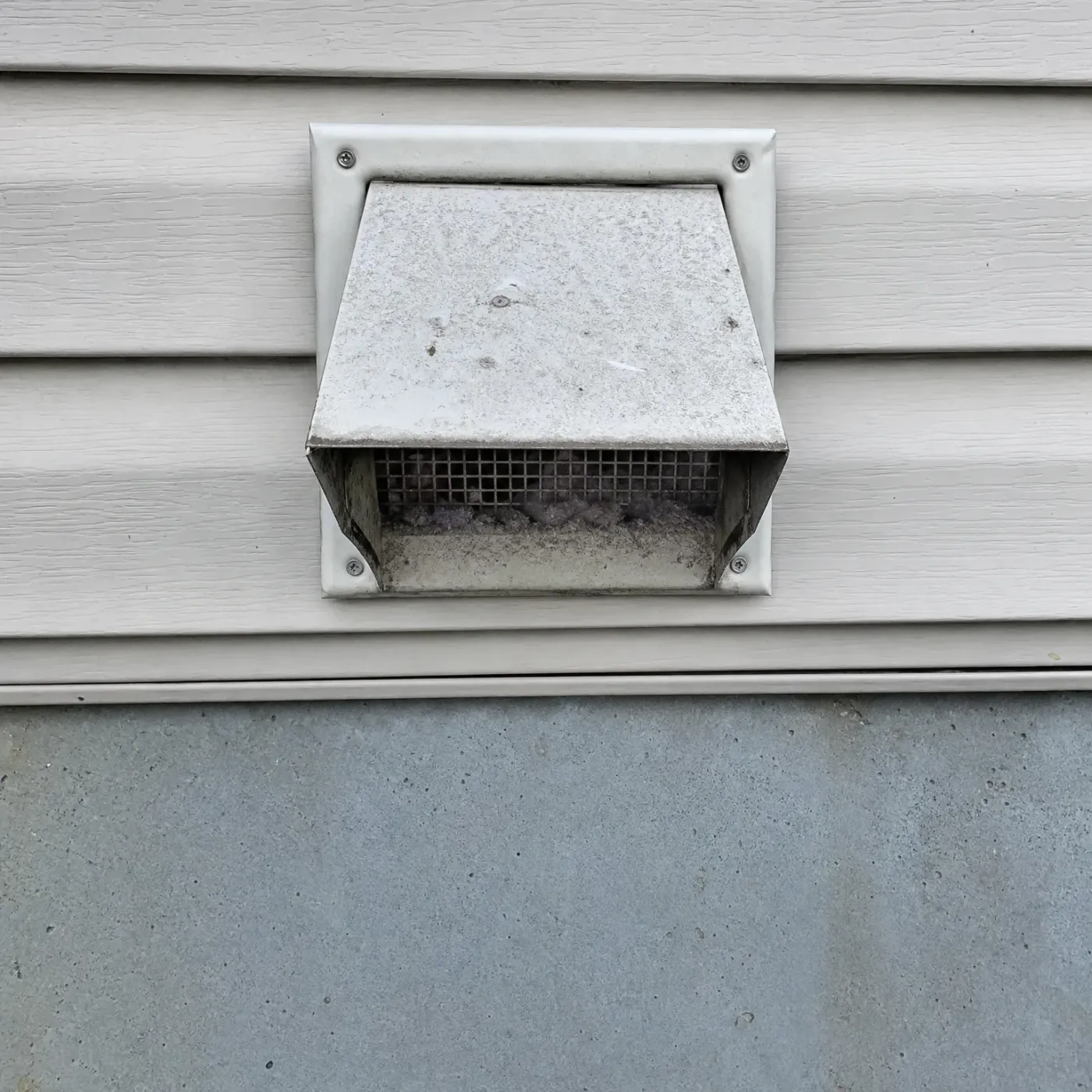
The screen behind this cap is coated solid, and air has nowhere to push through. The dryer heats the drum the same as always, but the moisture it's supposed to carry outside has nowhere to go, so the load comes out warm and still wet.

A dryer taking two or three cycles to dry a load almost always comes down to a blocked vent, not a broken machine. The air that should carry moisture outside is getting stopped somewhere between the drum and the hood, and until that path is clear, the dryer will keep running longer than it should and putting more heat into the room than it needs to.
You don't have to track down who clears vents or explain the three-cycle loads and the warm towels more than once. Once you're matched with a contractor who works on vents like yours, they'll reach out and take it from there, and you can get back to running a load once and having it come out dry.



Find a dryer vent cleaning pro in Richland County
One form replaces the calls you'd make to find a dryer vent pro.
