
A vent that's clear
Air moves straight out through the hood with every load. The flap opens when the dryer runs and closes when it's done. No lint catches on the screen, so nothing builds up between cleanings.
Your request goes to a Greenville County pro who takes dryer vent jobs.
Get matchedYes. A clogged dryer vent is one of the more common causes of house fires, and that risk is real here in Greenville. Lint builds up inside the vent line every time you run a load, and if it isn't cleared out, it blocks the airflow the dryer needs to push hot air outside. The heat has nowhere to go, so it backs up into the dryer itself, and the lint trapped in the line is exactly the fuel that heat needs. Summers here run long and muggy, which means your dryer may already be working against damp air just to get clothes dry, running longer and hotter on top of a vent that's already restricted. A dryer that takes two or three cycles to dry a load, or feels hot to the touch at the end of a cycle, is telling you the vent isn't clearing the way it should. The fix isn't complicated, but it does mean getting the full length of the vent line cleared, not just the lint trap you empty after every load.
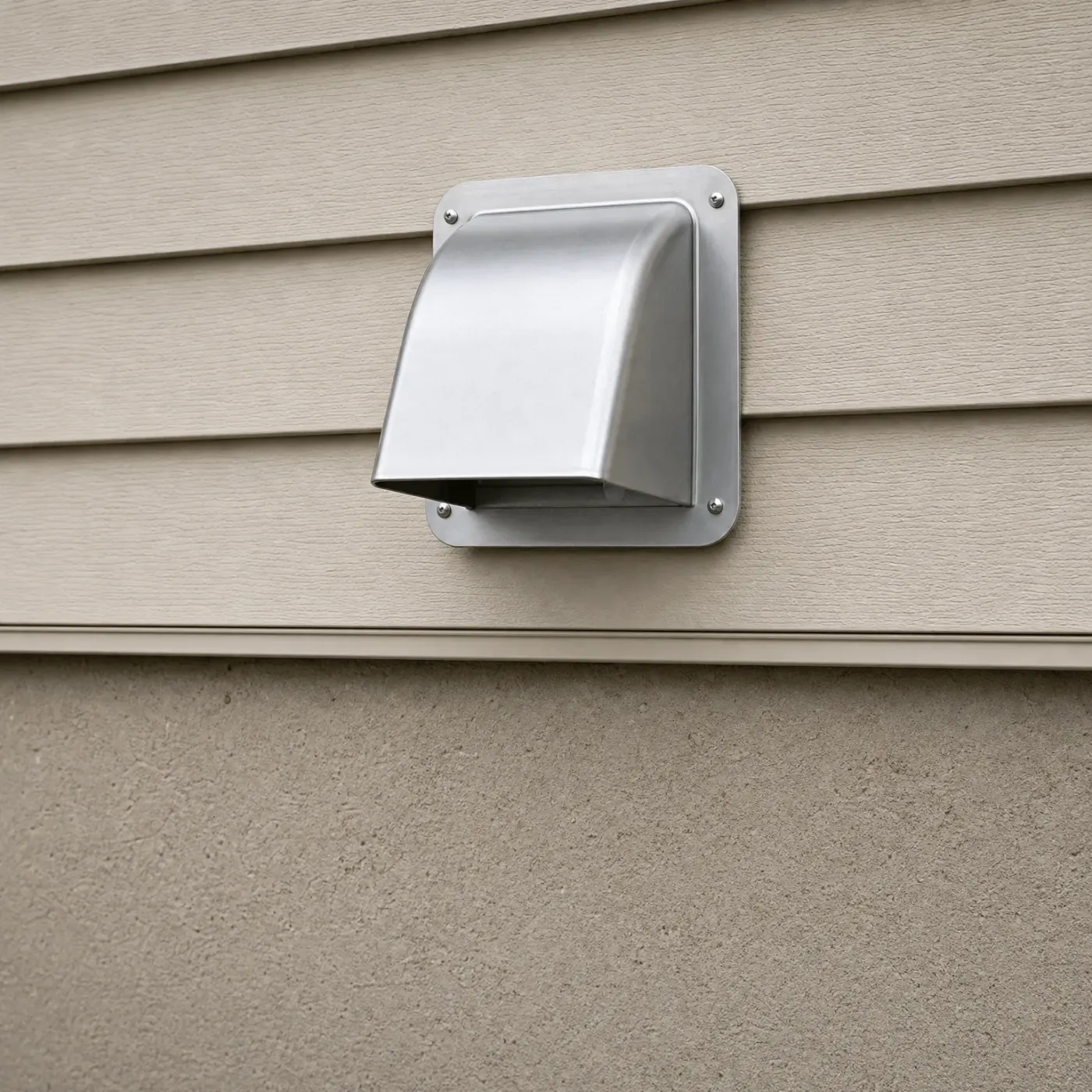
Air moves straight out through the hood with every load. The flap opens when the dryer runs and closes when it's done. No lint catches on the screen, so nothing builds up between cleanings.
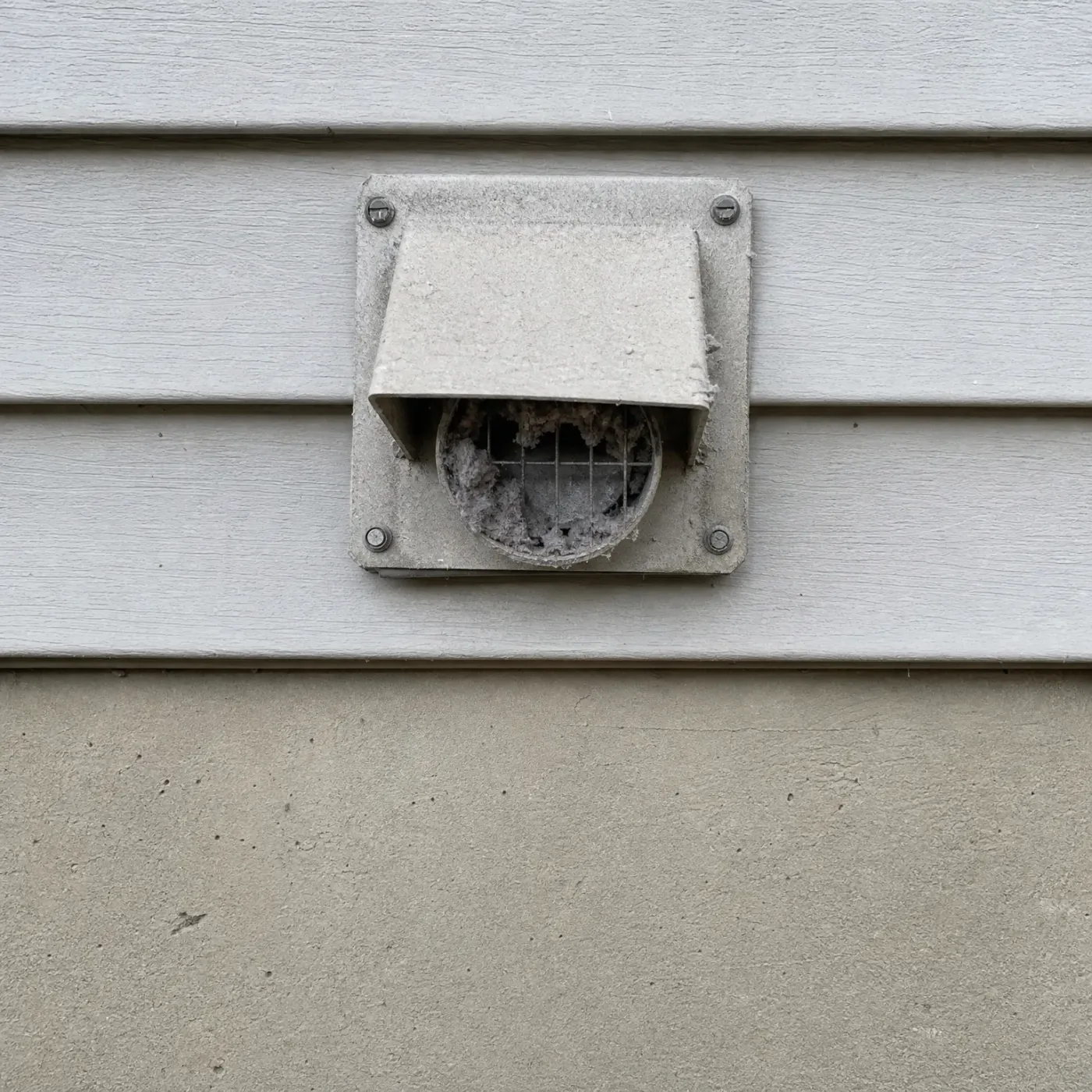
That mesh screen is packed with lint, and air can barely get past it. The dryer runs hotter and longer to dry the same load, and the heat has nowhere to go but back into the line.
2.43 people per household on average
With 2.43 people in the average household here, that dryer is running loads most days of the week, and every load leaves lint behind in the vent line.
Half the homes here were built by 1992
Half the homes in Greenville County were built in 1992 or earlier. A vent that old has had three decades to pick up dents, sags, and lint nobody's cleared.
Power here costs 14.44 cents per kilowatt-hour
Electricity here runs 14.44 cents per kilowatt-hour, about typical for the area. A clogged vent makes the dryer run longer to dry the same load, so that rate adds up on your bill.
ACS 2020-2024 · EIA-861 2025
Lint is cotton and synthetic fiber, dried out and packed loose. It ignites easier than paper. The heating element in your dryer sits right at the start of that vent line, so hot air passes straight through the lint that collects along the duct walls. In a clear vent, that air keeps moving out through the hood and the lint stays low. In a blocked one, heat has nowhere to go. It builds up around the element and around the lint itself until it reaches the point of ignition. That is the mechanism behind most dryer fires, not a wiring fault or a bad part.
Most dryer vent fires start at the back of the machine or just inside the wall, not out at the hood. That's where lint collects first, closest to the heat source, and it's the stretch a homeowner can't see without pulling the dryer out. A screen that looks clean at the hood tells you nothing about what's packed in the first few feet of duct. Flexible vinyl or foil duct, if your home still has it, traps lint in its ridges worse than smooth rigid metal does, which is part of why older installations carry more risk than newer ones.




The dryer takes two or three cycles to do what one used to do. You open the door after a cycle and the clothes are still damp, maybe warmer than usual. The top of the dryer feels hot to the touch. The laundry room picks up a burnt dust smell, especially partway through a load. Outside, the vent hood flap barely moves, or it doesn't move at all. Any one of these on its own might not mean much, but a few of them together in the same week mean the vent line is blocked somewhere between the dryer and the hood.
A blocked vent traps heat against packed lint right next to the dryer's heating element. That's where house fires start. Beyond fire risk, a clogged vent makes the dryer work harder for longer, which shortens the life of the heating element and the motor. Carbon monoxide is a separate concern for gas dryers, since a blocked vent keeps combustion byproducts from venting outside the way they're supposed to. None of this depends on how old your dryer is. It depends on how long lint has been building up in that line without anyone clearing it out.


You've already seen what a blocked vent can do and what it looks like in your own laundry room. Finding someone to clear it is its own job: searching for a contractor who does this kind of cleaning, calling a few, describing the same symptoms each time, then weighing quotes that aren't quite comparable. That's the part worth skipping. Request a dryer vent cleaning here and the search, the calls, and the back and forth go away. A load that used to take one cycle and now takes three isn't a quirk of the machine. It's lint sitting where hot air has to pass, in a house in Greenville County where that dryer runs most days of the week. The vent either carries that air out or it doesn't. Getting it looked at now is a smaller thing to deal with than waiting to find out which one yours is doing.

The dryer runs a load in under an hour, same as it did the day it was installed. Air moves out through the hood fast enough that you can feel it from a few feet away. The laundry room stays close to room temperature during a cycle. Nobody's thought about the vent since the last cleaning, because there's been no reason to.

Every load adds a little more lint to what's already packed in the line, and the dryer works harder to push air through it. Cycles stretch longer, the unit runs hotter than it should, and the hood outside barely stirs when you check it. None of this fixes itself. The buildup only goes one direction until something clears it out.
With 2.43 people in the average Greenville County household, that dryer isn't running once a week. Most houses this size put it through a load most days, and every one of those loads packs a little more lint into the vent line between cleanings.
ACS 2020-2024
The dryer doesn't know the vent is blocked. All it knows is the temperature of the air coming back across the thermostat near the element. That thermostat is what tells the element to cut off once the air gets hot enough, then kick back on once it cools. With a clear vent, that happens on a normal rhythm, a few times a cycle. With a clogged one, the hot air that should be leaving through the hood instead backs up into the drum and across that thermostat, so it reads hot sooner and shuts the element off faster, then back on faster once the trapped heat drifts enough to cool it. That faster cycling is wear the thermostat and the high-limit switch behind it aren't built to take over and over. Eventually one of them gives out. If the thermostat fails, you lose heat or lose the cycle entirely, which is an inconvenience. If the high-limit switch fails stuck closed, there's nothing left to stop the element once the thermostat has already missed its job. The element keeps putting out heat with little or no air moving past it to carry that heat out of the duct. The lint already packed against that clog is sitting right there in the heat with nowhere to go either. That's the point where it catches, right at the blockage, not at the dryer itself. The outside hood flap is the last check anyone has that air is actually moving, and a flap that's stuck or a duct that's crushed somewhere in the wall can mask a clog for a long time before anyone notices.


The vent stays clear through every load. Lint has nowhere to collect, airflow stays strong, and the fire risk that comes with a blocked line never builds.
Lint packs in a little more with every load until the vent is choked. That buildup sitting against a heat source is what starts dryer fires.

A blocked vent traps heat where lint can catch, and that's true whether the house is new or old, the dryer gas or electric. You've seen what that buildup looks like and what it does to a cycle. The fix is clearing the line out before it gets to that point.
Getting there means finding a contractor who does this kind of cleaning, which usually means calling around and describing the same problem more than once. You can skip that part. Answer a few questions about your house and your dryer, and a contractor who handles vent cleaning in Greenville County will reach out to you directly, already knowing what you're dealing with.


A local pro for your dryer vent cleaning



