





A tidal marsh of tall green grass with a narrow waterway at lower left and a cluster of moss-draped trees on a small rise in the distance under a pale blue sky.Let a pro reach out

Dryer taking too long to dry in Spartanburg, SC

Send the form and the dryer vent cleaning stops sitting on your list.

A load that used to take forty minutes is now going an hour and a half, maybe two, and it still comes out damp at the end. That usually means the vent, not the dryer. Lint builds up inside the duct and on the hood flap outside, and the air the dryer needs to push out has nowhere to go. The drum keeps turning but the moisture just sits in the clothes.

In Spartanburg, long sticky summers make this worse. The air outside is already heavy, so a vent that's half blocked has even less room to clear the extra moisture a load of wet laundry puts into it. Winter doesn't let up either. Most homes here heat with electric, and a clogged vent means the dryer runs longer to finish a load, which shows up on that electric bill whether you notice it or not.

A blocked vent is also the main reason dryers run hot to the touch and shut off mid-cycle. The exhaust has to go somewhere, and if it can't get outside fast enough, heat builds up where it shouldn't.

You could spend the next few days calling around, asking neighbors who they used, checking reviews, explaining the same problem five different times to five different people before anyone shows up. Or you could send the form below and let that part be done. You won't need to track down a contractor or sort through quotes yourself. Someone who does this work will have what they need from you already, and the search part of this stops being yours to carry.

A dryer that runs a full cycle and leaves clothes still damp is almost always fighting a blocked vent, not a broken machine. Every dryer needs a clear path to push hot, moist air outside. When lint packs the duct or the outside hood flap gets clogged, that air has nowhere to go, so the dryer keeps heating and tumbling without actually drying anything. In Spartanburg, where summers run long and muggy, a sluggish vent means more moisture stays trapped in the line to begin with, so the problem shows up faster than it would somewhere drier. Check the outside hood while the dryer runs. If the flap barely moves or you feel little to no air coming out, the vent is restricted somewhere between the dryer and the outside wall. That restriction is also a fire risk, since trapped lint is what dryer vent fires feed on. Clearing the duct, not replacing the dryer, is usually what fixes the long drying times.

A smiling bearded man in a dark long-sleeved shirt sits on a brown leather sofa in a living room, with a large glass bowl of popcorn on a table in the foreground and a houseplant and doorway behind him.
A smiling man with gray-streaked hair and a beard in a dark blue sweater reclines on a sofa in a living room with a lit wood stove, shelves, wicker baskets and a bowl of popcorn on a table.
A smiling bearded man in a dark plaid shirt sits on a green couch beside a cushion and a wooden bowl of popcorn, with a blurred kitchen and living area behind him.
A smiling bearded man in a dark green henley shirt sits on a gray couch in a living room with a bookshelf, lit lamp, houseplant and framed picture behind him, and a bowl of popcorn in the foreground.

A dryer dries by pushing hot, wet air out through the duct. When lint narrows that path, the air has nowhere to go, so the dryer runs hotter and longer trying to force a full load dry. The thermostat keeps cycling the heat on and off, chasing a temperature it can't hold steady, which is why a load that should take under an hour stretches toward two. Outside, the hood flap tells you a lot. It should swing open when the dryer's running and close flat when it's off. A flap that sags open or won't move at all usually means lint has built up right behind it. The shape of the duct matters too. Rigid metal lets air move straight through, while flexible foil or plastic sags and gives lint a place to catch at every bend. Every extra foot of run and every turn past the first couple cuts into how much air makes it outside at all, and a packed duct sitting against a hot element is how dryer fires start.

What's Actually Happening Inside the Vent

  • A clogged vent forces the dryer to run hotter and longer, and its thermostat cycles the heat on and off trying to hit the same temperature.
  • Lint is flammable, and a duct packed with it against a hot heating element is the most common cause of home dryer fires.
  • The outside hood flap should swing open freely when the dryer runs and snap shut when it stops, not hang loose or stay stuck.
  • A rigid metal duct moves air better than the flexible foil or plastic kind, which sags and catches lint at every bend.
  • Every extra foot of duct and every bend past the first two cuts how much air actually reaches the outside.
  • A dryer venting properly finishes a load in under an hour and the air coming out the hood outside should feel strongly warm, not weak.
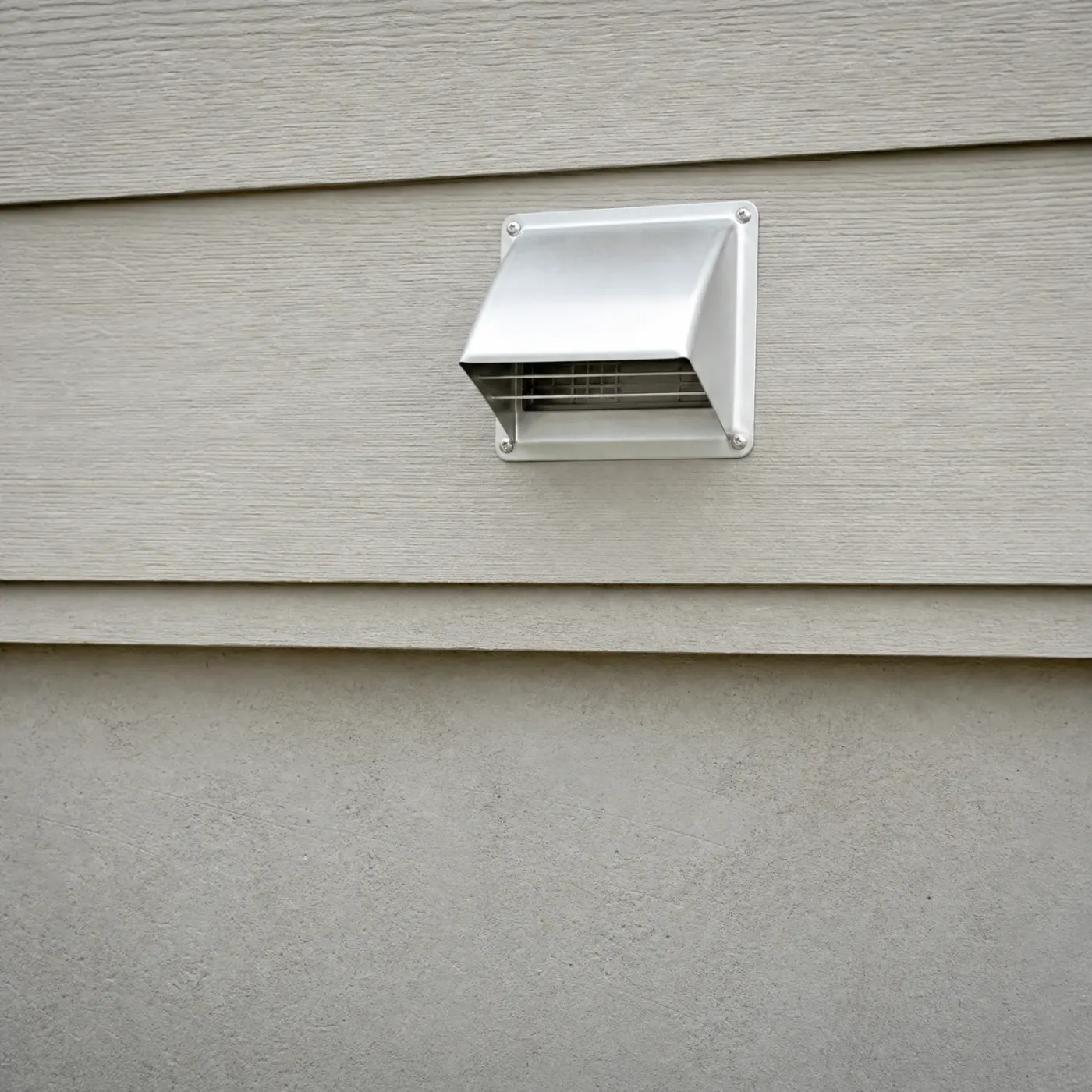
A white hooded dryer vent with a screened opening mounted on beige horizontal lap siding.
A clear vent lets the dryer push hot air out fast, so clothes dry in one normal cycle.
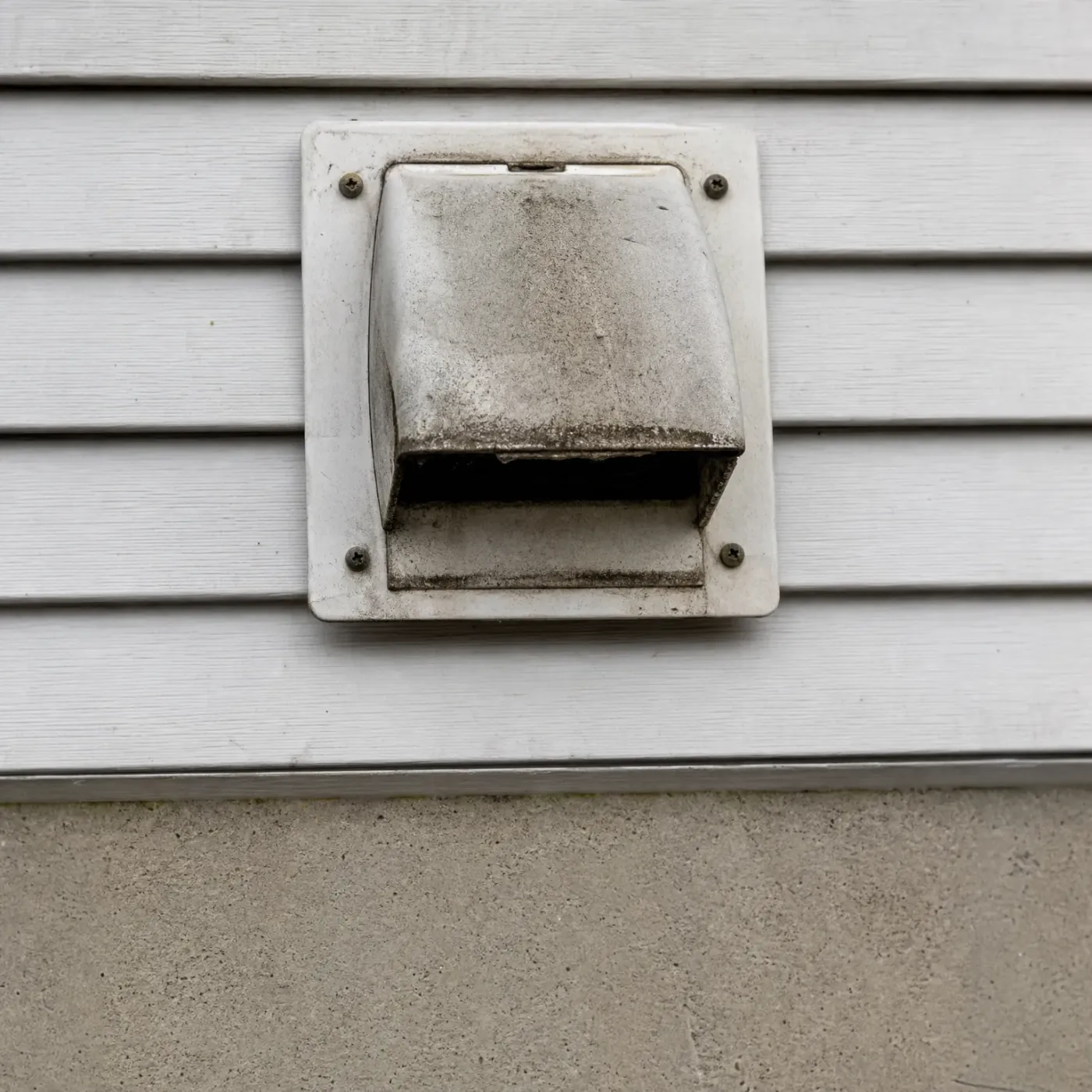
A dirt-streaked white plastic dryer vent hood screwed to light gray horizontal lap siding above a concrete foundation wall.
A caked hood flap traps moist air inside, so the dryer runs hot and long and clothes still come out damp.

What are you noticing in the laundry room

You run a load and come back to find the top of the dryer warmer than usual, or the laundry room itself feels warmer and a little damp, almost sticky the way it gets outside here in July. The clothes smell faintly hot, not clean. You might catch a burnt dust smell when the dryer first kicks on. Outside, the hood flap barely moves, or doesn't open all the way, even on high heat. None of that means the dryer is failing. It means the air has nowhere to go, and the heating element and thermostat are working harder than they're built to, cycle after cycle, with lint packed against a hot surface the whole time.

A pile of folded green, beige, and gray towels sits on top of a white washer or dryer in a dim room beside a window with trees outside.

It's almost nine on a Tuesday and you're still in the laundry room because the towels never finished. You pulled them out forty minutes ago, felt the damp patch in the middle of the stack, and ran them again anyway, hoping the second time would do it. Now they're piled on top of the dryer, warm on the outside and cool and wet underneath, and the room smells like hot, wet cotton. Outside it's that thick Spartanburg County night air that doesn't let anything dry on its own either. You've got a work shirt you need for tomorrow somewhere in that pile. You're tired, and you're done calling around. You just want someone who knows vents to come look at it.

Finding a pro stops being your job

You've already run that load twice and the dryer still isn't done. Figuring out why usually means someone has to pull the dryer out, get to the vent, and check the duct run and the hood outside, maybe clear it, maybe tell you it needs more than a cleaning. That's not a job most people in Spartanburg want to start on a weeknight, and it's not one you want to put off through a sticky summer or into a cold winter when the dryer's working harder than it should. Finding someone for it usually means searching, calling a few places, explaining the same thing more than once, then weighing quotes against each other. Send the request instead and that part is off your plate. You still have a load to deal with, but you're not the one tracking down who can look at it.

How long a duct run matters

A short straight shot from the dryer to the outside wall clears fast. A longer run, or one with a few turns in it, gives lint more places to catch and build up before it ever reaches the hood. Two-story houses and additions built onto the back of a house often push the duct run out further than the original layout called for. The longer the path, the more often it needs to be cleaned to keep up. If your laundry room sits far from an outside wall, that distance is working against the dryer every single load.


Why summer makes it worse

Spartanburg summers get hot and heavy with moisture, and that outside air pushes back against the air the dryer is trying to force out through the hood. A vent that clears fine in February can struggle in July and August doing the exact same job. The dryer ends up working against the weather and the clog at the same time. That is part of why a load that dried fine all spring can suddenly start running long once summer settles in, even if nothing in the laundry room has changed.

A woman in a cream knit sweater reclines on a sofa with her eyes closed and a slight smile, a closed dark book resting on a blanket in the foreground and a lit lamp and small potted plant behind her.
A smiling bearded man in a dark green sweater sits at a dinner table with a glass of red wine, a bowl of salad and a lit candle in the foreground, in a dimly lit room with a framed picture, lamp and potted plants behind him.

Clean it yourself and you can knock the lint out of the parts you can reach, the lint trap and a few feet of duct behind the dryer. What's packed further down the line, or caked on the hood flap outside, stays right where it is.

A full cleaning clears the duct from the dryer to the outside wall and checks the hood flap itself, so the air has a clear path the whole way instead of just the first few feet of it.

2.58 people per household on average

Most households in the county run close to three people, which in a laundry room means loads almost every day, not twice a week. A vent that's already restricted has less time to clear itself between runs, so the lint keeps building and drying times keep climbing.

ACS 2020-2024

A metal dryer vent hood mounted on beige horizontal lap siding, with gray lint clogging its open flap, above a lighter textured foundation wall.
Before you get your dryer vent cleaning
A white hooded exterior dryer vent with a mesh screen, screwed to light gray horizontal lap siding above a concrete foundation.
After you get your dryer vent cleaning

Why does this keep happening in your laundry room?

  • 2.58 people per household on average

    With 2.58 people in the average household here, laundry piles up fast, and a vent that's already slow to clear gets run again before it's had a chance to recover.

  • Half the homes here were built by 1990

    Half the homes in the county were built in 1990 or earlier, and duct runs from that era tend to be longer or bent through additions, giving lint more places to settle.

  • Power here costs 14.25 cents per kilowatt-hour

    Power here runs 14.25 cents per kilowatt-hour, and a dryer fighting a blocked vent pulls that rate for an hour or two instead of the forty minutes it's built for.

ACS 2020-2024 · EIA-861 2025

Where That Leaves Your Laundry Room

  • A dryer that takes an hour and a half or more and still leaves clothes damp has a blocked vent, not a broken machine.
  • The lint trap catches what collects right at the door, but the duct run and the outside hood flap are where the real blockage builds.
  • Running the same load twice doesn't clear a vent problem, it just adds another cycle of heat and moisture to a system that already can't push air out.
  • A full cleaning checks the whole path from the dryer to the outside wall, including the parts a homeowner can't reach by pulling the machine out.
  • Instead of calling around and explaining the same damp-load problem to one contractor after another, you send one form and the search is off your plate.
  • Once the vent is actually clear, a load goes back to running one normal cycle instead of two or three.

A dryer stretching a forty-minute load into an hour and a half, still coming out damp, is telling you something about the vent, not the machine itself. The lint trap only handles what collects at the door. The real buildup sits further down, in the duct run and on the hood flap outside, places you can't see and mostly can't reach by pulling the dryer away from the wall. Running the load again doesn't fix any of that. It just pushes more hot, moist air through a path that's already struggling to clear it, which is why the second cycle so often leaves you in the same spot as the first.

A full cleaning covers the whole path, from the dryer to the outside wall, not just the section within arm's reach. That's the difference between clearing what you can get to and clearing what's actually causing the slow dry.

What this means for you right now is fairly simple. You don't need to diagnose the duct yourself or guess whether it's a short run or a long one with a few turns in it. You need the vent checked end to end. Instead of calling around, explaining the same damp-towel problem to one contractor after another, and sorting through quotes to figure out who actually does full vent cleanings versus who just services the machine, sending one form puts that search on someone else's plate. Once the vent is clear, a load goes back to taking one cycle instead of two or three, and the laundry room stops being where your evening ends up.

A dark gray hooded exterior vent cover with a louvered opening mounted on dark horizontal lap siding, viewed at a steep angle.

Let someone else find the pro

Skip calling around for someone who cleans dryer vents.

Duct and vent cleaningSpartanburg County, SC
Step 1 of 3

What kind of equipment?