Heat Pump Installation in Georgetown, SC
A new system here will heat from November through March and cool from May through October every year. Tell us about the house, and a licensed contractor who covers Georgetown County will get in touch.
Tell us about the job
It takes about a minute.
Eleven months of work for one system
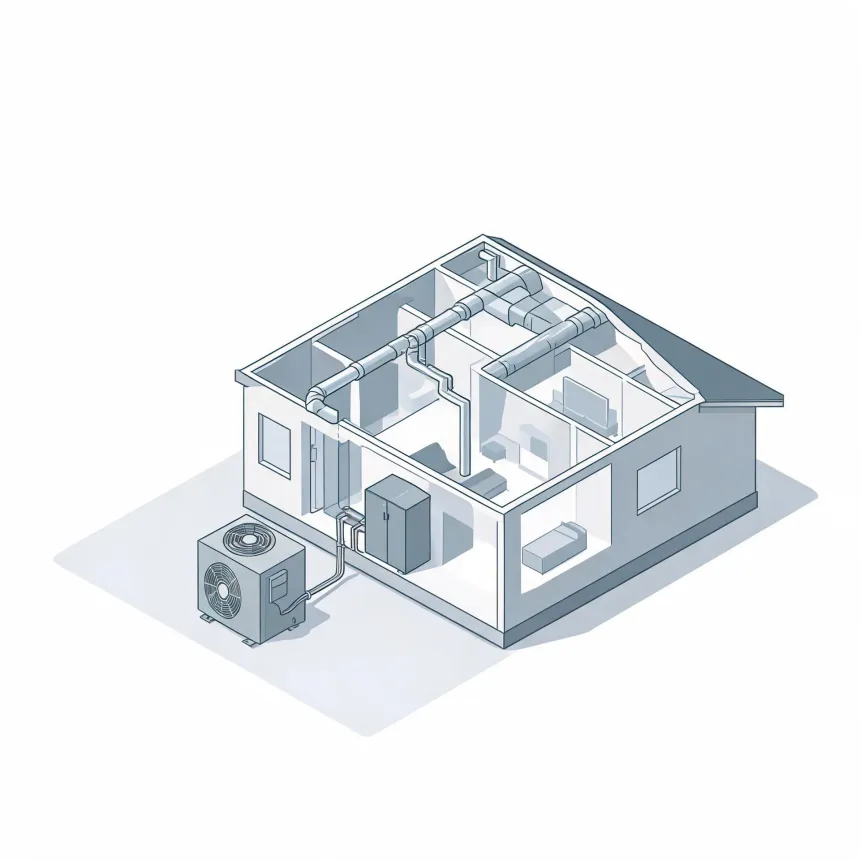
In Georgetown County, a heat pump runs almost the whole year. Winter nights average 38°F from December through February, and summer afternoons average 89°F, so the same unit carries the house from November through March for heat and May through October for cooling. That is 11 months with hardly a break to shut down and rest.
Most homes here already heat with electricity, so the heat pump is not a backup system, it is the system. A new one installed today has to meet the federal minimum of 14.3 SEER2 for cooling and 7.5 HSPF2 for heating, and it has to hold up to what comes through this county. Forty-five damaging wind events and 2 winter storms have hit here over the past ten years, and in 2024, 45% of South Carolina households lost power for 24 hours or more. When the power comes back, the unit needs to come back on its own.
- 5 months
- November through March, your system heats
- 6 months
- May through October, it cools
- 38°F
- the average winter night it heats against
- 89°F
- the average summer afternoon it cools against
NOAA nClimDiv, 1991–2020 normals
- Is a heat pump better than a furnace?
- A heat pump does both jobs a furnace can't, since it heats in winter and cools in summer from one system. A furnace only heats, so you'd still need a separate air conditioner for the six months a year homes here need cooling. Winter lows here average 38°F, which a heat pump handles fine without backup heat. The right choice also depends on what's already installed in the house, so a contractor can look at your setup and tell you what fits.
- What's the difference between a heat pump and an air conditioner?
- An air conditioner only cools. A heat pump cools the same way in summer, then reverses that process in winter to bring heat into the house instead of pulling it out. That's the whole difference. Both use a compressor and refrigerant, but only the heat pump can run in reverse to heat the home, which matters here since homes need heat from November through March.
- Does a heat pump work in cold weather?
- Yes. A heat pump pulls heat from outside air even when it's cold, because there's still heat in air well below freezing. Winter nights here average 38°F, well within the range a heat pump is built to handle. Newer heat pumps also have to meet a federal minimum of 7.5 HSPF2 for heating, so any unit installed now is rated for the job.