
HVAC Repair in Georgetown, SC
Homes here need heat from November through March and cooling from May through October. If your system quits, tell us what it's doing and a licensed contractor who covers Georgetown County will get in touch.
Tell us about the job
It takes about a minute.

Eleven months of work, then a storm knocks out the power
Your system runs almost all year here. Heat from November through March, cooling from May through October, only a few weeks off in between. Summer afternoons averaging 89°F push the compressor hard for six straight months. Winter nights averaging 38°F are mild by most standards, but the system still cycles on and off most nights from December through February, and each cycle wears on the parts that start it.
Most homes in the county heat with electricity, so when the power goes out, the heat goes with it. That happened to nearly half of South Carolina households at some point in 2024, for a full day or longer. The county has seen 45 damaging wind events in the last ten years, the kind that snap power lines and leave a system sitting dark until the grid comes back and it has to restart cold.
- 5 months
- November through March, your system heats
- 6 months
- May through October, it cools
- 38°F
- the average winter night it heats against
- 89°F
- the average summer afternoon it cools against
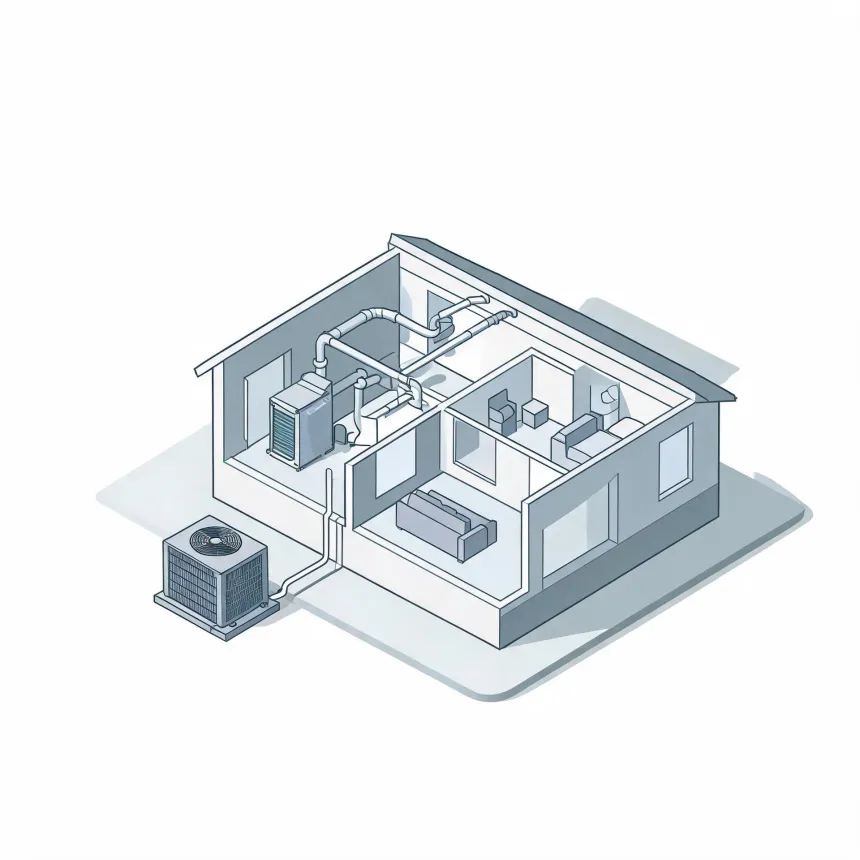
NOAA nClimDiv, 1991–2020 normals
- Why is my heat not working?
- Start with the thermostat. Make sure it is set to heat and set a few degrees above room temperature, and check that it has power if it runs on batteries. If the thermostat looks right, check your breaker panel for a tripped breaker, since a furnace or heat pump that lost power will not respond to anything else. Most homes here heat with electricity, so a breaker issue or a power outage will stop heat cold. If power and thermostat both check out and you still have no heat, that points to something inside the unit that needs a contractor to look at.
- Why is my system running but not cooling the house?
- If the system runs but the air coming out is not cold, check the filter first. A filter clogged with dust blocks airflow across the coil, and that coil can ice over, which cuts cooling even though the unit keeps running. Also check that nothing is blocking the outdoor unit, like grass clippings, leaves, or a fence panel too close to it, since it needs open air around it to release heat. On a 89°F afternoon a struggling system falls behind fast, so if the filter is clean and the outdoor unit is clear, the problem is likely the refrigerant charge or a part inside the unit, and that calls for a contractor with gauges.
- What can I check before calling for HVAC repair?
- Check the thermostat settings and batteries, then check your breaker panel for anything tripped. Look at the filter and replace it if it is gray or clogged, since a dirty filter causes problems that look like bigger failures. Walk outside and make sure the outdoor unit is not blocked by leaves, plants, or debris, especially after any wind or storm has come through. If everything there looks fine and the system still is not heating or cooling right, that is the point where a contractor needs to take over.