Ductwork doing its job
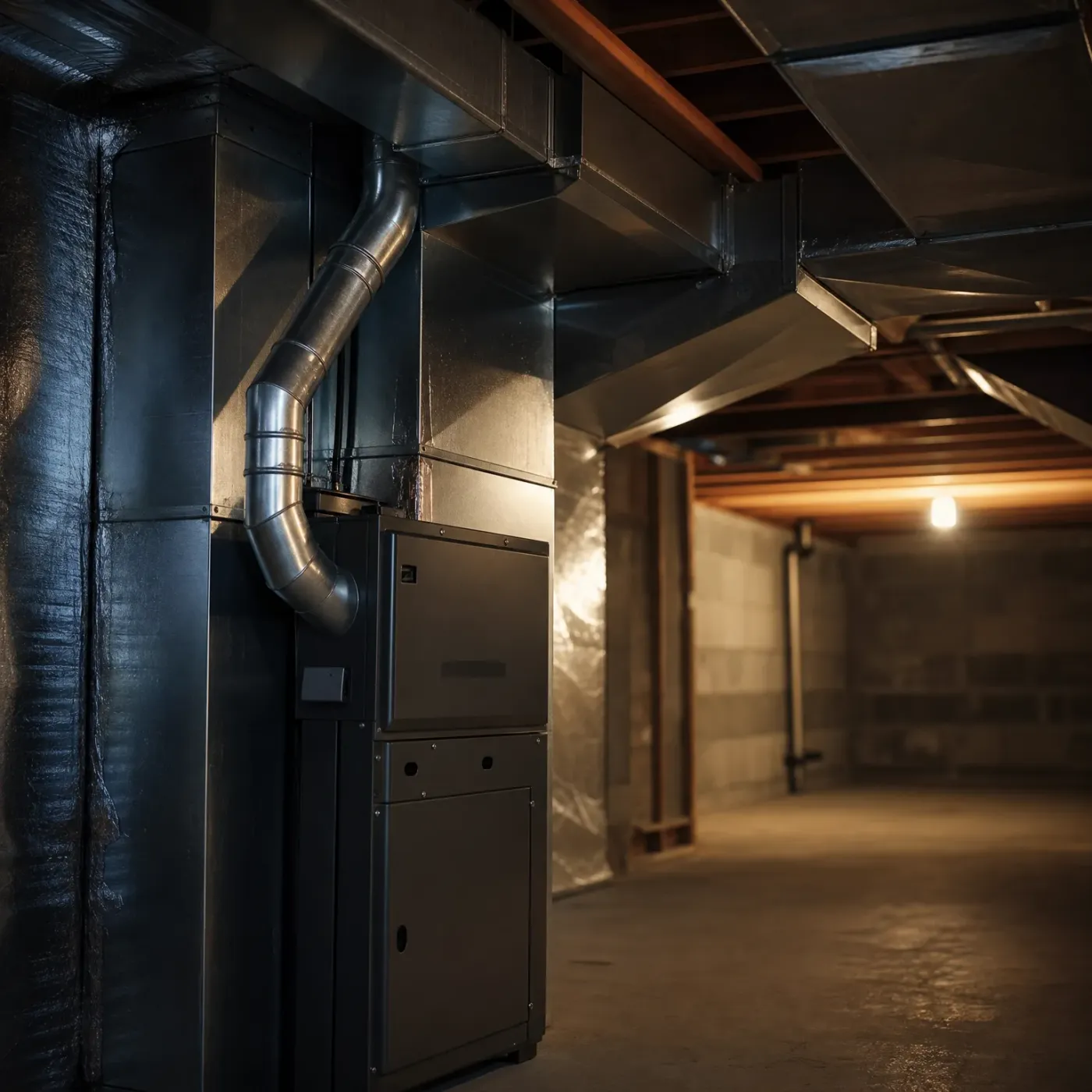
Clean metal, a tight seal at every joint, and nothing lining the inside but air. Ducts like these can sit above a basement for years and never put a smell into a single room.
The right pro for this job
A musty smell from your vents usually means moisture is sitting somewhere in the duct system, often in the coil or the drip pan, with long Greenville summers giving it plenty of chances to grow. This page gets into what causes it and what duct cleaning involves. Answer a few questions and a contractor who handles duct cleaning in your area will reach out, so you skip the searching and the back and forth of explaining it more than once.
Find a duct system proA musty smell from your vents almost always means mold or mildew growing somewhere air passes through, usually the evaporator coil, the drip pan, or the ducts themselves. Humid air moving across a wet coil gives mold what it needs, and with Greenville summers staying muggy for months at a time, that coil can stay damp for long stretches between repairs. Once mold takes hold on the coil or inside the ductwork, the smell gets pulled through the house every time the system runs, not just in one room. A clogged drain line backing up water into the pan does the same thing. The smell itself will not go away on its own, because the moisture feeding it is still there. It can also mean dust and debris have built up inside the ducts to the point where they hold moisture after the coil cycles off. Either way, the fix starts with finding where the water is sitting, not just masking the smell at the vent.


Your evaporator coil runs cold enough to pull moisture out of the air every time the system cycles. That water is supposed to drip into the pan and drain outside. If the drain line clogs or the pan sits low, water stays put instead, and that standing moisture is what mold needs to take hold. Greenville summers run long enough that the coil rarely gets a break, so a drain that is slow to clear gets tested again and again. Once mold is established on the coil, every pass of air through it picks up more of the smell and carries it straight into the rooms you're sitting in.
Cleaning the ducts clears out dust, debris, and the mold already growing on the duct walls, but it won't fix a coil that keeps getting wet or a drain line that keeps backing up. If that part of the system isn't working right, the smell can come back even after the ducts are clean. A contractor doing the work can check the drain line and the pan while they're in there, which is worth asking about. Otherwise you're cleaning the symptom and leaving the cause in place, and in a Greenville summer, that cause has months to start the problem over again.
Half the homes here were built by 1992
Cooling runs May through September here, five months of warm air crossing that coil, which is five months of chances for a musty smell to start.
Heat runs October through April
Heat runs October through April, about seven months. A duct system sitting unused for stretches between cycles gives any damp smell time to settle in.
Cooling runs May through September
Half the homes in Greenville County were built in 1992 or earlier. If your ductwork came with the house, it's worth finding out how old it actually is.
ACS 2020-2024 · NOAA nClimDiv 1991-2020

Once you can smell it, the air moving through every room is carrying it, not just the room near the thermostat. Bedrooms, the kitchen, wherever a vent sits open, the same air passes through that wet coil or those ducts first. A smell that's strongest in one room and faint in others usually points to a duct problem near that room. One that's even everywhere points back to the coil or the pan.
Mold on a wet coil doesn't stay put. It can spread across the coil fins and into the duct runs closest to the air handler, and the longer standing water sits in the pan or drain line, the more it grows. A clogged drain line can also back up and overflow, which puts water where your system wasn't built to have it. Catching it early keeps the job to a cleaning instead of coil or duct work.
It's a fair question once you've ruled out the obvious. You've smelled it, maybe run the system with the fan on and off, and you still don't know if you're dealing with actual mold growth or just stale air sitting in the ducts. The word mold carries weight, and you want to know if that's really what's happening before you decide what to do about it.
A musty smell that shows up every time the system runs, rather than once after it's been off a while, means something is actively growing, not just sitting stale. Mold needs moisture to take hold, and a duct system only holds that kind of moisture in a few places: the evaporator coil, the drip pan, or a section of duct that stays damp longer than it should. Once mold is established on the coil or in the pan, air moving across it picks up the smell and carries it into every room the system serves. A smell that fades in and out with humidity is still worth checking, but one that's steady points to growth that won't clear on its own.






You can run a fan a different way, swap a filter, spray something citrus-scented into the return, and the smell comes back in a week because none of that touches the water sitting in the pan or the mold growing on the coil. Finding out which one it is, and getting the duct system actually cleaned out instead of just masked, means someone looking at your coil, your drain line, and the ducts themselves in person. That's a different call than the one you make for a filter change. You'd otherwise be the one calling around Greenville for someone who does duct cleaning, explaining the smell to three or four different companies, then sitting with quotes that don't describe the same job. Handing that off means one contractor who works in Greenville County takes it from here, looks at what's actually going on behind your vents, and tells you what it'll take to get the air moving through clean again.
A musty smell on its own doesn't tell you which part of the system has water sitting in it, and guessing wrong means you clean the wrong thing while the real spot keeps growing mold.
A contractor who runs a camera through the ducts and checks the coil and drain line can tell you exactly where the moisture is, so the cleaning actually reaches it instead of just masking the smell for a few days.



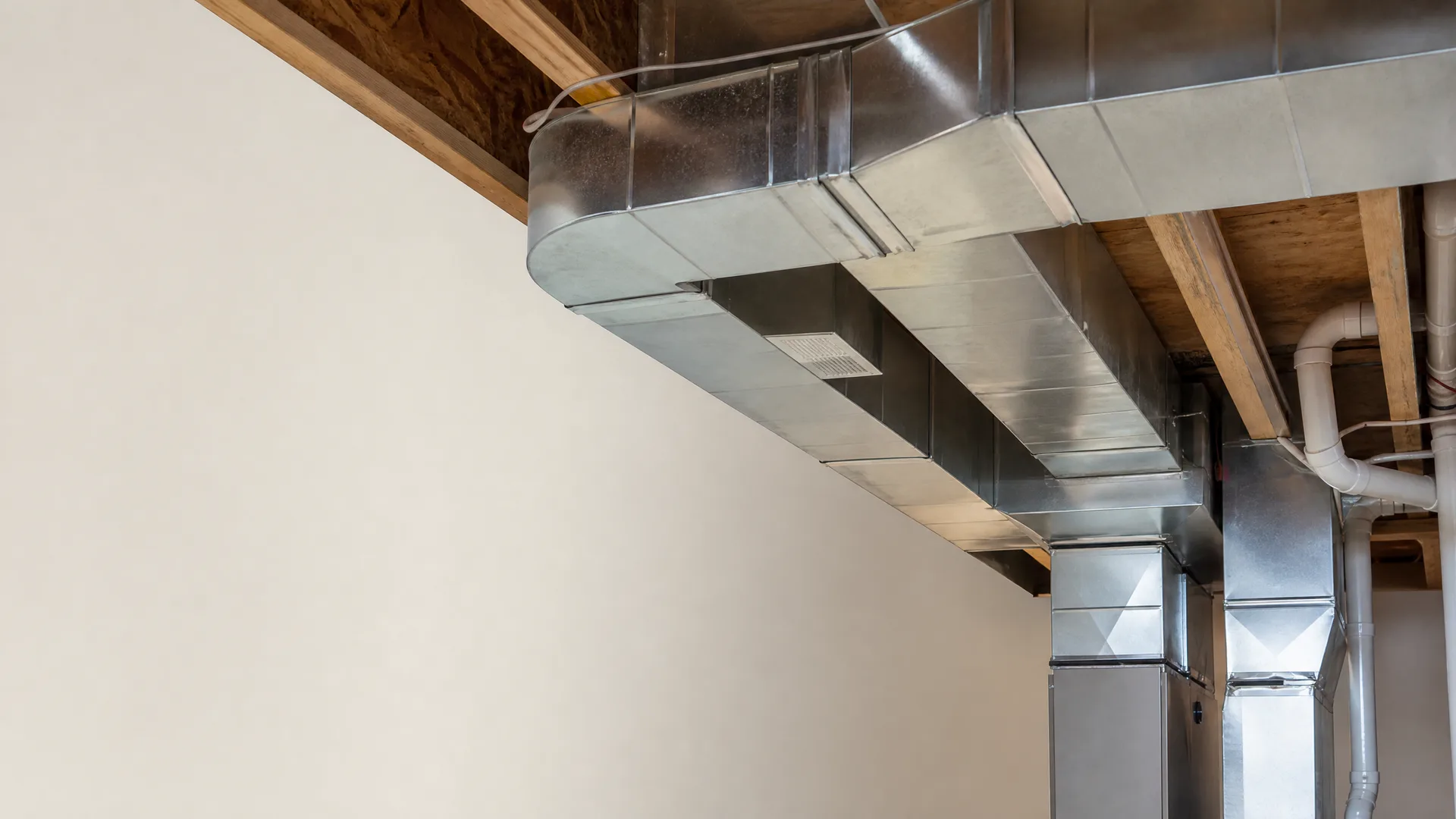
Clean metal, a tight seal at every joint, and nothing lining the inside but air. Ducts like these can sit above a basement for years and never put a smell into a single room.

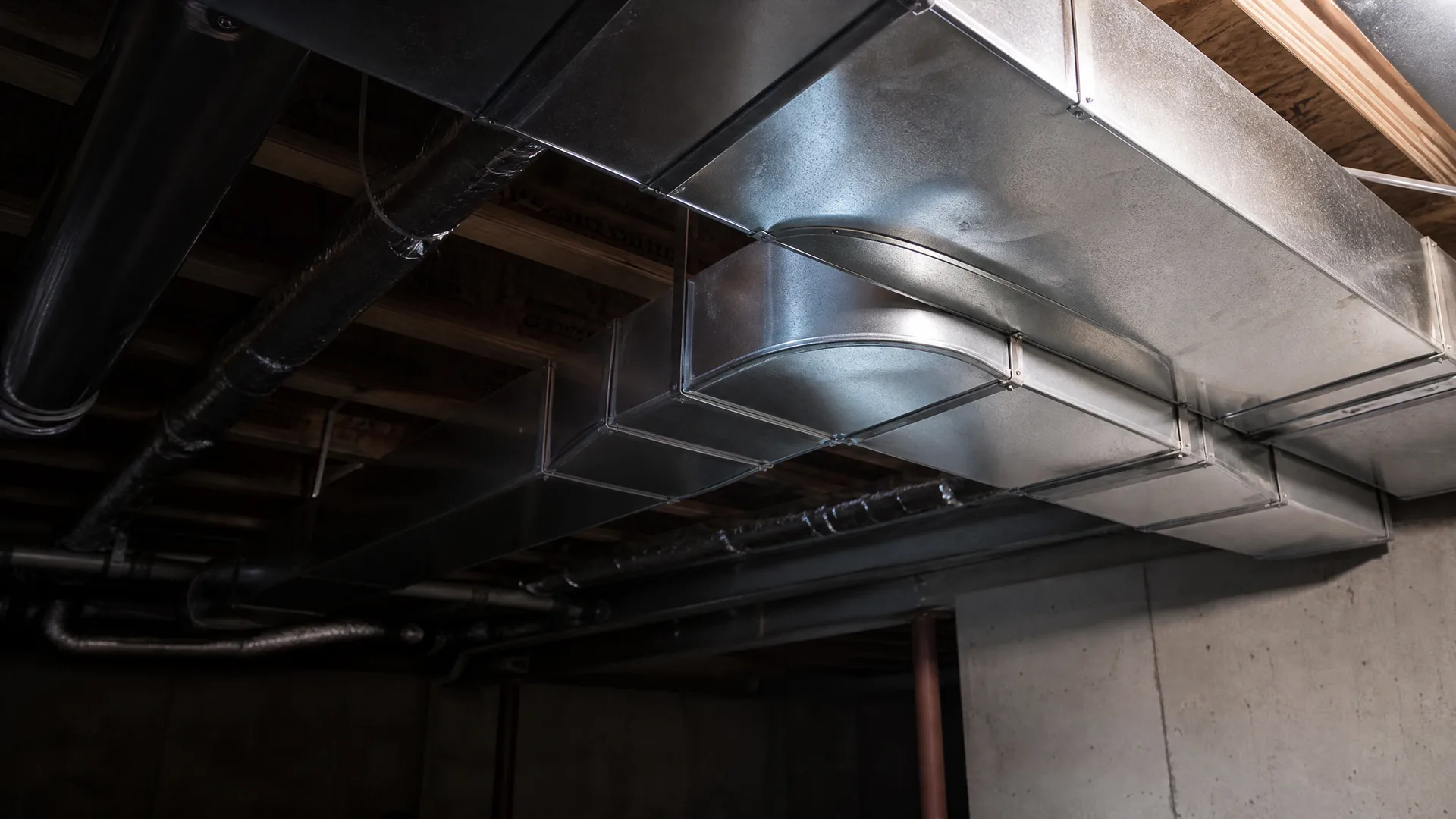
That dark coating on the metal is years of dust holding moisture, and moisture sitting on dust is exactly what mold needs. Air pulled through ducts like these picks up whatever is growing on their walls before it reaches your vents.

While it sits there, the smell is in your laundry, your kids' rooms, the air by your bed at night. It doesn't stay near the thermostat. Open a closet that shares a wall with a duct run and you may notice it stronger there, or catch it on towels pulled straight from the dryer vent area. Guests notice before you do, because you've been breathing it long enough to stop registering it.
There's also what you can't see. Mold on a coil or in a drip pan doesn't stay put, it spreads as long as the moisture feeding it stays put. Waiting it out, or masking it with a new filter or a can of spray, doesn't touch whatever is actually wet. Finding the source means someone has to get a camera into the ducts and check the coil and pan directly, which isn't a weekend project with tools from the hardware store. A contractor who does this work can tell you in one visit where the water is sitting and what it would take to clear it out, rather than you working through guesses on your own.

At 14.44 cents a kilowatt-hour, running the blower longer to chase a smell with fan tricks adds up without fixing anything. A contractor who finds the wet coil or clogged drain line once stops the moisture for good, so you're not paying to move smelly air around all summer.
EIA-861 2025
A musty smell from your vents has one real cause: water sitting somewhere it shouldn't, usually the evaporator coil, the drip pan underneath it, or the ducts themselves. Nothing you do from the living room fixes that. A new filter, a different fan setting, a spray in the return, none of it reaches the coil or the clogged drain line that's actually feeding the smell. It just covers the air for a day or two.
Getting rid of it for good means finding the exact spot, which takes a camera run through the duct system and a look at the coil and the drain line, not a guess based on which room smells worst. Once a contractor finds that spot and cleans it, the moisture that was growing mold is gone, and the smell doesn't come back the way it does after a filter swap or a scented spray.
What usually eats the time isn't the work itself, it's finding someone to do it. Calling a handful of contractors, explaining the smell to each one, asking if they handle duct cleaning or just install systems, then sitting with three quotes trying to tell them apart. That part is what goes away here. You answer once, and a contractor who already works on homes like yours in Greenville reaches out to you. No repeating the story to five different people, no sorting through quotes to guess who actually knows what they're looking at. You still get the same camera run, the same check of the coil and drain, just without the legwork of finding who does it.
A duct system pro near you