Mini Split Installation in Orangeburg, SC
A new system here will heat from November through March and cool from May through September every year. Tell us about the house, and a licensed contractor who covers Orangeburg County will get in touch.
Tell us about the job
It takes about a minute.
What Orangeburg County weather asks of a mini-split
Your mini-split works ten months of the year here. Heat from November through March, cooling from May through September, with only a short break in between. Winter nights average 37°F, so the heating side has to hold steady on the colder nights that drop below that. Summer afternoons average 91°F, and that's the load it answers all day, every day, for five months straight.
Most homes in South Carolina heat with electricity, so the heat pump side of a mini-split is doing real work, not sitting behind a furnace as a backup. Any unit installed new has to meet 14.3 SEER2 for cooling and 7.5 HSPF2 for heating, the federal minimum for split-system heat pumps since 2023. Power matters too. South Carolina saw 177 damaging wind events over the last ten years, and 45 percent of households in the state went at least 24 hours without power in 2024. A mini-split that comes back on by itself once the power returns is worth asking about.
- 5 months
- November through March, your system heats
- 5 months
- May through September, it cools
- 37°F
- the average winter night it heats against
- 91°F
- the average summer afternoon it cools against
NOAA nClimDiv, 1991–2020 normals
- Is a mini split worth it?
- For most homes here, yes. It runs November through March for heat and May through September for cooling, so it covers most of the year instead of sitting idle half the time. Most homes here already heat with electricity, and a mini split moves heat instead of generating it, so it does that job for less than baseboard or resistance heat. It also gives you cooling from a system already installed, instead of adding a separate air conditioner.
- How many rooms can a mini split cover?
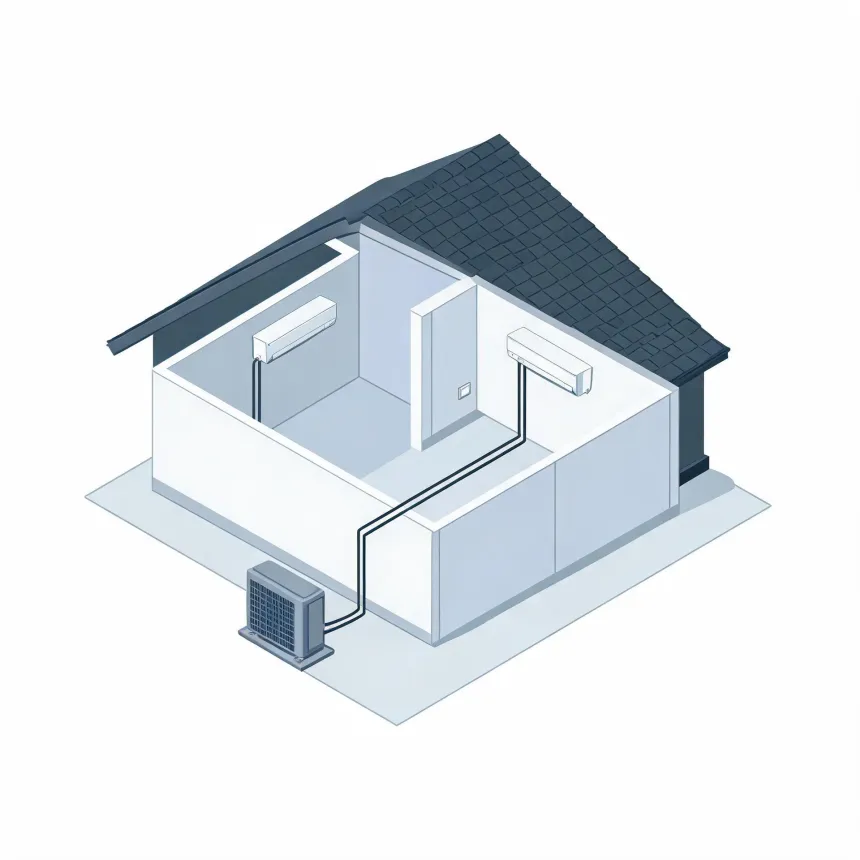
- A single outdoor unit can run one indoor head or several, so the number of rooms depends on how many heads you install and how the outdoor unit is sized to support them. Each indoor head heats and cools only the room it's mounted in. A contractor will size the outdoor unit and the number of heads to the rooms you want covered.
- Can a mini split heat a whole house?
- It can, if enough heads are placed to reach every room, but a single indoor head only heats the space it's in. Open floor plans do well with fewer heads since the air moves between rooms. A house with separate closed-off rooms usually needs a head in each one to keep every room warm through the winter nights here, which average 37°F from December through February.