Mini Split Installation in Aiken, SC
A new system here will heat from November through March and cool from May through September every year. Tell us about the house, and a licensed contractor who covers Aiken County will get in touch.
Tell us about the job
It takes about a minute.
Aiken asks a mini-split to work most of the year
A mini-split here spends 5 months heating and 5 months cooling, which is 10 months out of the year with barely a break between seasons. Winter nights average 36°F, summer afternoons average 91°F, and the same unit has to cover both ends of that swing.
Any mini-split installed new has to meet the federal minimum for a split-system heat pump, 14.3 SEER2 for cooling and 7.5 HSPF2 for heating. Aiken County has also logged 185 damaging wind events over the past ten years, and with most homes here heating on electricity, a storm that cuts power takes the mini-split down with it until service is back.
- 5 months
- November through March, your system heats
- 5 months
- May through September, it cools
- 36°F
- the average winter night it heats against
- 91°F
- the average summer afternoon it cools against
NOAA nClimDiv, 1991–2020 normals
- Is a mini split worth it?
- For most homes, yes, especially if you're heating or cooling a room that your main system doesn't reach well. A mini split gives you a heat pump dedicated to that space, so it runs efficiently on a cold winter night or a 91°F summer afternoon. With 63.6% of homes here already heating with electricity, a mini split often fits right into the existing setup without new gas lines or ductwork. The main question is whether your layout suits ductless zones or whether extending existing ductwork makes more sense, and that's worth walking through with a contractor.
- How many rooms can a mini split cover?
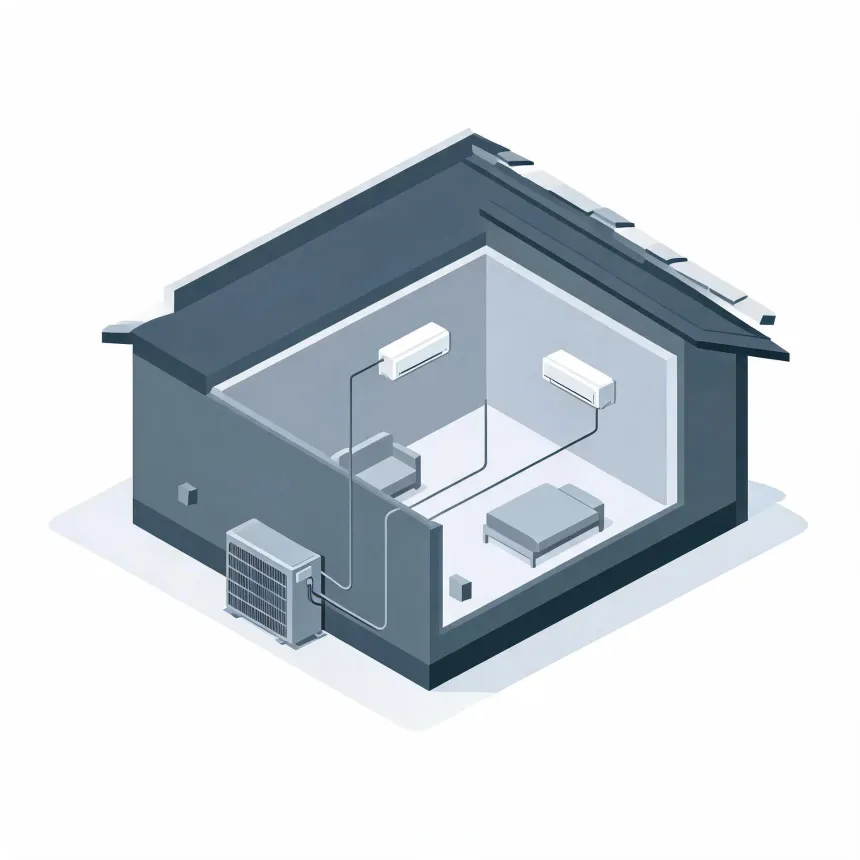
- A single outdoor unit can run one indoor head or several, depending on the system. A single-zone system covers one room or open area. A multi-zone system runs several indoor heads off one outdoor unit, each with its own thermostat, so you can heat or cool a bedroom and a living room differently at the same time. How many zones make sense for your house depends on the square footage and layout, which is something a contractor sizes room by room.
- Can a mini split heat a whole house?
- It can, if enough zones are installed to cover every room and the system is sized for the coldest nights it needs to handle. Winter nights here average 36°F from December through February, and a mini split heat pump keeps working in that range without switching to backup heat the way some systems do. Whole-house coverage usually means a multi-zone setup with an indoor head in each main room, planned around your home's layout rather than added room by room later.