Mini Split Installation in Easley, SC
A new system here will heat from October through April and cool from May through September every year. Tell us about the house, and a licensed contractor who covers Pickens County will get in touch.
Tell us about the job
It takes about a minute.
Easley asks a mini-split to run almost year round
Winter nights here average 33°F, and homes need heat from October through April. Summer afternoons average 87°F, with cooling running May through September. That's 12 months a year the system is doing one job or the other, with barely a break between seasons.
A mini-split installed now has to be built for both ends of that range. Any unit manufactured from 2023 on has to meet 14.3 SEER2 for cooling and 7.5 HSPF2 for heating, the federal minimum for split-system heat pumps. Pickens County also sees its share of storms, 69 damaging wind events over the last ten years, so the outdoor unit needs to be mounted and wired to hold up through them.
- 7 months
- October through April, your system heats
- 5 months
- May through September, it cools
- 33°F
- the average winter night it heats against
- 87°F
- the average summer afternoon it cools against
NOAA nClimDiv, 1991–2020 normals
- Is a mini split worth it?
- For most homes here, yes, especially if a room runs hot or cold no matter what the rest of the house does. Easley needs heat from October through April and cooling from May through September, so a system working nearly year round earns its place. A mini split heats and cools that one space directly instead of pushing air through ducts, which helps most in additions, garages turned into living space, or rooms an existing system never handles well. A contractor can look at the house and say whether it solves the actual problem you have.
- How many rooms can a mini split cover?
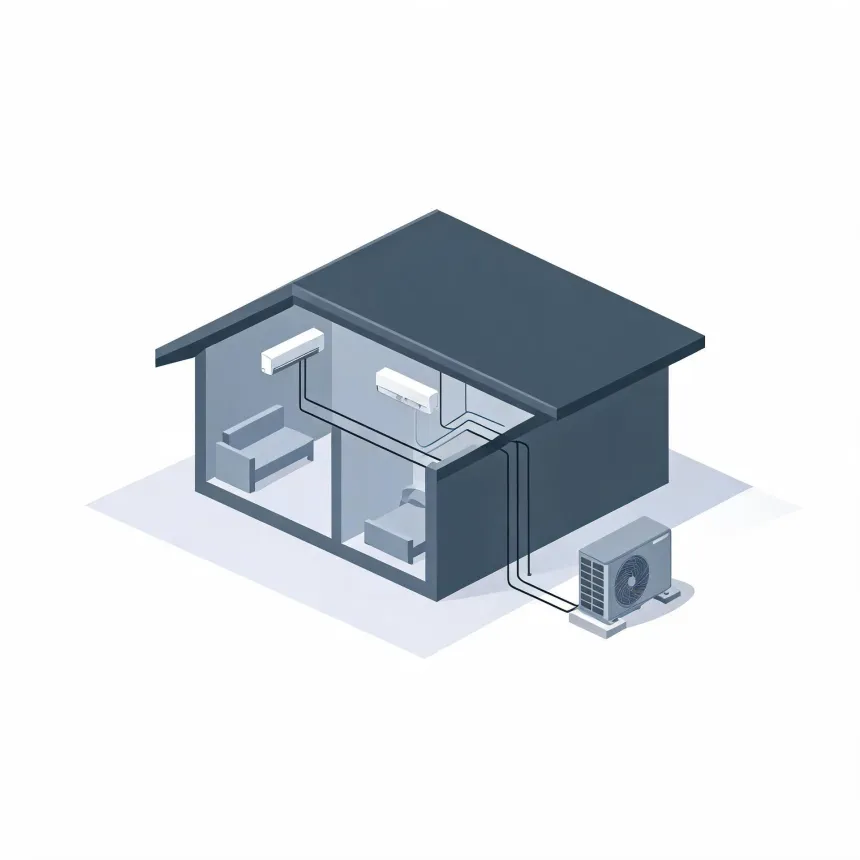
- A single-zone mini split covers one room or open area well. Multi-zone systems can run several indoor units off one outdoor unit, with each zone controlled on its own. How many zones make sense for a given house depends on the layout and how the rooms are used, so a contractor should walk through the space before you settle on a number.
- Can a mini split heat a whole house?
- A multi-zone mini split can heat a whole house if enough indoor units are placed to cover every room, but a single unit generally cannot on its own. Winter nights here average 33°F, so the heat pump has to be sized to keep up on the coldest nights, not just handle mild ones. Whether a whole-house mini split setup makes more sense than another heating approach depends on the layout of the house, and that's a call a contractor can make after seeing it.