Mini Split Installation in Anderson, SC
A new system here will heat from November through March and cool from May through September every year. Tell us about the house, and a licensed contractor who covers Anderson County will get in touch.
Tell us about the job
It takes about a minute.
What Anderson County asks of a new mini-split
Ten months out of the year, a mini-split here is either heating or cooling your home. Winter nights average 34°F from December through February, and summer afternoons run around 89°F. That is a long stretch of steady work, not a machine that gets a break most of the year.
Most homes here heat with electricity, so the heat pump side of a mini-split matters as much as the cooling side. Any unit installed new has to meet the federal minimum for split-system heat pumps, 14.3 SEER2 for cooling and 7.5 HSPF2 for heating. Power interruptions are common in this part of South Carolina, with almost half of households losing power for at least a day at some point in 2024, so it is also worth knowing how your system comes back on once power is restored.
- 5 months
- November through March, your system heats
- 5 months
- May through September, it cools
- 34°F
- the average winter night it heats against
- 89°F
- the average summer afternoon it cools against
NOAA nClimDiv, 1991–2020 normals
- Is a mini split worth it?
- For most homes here, yes, especially in a room that never gets comfortable with what's already installed. A mini split heats through winter lows averaging 34°F and cools through the 89°F afternoons Anderson sees all summer, and it does both from one unit with no ductwork involved. It also gives you a room that keeps working if the main system goes down, which matters given how many wind events this area sees. Where it makes less sense is a whole house already served well by existing ducts, since then you're adding a system rather than fixing a gap.
- How many rooms can a mini split cover?
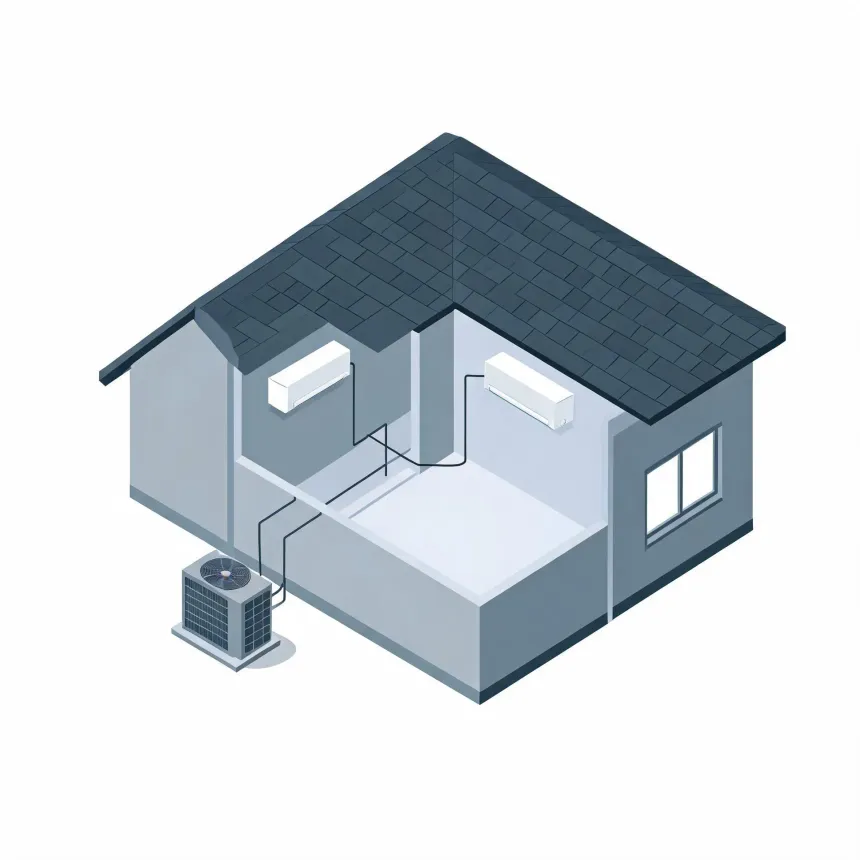
- A single outdoor unit can run one indoor head or several, depending on which system a contractor installs. Multi-zone systems run several indoor heads off one outdoor condenser, each one heating or cooling its own room independently. The right number for a given house depends on the square footage and layout of each room, so a contractor will size it to the house rather than guess at a number that fits every home.
- Can a mini split heat a whole house?
- It can, if the system is sized and placed to reach every room, but a single indoor head only heats the space it's in. Whole-house coverage means either a multi-zone system with a head in each main room or ductwork paired with a ducted mini split air handler. Homes here need heat five months a year, November through March, with winter lows averaging 34°F, so whatever gets installed has to be sized for those nights, not just for mild days. A contractor can work out whether a mini split alone covers the house or whether it makes more sense alongside what's already there.