
HVAC Installation in Rock Hill, SC
A new system here will heat from October through April and cool from May through September every year. Tell us about the house, and a licensed contractor who covers York County will get in touch.
Tell us about the job
It takes about a minute.

Rock Hill asks for heat and cooling nearly all year
Homes here need heat from October through April, seven months, with winter nights averaging 33°F. Then the system switches over and runs cooling May through September, with summer afternoons averaging 89°F. That leaves the system idle only a few weeks out of twelve.
Nearly half of homes in the area heat with electricity, which means a heat pump or electric furnace carries the load all winter, not just on the coldest nights. Storms are part of the picture too. The region has logged 78 damaging wind events over the past ten years, and 45% of South Carolina households went at least 24 hours without power in 2024. A new system here should be sized for both the long stretch of heat and cold it will run through and the chance that the power will not always be there when it needs it.
- 7 months
- October through April, your system heats
- 5 months
- May through September, it cools
- 33°F
- the average winter night it heats against
- 89°F
- the average summer afternoon it cools against
NOAA nClimDiv, 1991–2020 normals
- When should I replace my HVAC system?
- Replace it when repairs keep coming or the system can't keep the house comfortable through the summer heat and winter cold here. An older furnace or air conditioner that needs a major repair, like a cracked heat exchanger or a failed compressor, usually isn't worth fixing. Watch for rooms that won't heat or cool evenly, energy bills that keep climbing, or a system that runs constantly and still can't hold the temperature you set. Homes here need heat or cooling all 12 months of the year, so the system gets worked hard and wears out accordingly.
- Should I replace my furnace and air conditioner at the same time?
- If both units are close in age, replacing them together usually makes sense. A furnace and air conditioner installed at the same time are matched to work together, and keeping an old one running alongside a new one often means the new unit is held back by the old. If only one has failed and the other still has life left, a contractor can look at both and tell you whether pairing them now or waiting makes more sense for your house.
- What happens during an HVAC installation?
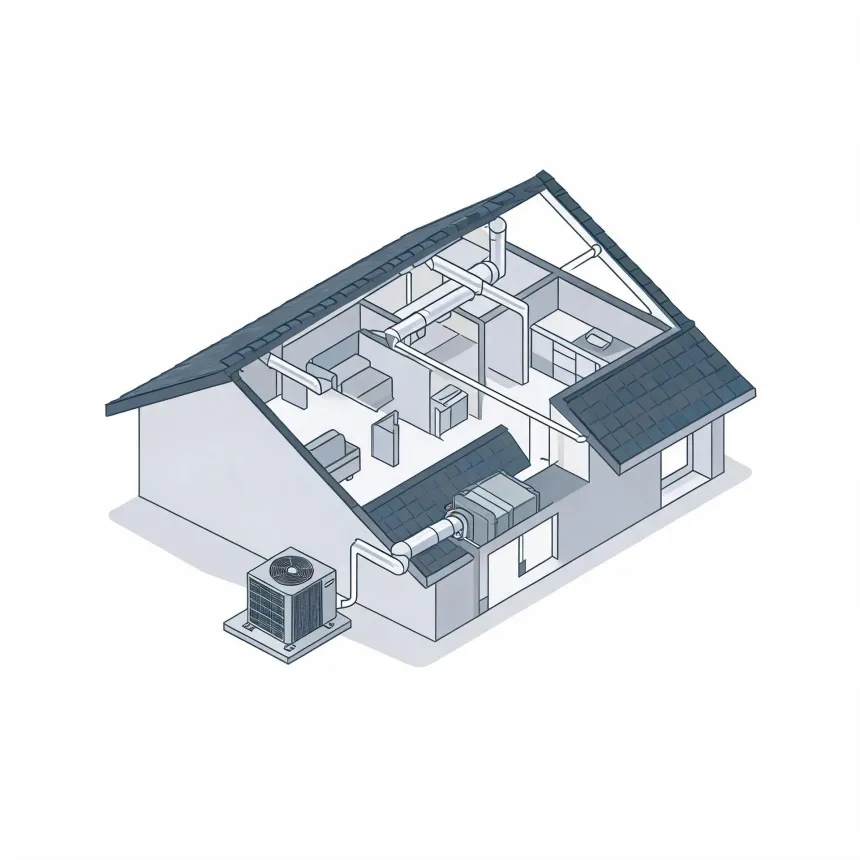
- A contractor removes the old furnace and air conditioner, then sets the new equipment in place and connects it to your ductwork, gas line or electrical circuit, and the refrigerant lines. They check the ducts for leaks or sizing problems, since a new system connected to bad ductwork won't perform right. Once everything is connected, they test the system, check refrigerant levels, and confirm the thermostat is working before they consider the job done.