Heat Pump Installation in Rock Hill, SC
A new system here will heat from October through April and cool from May through September every year. Tell us about the house, and a licensed contractor who covers York County will get in touch.
Tell us about the job
It takes about a minute.
A heat pump in Rock Hill works almost every month of the year
Homes here need heat from October through April and cooling from May through September. That is 12 months of the year with the system running one way or the other. Winter nights average 33°F, which is mild compared to a lot of the country, but that also means the heat pump is doing most of the heating work itself rather than handing off to a backup element as often.
Any split-system heat pump installed new has to meet 14.3 SEER2 for cooling and 7.5 HSPF2 for heating, since those are the federal minimums as of 2023. With summer afternoons averaging 89°F and nearly half of homes here already heating with electricity, sizing the new system correctly for both seasons matters as much as the equipment itself.
- 7 months
- October through April, your system heats
- 5 months
- May through September, it cools
- 33°F
- the average winter night it heats against
- 89°F
- the average summer afternoon it cools against
NOAA nClimDiv, 1991–2020 normals
- Is a heat pump better than a furnace?
- A heat pump does something a furnace cannot. It cools your home in summer and heats it in winter, using the same equipment. A furnace only burns fuel to make heat, so you still need a separate air conditioner alongside it. With winter lows around Rock Hill averaging 33°F, a heat pump can handle most of the season on its own. Whether it covers every cold night depends on the specific unit and the house, so a contractor should size it against your home before you decide.
- What's the difference between a heat pump and an air conditioner?
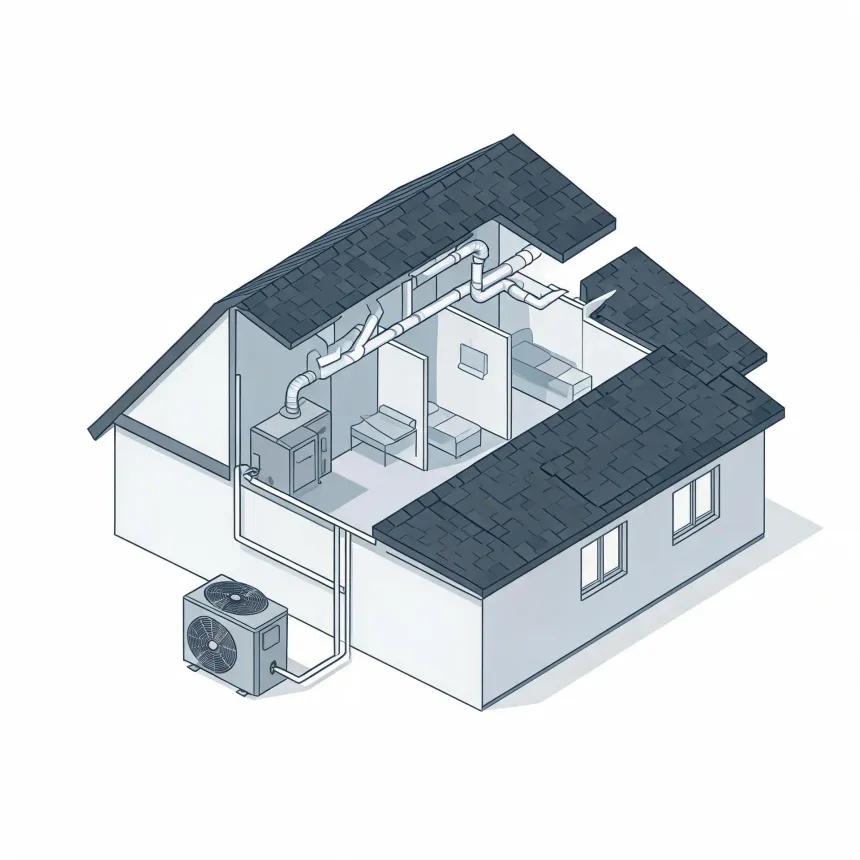
- An air conditioner only moves heat out of your home. A heat pump does that too, but it can also run in reverse and move heat into your home. That reverse mode is what lets it heat in winter and cool in summer. Mechanically they use the same kind of refrigerant cycle and the same style of outdoor unit. The difference is a reversing valve that lets the heat pump switch direction.
- Does a heat pump work in cold weather?
- Yes, a heat pump pulls heat from outside air even when it's cold. It works harder and puts out less heat as the temperature drops, but it keeps working. Rock Hill winter nights average 33°F from December through February, well within the range a heat pump handles without trouble. On a night much colder than that, some systems bring in backup heat to make up the difference. A contractor can tell you whether the model you're looking at needs that backup for this area.