
HVAC Installation in Gaffney, SC
A new system here will heat from October through April and cool from May through September every year. Tell us about the house, and a licensed contractor who covers Cherokee County will get in touch.
Tell us about the job
It takes about a minute.

Gaffney runs its system almost year round
Heat runs October through April here, seven months out of twelve. Cooling picks up in May and holds through September. That leaves almost no month where a system sits idle, so a new furnace or heat pump has to hold up under steady use, not occasional bursts.
Winter nights average 32°F, mild enough that a heat pump can carry the load without much help from backup heat. Summer afternoons average 88°F, so the cooling side has real work to do too. Most homes here heat with electricity, which makes the choice between a heat pump and a straight AC and furnace worth thinking through with whoever installs it. Storms are part of the picture as well. Cherokee County has logged 49 damaging wind events and 6 winter storms over the past ten years, and across South Carolina almost half of households lost power for a day or more in 2024. A new system installed now has to be sized and set up to handle outages as well as the season.
- 7 months
- October through April, your system heats
- 5 months
- May through September, it cools
- 32°F
- the average winter night it heats against
- 88°F
- the average summer afternoon it cools against
NOAA nClimDiv, 1991–2020 normals
- When should I replace my HVAC system?
- Replace it when repairs stop making sense, not on a fixed schedule. If your furnace or air conditioner is breaking down most years, if a repair costs a large share of what a new system would, or if it's no longer keeping up on the coldest or hottest days, that's your sign. An older system also works harder than it used to, and homes here need heat or cooling every month of the year, so there's no season where a failing system just gets a break.
- Should I replace my furnace and air conditioner at the same time?
- If both are old, yes, it's worth doing together. A furnace and air conditioner installed at the same time are matched to work as one system, and pairing a new one with an old one can mean the new unit never runs at its best. If only one has failed and the other is still young, a contractor can tell you whether it makes sense to wait or to replace both now.
- What happens during an HVAC installation?
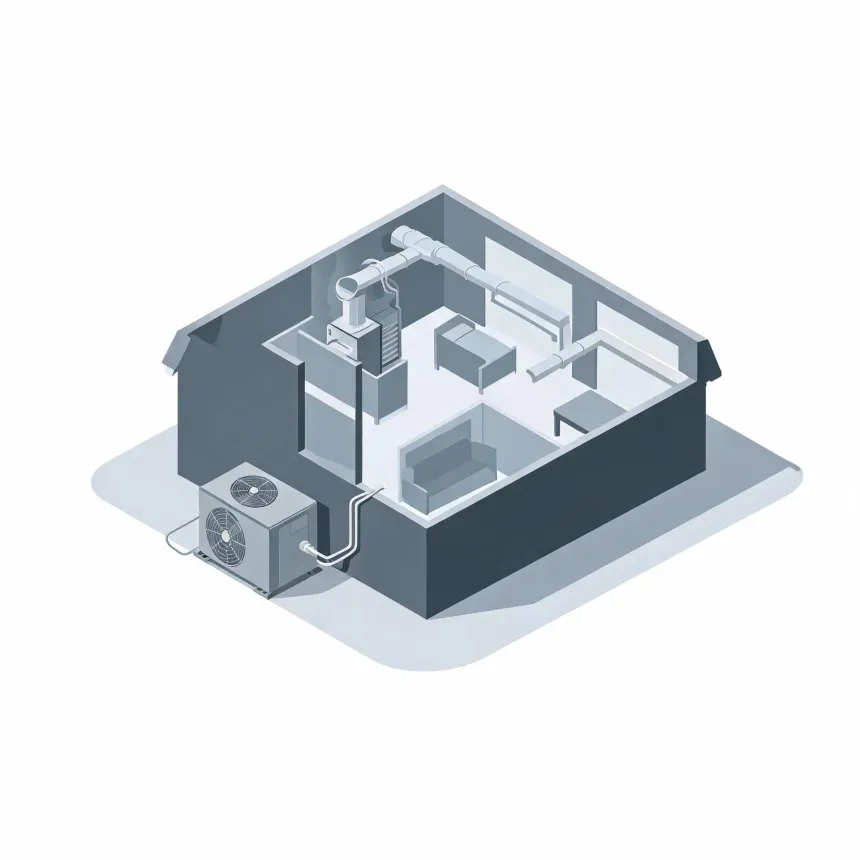
- A contractor removes the old furnace, air conditioner, or both, and sets the new equipment in place, connecting it to your ductwork, refrigerant lines, gas line or electrical circuit as needed. They'll check that the ducts and vent hood are sized right for the new unit, since equipment installed to the wrong specs won't heat or cool the way it should. Once it's connected, they test it, set the thermostat, and walk you through anything you need to know. A contractor can walk you through the specifics for your house and give you a price for the job.