How often to clean a dryer vent in Myrtle Beach, SC

Skip the calls

A dryer vent full of lint does not announce itself until clothes take two cycles to dry or the laundry room starts to feel warm. By the time you notice, you are left searching for someone to look at it, calling a few places, explaining the same thing over and over, and trying to sort out which quote actually makes sense. That is the part you can skip. Horry County homes deal with long muggy summers that keep moisture in the air most of the year, and a vent cleaning request here goes to a local contractor who works on vents in this kind of climate all the time and knows what tends to clog them. You get matched with one contractor, not a handful calling you back at once. Fill in a few details about your home and your dryer, and let someone who already knows this equipment take it from there.

How often should I clean my dryer vent in Myrtle Beach?

Clothes coming out damp after a full cycle, or two cycles just to get them dry, is usually what sends people looking this up. You're not wrong to wonder if the vent is overdue. It is easy to forget about since it is out of sight, and most people only think about it once drying starts taking longer or the laundry room gets warmer than it should.

Once a year for most homes, more often if you run loads daily

Lint builds up inside the vent every time you dry a load, and it narrows the path the hot, damp air needs to escape outside. A once-a-year cleaning keeps that path clear for most households in Horry County. If you're doing laundry for a big family or running the dryer most days, lint collects faster and the vent is worth checking twice a year instead. Humid summers here mean the air leaving your dryer is already carrying a lot of moisture, and a vent that's partly blocked has a harder time pushing it out. A longer dryer run, or a laundry room that feels warmer than the rest of the house, usually means the vent needs attention sooner than your next scheduled cleaning.

A pile of beige, navy, and teal towels sits on top of a washer or dryer in a dim laundry room with a window and an upper cabinet.

It's a Tuesday evening, a little after seven, and you're still in the clothes you wore to work. The dryer has been running since before dinner. You open the door expecting warm, folded-ready towels and instead find them heavy and damp, the same load you started two cycles ago. The laundry room is warmer than it should be, warmer than the hallway outside it, and the air in there smells faintly hot, like dust sitting too close to a bulb. You run a hand over the towels again, hoping you're wrong. You're not. You stack them back on top of the dryer and start a third cycle, already thinking about who you'd even call about this.


What does your household actually run through that dryer?

  • 2.37 people per household on average

    Horry County households average 2.37 people, which usually means a load most days, not once a week. More loads push more lint through the vent faster.

  • Half the homes here were built by 1999

    Half the homes here were built in 1999 or earlier. An older vent run has had more years to collect lint in the bends and joints you can't see.

  • Power here costs 13.25 cents per kilowatt-hour

    Electricity here runs 13.25 cents per kilowatt-hour, cheap by most measures. A clogged vent still makes the dryer run longer to do the same job, so you feel it on the bill even at that rate.

ACS 2020-2024 · EIA-861 2025

How the Vent Actually Clogs

  • Lint builds up fastest in the elbows where the vent turns, not in the straight runs.
  • A rigid metal vent lets lint move through on its own more than a flexible foil one does.
  • The flap on the outside hood should open fully when the dryer runs and snap shut when it stops.
  • A clogged vent forces the dryer to run hotter, which wears out the heating element and the thermal fuse faster.
  • Lint that collects right at the exterior hood blocks airflow even when the rest of the duct is clear.
  • A vent cleaning clears the full run from the back of the dryer to the outside hood, not just the trap.

Lint does not spread evenly through the vent. It catches wherever the duct turns, so an elbow a few feet from the dryer or the bend behind the wall usually holds more than the straight sections combined. The type of duct changes how much builds up. Rigid metal lets air move in a straight path, so lint tends to carry through to the outside. Flexible foil duct has ridges, and lint catches on every one of them, which is why these vents need attention more often if your home has one. At the outside wall, the hood has a flap that should swing open wide while the dryer runs and close when it shuts off. Lint collects right at that opening too, and once it blocks the flap, air backs up through the whole line even if the rest of the duct is clear. None of this is just about dry clothes. A blocked vent makes the dryer's heating element work harder and stay hot longer than it was built to, and the thermal fuse is there to shut the dryer down if it gets too hot. A vent cleaning is not the same as cleaning the lint trap. It means clearing the full run, from the back of the dryer through every elbow to the hood outside, so air has a clear path the whole way.

A smiling woman with long dark hair in a gray sweater sits behind a white countertop holding a glass of red wine, with a dimly lit living room and dark kitchen island in the background.
A woman in a beige knit sweater with her hair up laughs while looking to the side, seated in a dimly lit living area with a sofa, windows and a kitchen counter behind her, a glass of red wine in the lower right foreground.
A woman in a black sweater laughs while seated at a light stone counter with a glass of red wine, in a dimly lit living and dining room with bookshelves, a table lamp and framed artwork behind her.
A smiling woman with long dark hair in a beige sweater sits at a granite counter with a glass of red wine, with a living room, fireplace and dining area behind her.
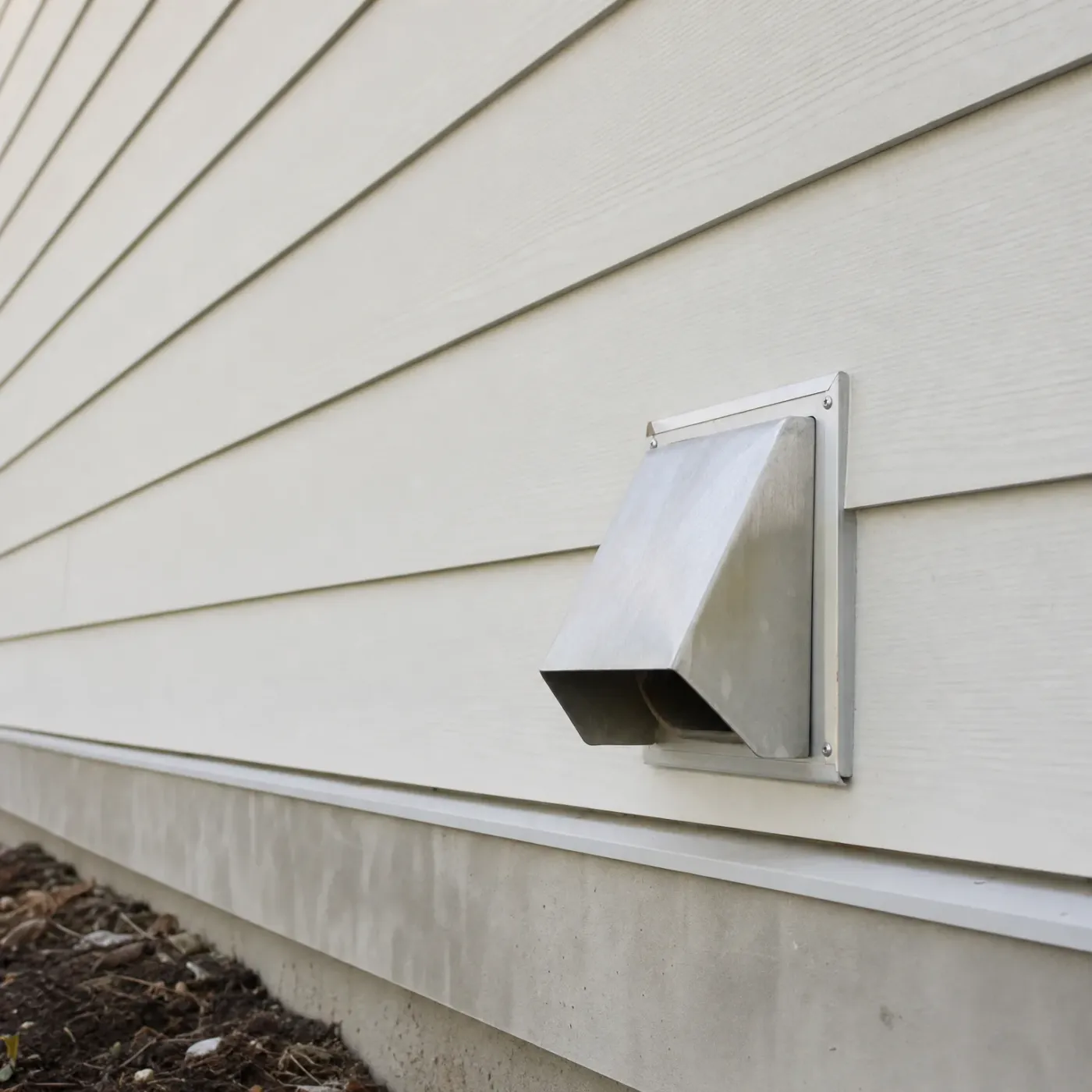
A metal hooded dryer vent mounted on cream-colored horizontal lap siding above a concrete foundation, with bare soil at the lower left.

No calling every shop in Horry County

The pro who gets in touch is licensed in South Carolina and works in Horry County.

Skip searching for a dryer vent pro and answer a few questions instead.

Get one local pro

You only hire the pro if you want to.

Is your laundry room warmer than it should be

Stand next to the dryer partway through a cycle. If the room feels warmer than usual, or you catch a faint hot, dusty smell, air that should be going outside is backing up into the house instead. Check the outside hood while the dryer runs. The flap should swing open with a steady stream of air. A weak trickle, or a flap that barely moves, means the line is blocked somewhere between the drum and the outside wall. Left alone, that blocked air has nowhere to go but back toward the dryer's heating element, and a dryer that keeps running hot against a clogged vent is a known cause of house fires.

A white hooded exhaust vent with a louvered opening mounted on white horizontal lap siding, with blank white space at right.

A vent cleaned on schedule

Air moves out fast and the dryer shuts off when the cycle says it should. You walk past the outside hood and watch the flap snap open while it runs, then close when it stops. The laundry room stays close to room temperature the whole time. You run the dryer as often as your household needs to without thinking about the vent at all, because nothing is pushing back against it.

A metal hooded exterior vent cover screwed to beige horizontal lap siding, next to a plain white wall corner.

A vent gone too long

The same load goes through twice before it comes out dry, and you start building that extra time into laundry night without noticing you're doing it. The outside hood flap barely lifts, if it moves at all. Lint has packed into the turns tight enough that the air has nowhere to go but back into the room, and that's the heat you're feeling standing next to the machine.

Clean It Yourself or Call a Contractor

Clean it yourself

  • You can pull the lint trap and wipe it out after every load, which catches most of the lint before it ever reaches the vent.
  • Reaching the hood outside to check the flap takes a few minutes if you can get to it without a ladder.
  • A long brush can clear the first few feet of straight duct behind the dryer if that's all you have.
  • Bends in the vent and anything past the first run are hard to reach without the right tools, so lint there stays put.
  • You won't know how much has built up inside the wall or the roof line unless you take the duct apart.
  • If the vent run is long or has several turns, doing this yourself means guessing at how clean it actually got.

Have it cleaned by a contractor

  • A contractor who works on vents every season knows where lint collects first, usually at the elbows rather than the straight runs.
  • They bring equipment built to clear the full length of the vent, not just what you can reach by hand.
  • One local contractor takes the call instead of you ringing around to a handful of companies and repeating the same story each time.
  • They can check the outside hood flap while they're there and tell you if it's sealing and opening the way it should.
  • You skip the work of comparing quotes from strangers, since the contractor is already matched to your address.
  • A full cleaning clears lint from behind walls and along the roof line, which is the part a homeowner usually can't get to.
A white hooded exterior vent cover with a mesh screen mounted on gray lap siding above a concrete foundation.

The flap opens and shuts the way it should

This is a vent doing its job. Warm air pushes the flap open the moment the dryer starts and it snaps shut the second the cycle ends. The screws holding the cap are clean, the mesh is clear, and nothing is holding the flap open from the outside.

A white plastic hooded dryer vent mounted on beige lap siding, with gray lint clogging its louvered opening and hanging below it.

Lint has already made it outside

This hood is past due. Lint is packed into the opening and hanging off the flap in loose strands, which means the flap can't close all the way anymore. If lint built up this much outside, more of it is sitting in the duct between here and the dryer.

A white plastic hood-style dryer vent mounted on beige horizontal siding, with its opening clogged by thick gray lint.
Before you get your dryer vent cleaning
A white hooded dryer vent with a louvered opening mounted on light gray horizontal lap siding above a concrete foundation.
After you get your dryer vent cleaning

1,500 lint fires a year

That's how many home dryer fires the U.S. sees annually tied to lint buildup. Most start in the vent itself, not the machine.

Answer a few questions

4 feet a minute

A clear vent moves air out at that rate or faster. A packed one slows to a crawl, and the dryer works harder to push air through.

Answer a few questions
A smiling man with curly graying hair and a dark knit sweater sits at a candlelit dinner table with a glass of red wine, a water glass and a bowl of salad in the foreground, in a dimly lit room with a lamp, framed picture and window behind him.
A woman in a cream knit sweater reclines on a gray sofa with her eyes closed and a slight smile, covered by a fleece blanket with a closed book on her lap, a lit table lamp and potted plants behind her.

2.37 people per household on average

At 2.37 people, most houses here run a load close to every day. That pace feeds lint through the vent steadily, so a cleaning schedule built for a lighter household falls behind in yours.

ACS 2020-2024

Once a year is the answer for most homes around Myrtle Beach, sooner if the household runs a load close to every day or the vent run has more than a couple of elbows in it. A warm laundry room, a flap that won't snap shut, clothes still damp after a full cycle, any of those means don't wait for the date on the calendar. You don't have to sort through which company to call or explain the setup more than once. You'll be matched with one licensed local contractor who works on vents like yours all year and knows which elbow fills first and which cap tends to stick shut on a Horry County house. No list of companies calling you back at once, just the one who shows up knowing what to check.

A dark-clad house with large windows beside a gravel driveway lined with in-ground path lights, ornamental grasses and hydrangeas, with distant hills and an orange sunset sky.

Dryer Vent Cleaning

Skip the calls to every shop

Duct and vent cleaningHorry County, SC
Step 1 of 3

What kind of equipment?

  • A beige upholstered armchair with a green cushion and a knitted throw sits beside a window with a rain-speckled pane, with a lit table lamp and bookshelf behind and a wooden side table holding a ceramic mug and a book.
    • Get matched with a Horry County pro who cleans dryer vents.
    • Get matched with a pro who works on dryer vents in Horry County.
  • A ceramic table lamp with a wide linen shade and a dark wooden bowl sit on a round wood side table beside a beige upholstered sofa with a chunky knit throw, in front of a curtained window.
    • After you send the request, you're done searching.
    • Send the form and the dryer vent cleaning stops sitting on your list.
  • A living room with a light gray sectional sofa holding brown and cream textured pillows and a knit fringed throw, a rustic wood coffee table with stacked books and a stone vase of olive branches, built-in shelves with pottery, and a tall olive tree beside a curtained window.
    • Answer a few questions about the dryer vent cleaning and skip the search.
    • Answer a few questions instead of calling shop after shop.
  • A ceramic urn-shaped table lamp with a mottled gray glaze and beige drum shade sits on a dark wood side table beside a potted green plant, next to a light beige upholstered sofa and a framed artwork on a gray wall.
    • Your request stays with one local pro.
    • Your dryer vent cleaning request goes to one local pro.