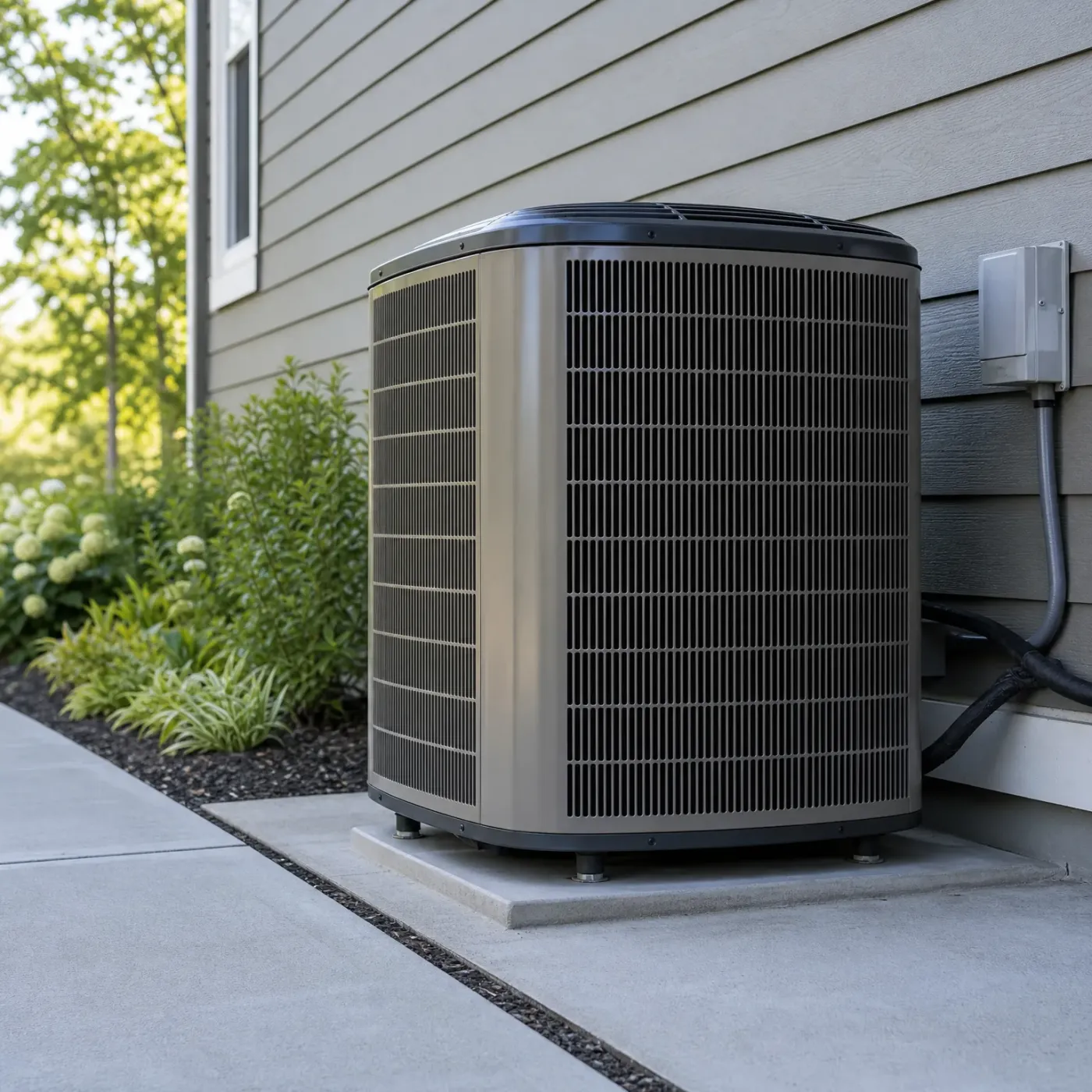
Running the way it should
The outdoor unit cycles on, the fan turns, and cold air comes through the vents inside. The coil guard is clean and the pad underneath sits level. This is the baseline you want back once the system is fixed.
First, check the thermostat is set to cool and a few degrees below room temperature, and check the breaker. If those are fine, go to the outside unit. If it's not running at all, or running but not blowing cold air, turn it off at the thermostat so it stops short cycling and doesn't strain the compressor further. A South Carolina summer means a dead AC turns a house uncomfortable fast, and humidity climbs right along with the temperature once the system stops pulling moisture out of the air. Check the air filter too. A filter clogged with dust can starve the system of airflow and cause the indoor coil to ice over, which then blocks cooling even after you fix the airflow. If the outdoor unit is running but the air inside isn't cold, that points to something inside the system itself, like the charge or a failing part, and that's a repair job, not something to clear yourself.

The outdoor unit cycles on, the fan turns, and cold air comes through the vents inside. The coil guard is clean and the pad underneath sits level. This is the baseline you want back once the system is fixed.

Dirt coats the coil guard and the unit looks like it's been neglected a while. It might still run, just not cool the house, or it might not come on at all. Either way, that buildup points to a system that needs a look before South Carolina heat pushes it further.




Your thermostat is just a switch. Set it to cool, drop it a few degrees below room temperature, and it tells the outdoor unit to start. The compressor out there pressurizes refrigerant and pushes it through the outdoor coil, where the fan blows outside air across it to get rid of the heat your house doesn't want. The refrigerant comes back inside cold, and the blower pushes your home's air across the indoor coil to pick up that cold before sending it through the ducts. Each part depends on the one before it, so a problem in one spot shows up somewhere else. A dirty filter chokes airflow until the indoor coil freezes over, even though the filter is the real cause. Water that collects on that coil drains out through the condensate line, and if the line clogs, a safety switch shuts the whole system down before it floods. Outside, a weak capacitor can't give the compressor or fan motor the jolt they need to start, so the unit just hums instead of running.


A compressor that keeps trying to start against high pressure or a bad run capacitor is what burns out and turns a repair into a replacement. That's why cutting power at the thermostat matters more than anything else you can do before a contractor gets there. It stops the short cycling that wears down the compressor and the contactor. A unit that's merely low on refrigerant or has a failed capacitor can usually be fixed outright, but a compressor that's been allowed to labor through repeated failed starts is a different, more expensive problem. Shutting it off doesn't fix anything. It just keeps today's problem from becoming tomorrow's bigger one.
In South Carolina, a stopped AC doesn't just mean a warm house. The air indoors holds onto moisture fast once the system quits moving air across the coil, and that moisture settles into furniture, drywall, and anything stored in closets or a basement. A day or two without cooling in July does more here than the same stretch would somewhere dry. That's part of why acting on a small problem, a warm room, a weak airflow, a unit that cycles too often, matters more in a muggy climate than people expect. The equipment itself isn't different here. What's different is how fast the air in the house tells you something's wrong.


Send the request today and stop worrying about who to call.
Say what's going on with your air conditioner, and a pro who works on them reaches out.
You're not committing to anything by asking.


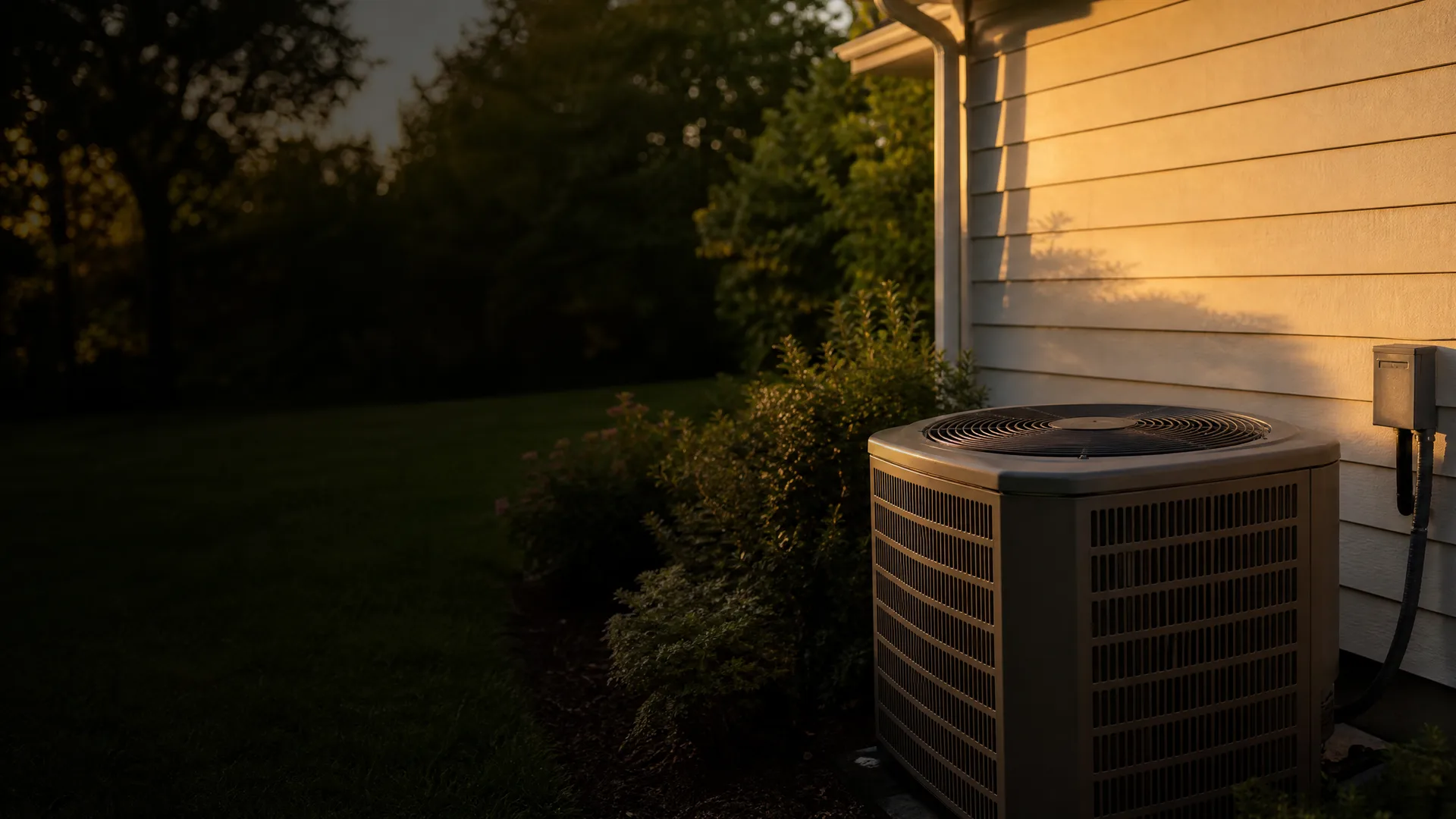
By seven that evening the sun is low and orange over the yard, and the air still sits thick and wet the way it does on an August night in South Carolina. You're out back with a glass of tea, and that's when you notice it. The condenser fan isn't turning. No hum, no spin, nothing moving behind the grille. Inside, the vents have gone warm sometime in the last hour without you noticing. The dog is panting by the back door. You crouch down and look at the unit for a minute, like staring at it might start it up again. It doesn't. You head back inside to find the thermostat and shut the system off before you do anything else.
South Carolina summers run a dew point averaging 69°F across June, July and August, per NOAA. That's heavy, wet air, and it means your air conditioner isn't just cooling your house, it's pulling a lot of moisture out of that air too. When the unit can't keep up, you feel it fast. The house stays clammy even after the thermostat says it hit the set temperature. Windows sweat. The air inside feels thick instead of dry and cool. That extra moisture load is also why a struggling system in South Carolina tends to run longer cycles than the same unit would somewhere drier, which wears on the compressor and shows up sooner as a problem worth calling in.
NASA POWER T2MDEW county cells weighted by homes
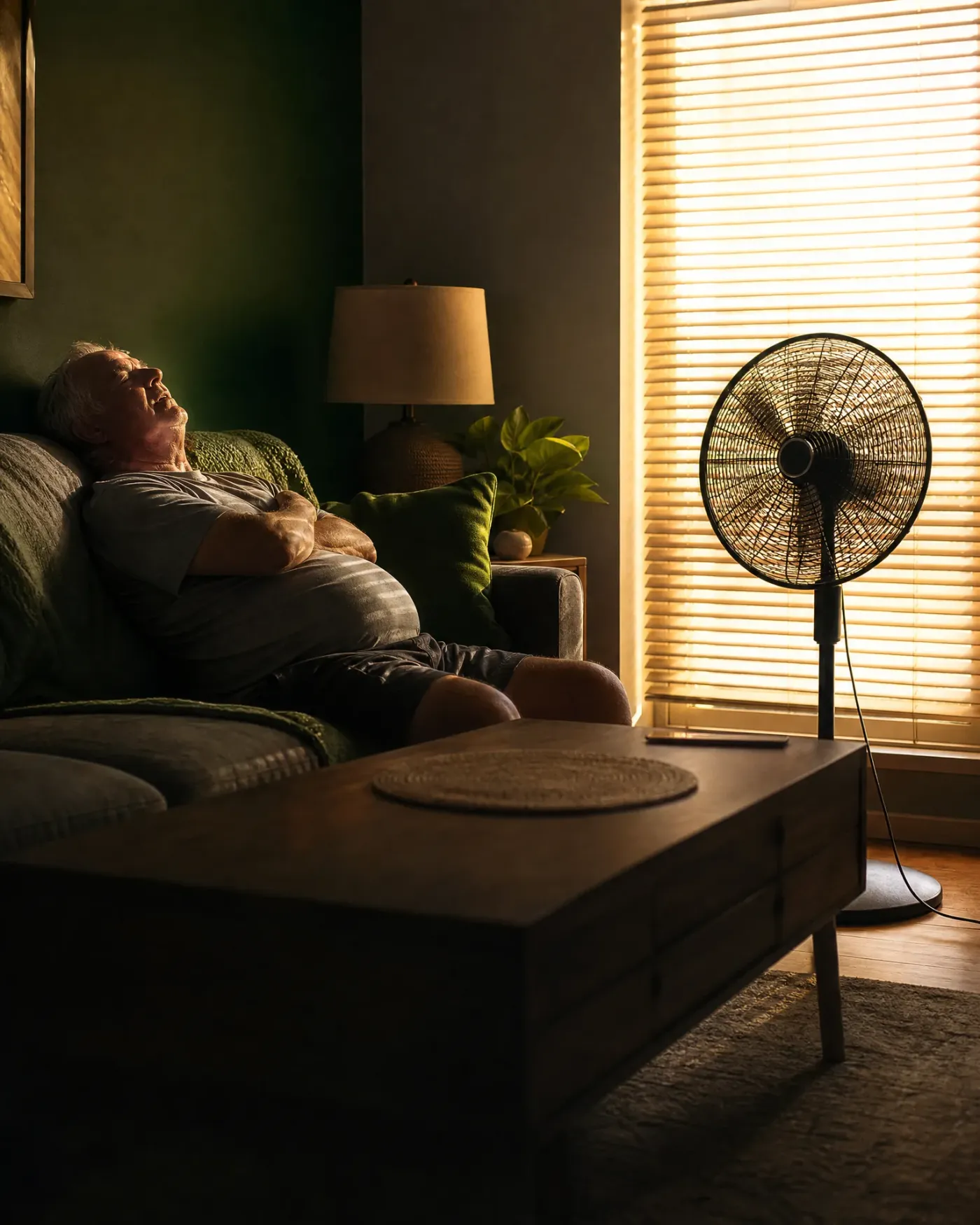
The air coming through the vents feels like room temperature or warmer, not cold. The thermostat might show a number close to the actual temperature in the house, or it keeps climbing no matter how low you set it. You may hear the outdoor unit trying to start and failing, a hum or a click with no fan turning. Indoors, the air feels heavier than usual, sticking to your skin the way it does when moisture isn't being pulled out. If this sits for long in South Carolina's heat, the house holds onto that heat and humidity, and that's harder on everyone inside, especially anyone older or with breathing trouble.
Thermostat calls for cooling and closes a switch to the outdoor unit
The compressor pressurizes refrigerant and sends it to the outdoor coil
The fan pulls outside air across the coil to release heat
Cooled refrigerant moves to the indoor coil near the blower
At 15.12 cents per kilowatt-hour, running your air conditioner on borrowed time costs you by the hour, not just the repair bill later. A unit that's low on refrigerant or straining through a dirty coil pulls more power to do less cooling, and that shows up on the next bill whether or not the house ever gets comfortable.
EIA-861 2025 statewide residential average

You checked the thermostat and the breaker. You cut power to the outdoor unit so a bad capacitor or a struggling compressor doesn't turn into something worse. You know whether it's not running at all or running without cold air coming through the vents. That's the part that was yours to do.
What happens next isn't. Once you send the form, you're matched with a contractor who handles the kind of problem you're dealing with, and they'll reach out to you. You don't need to keep diagnosing it or figure out who to call. The house is sitting warm and wet the way it does on a South Carolina summer evening, and that's reason enough to hand this part off.


It costs nothing to send, and you don't have to hire anyone.
A house stuck at 84 degrees in a South Carolina summer doesn't get better on its own. The longer a struggling compressor keeps trying to start, the more likely a repair turns into a replacement. Sending the request now is what gets a contractor looking at your system instead of your afternoon disappearing into it.