South Carolina HVAC Match

How long an AC takes to cool a house in South Carolina

Send the form, and lining up the air conditioner tune-up stops being yours to chase.

Hand it off

How long does it take an AC to cool down a house in South Carolina?

You come home to a house that's sat shut up all day, or you've bumped the thermostat down a few degrees, and you're watching the number on the wall hoping it moves faster. In South Carolina's heat and humidity, that wait can feel longer than it should, and you start wondering if something's wrong with the unit or if this is just how long it takes.

A properly working AC drops a house 2 to 3 degrees an hour

Most homes cool at a rate of 2 to 3 degrees per hour when the system is working as it should. So a house that's 8 degrees above your setting could take two to three hours to catch up. The humidity here makes the AC work harder than the same temperature drop would in a drier state, since the system has to pull moisture out of the air as it cools it. If a full afternoon passes and the house hasn't caught up, or it cools but stays sticky and damp feeling, that points to something off with the system rather than the weather asking too much of it.

A man in a blue sweatshirt reclines with closed eyes in a brown leather armchair in a living room with a bookshelf, houseplant, sofa, window, and a side table holding newspapers and a dark mug.
A bearded man in a gray pullover reclines with closed eyes on a brown leather sofa in a sunlit room with a window, framed picture, potted plant, and a wooden cabinet holding papers and a dark mug.
A man in a gray sweater leans back with closed eyes in a brown leather armchair beside a wooden side table holding a dark mug and a folded newspaper, with bookshelves and a window seat behind him.
A man in a green sweater reclines in an armchair with his eyes closed and a slight smile, beside a window with plants, a small table holding a mug and folded newspaper, and bookshelves behind him.

Slow to Cool or Falling Behind

AC running slow

  • The air coming out of the vents still feels cool, just not cold enough to catch up fast.
  • A dirty filter or a coil caked with dust cuts how much air moves, even when the compressor is working fine.
  • The thermostat might show the temperature dropping, just a degree an hour instead of two or three.
  • This is usually the time a tune-up fixes, since the parts are working, just not at full strength.
  • Humidity drops slower too, so the house feels damp even after the number on the wall looks right.
  • Letting this go through a whole South Carolina summer means higher bills for the same result.

AC not keeping up at all

  • The house holds steady or climbs even with the thermostat set low and the system running nonstop.
  • This points to something more specific, like a low refrigerant charge or a compressor that's failing.
  • A system sized wrong for the house will struggle the same way no matter how well it's maintained.
  • Ice on the outdoor unit or the indoor coil is a sign of this, not of a simple dirty filter.
  • A contractor who works on this equipment every summer in South Carolina can usually tell which it is in one visit.
  • Waiting this one out costs more than the bill, since a compressor under strain can fail outright in August heat.
  1. Thermostat calls for cooling and signals the outdoor unit

  2. Compressor starts and pressurizes refrigerant for the coil

  3. Indoor coil pulls heat and moisture out of the air

  4. Blower pushes cooled air through the ducts into each room

Is your house taking longer to cool than it used to

You set the thermostat and then you wait, and the house stays warm longer than it should. Maybe you notice the air at the vents feels weaker than it used to, more like a breeze than a real flow. Maybe the unit outside is running almost nonstop on a hot afternoon and the house still feels sticky. Upstairs stays warmer than downstairs no matter how low you set it. A bedroom at the end of the hall never quite catches up. None of this means the system is finished, but a unit working this hard to do what it used to do easily is wearing down faster, and your electric bill is already showing it.

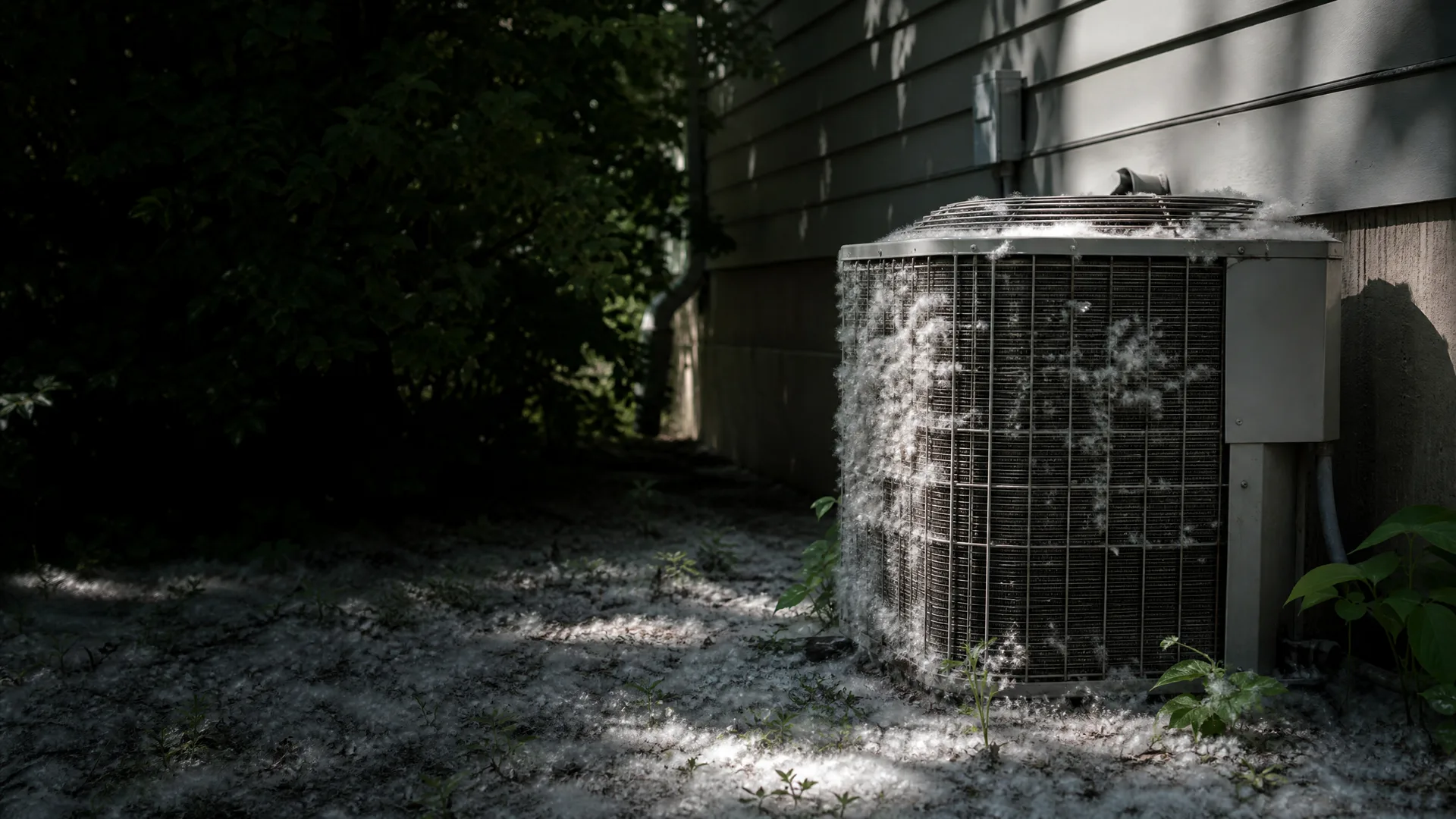
An outdoor air conditioner condenser unit beside a house with horizontal siding, its coil covered in white cottonwood fluff that also blankets the ground around it.

You're out by the side yard in late May, grass still wet from morning, when you notice the condenser running the whole time you're out there and never seeming to catch up. You crouch down and see why. The fins are packed with white fluff, cottonwood seed caught in the coil like snow that won't melt. Air isn't moving through it the way it should. Inside, the house is still warm, the thermostat creeping down a degree at a time instead of dropping the way it used to. You brush at the fins with your hand but the fluff is matted in deep, past what a hand or a hose is going to clear.

Done looking for an air conditioner pro

A unit that used to pull a house down to temperature in a reasonable stretch and now takes twice as long isn't failing outright, it's falling behind, and that gap usually traces back to something a maintenance visit catches early: a coil losing its grip on heat because it's coated in dust, a filter choking airflow, refrigerant running low from a slow leak nobody's noticed yet. In South Carolina, where the unit works hard most of the year, that slow slide happens faster than it would somewhere milder, and a system left unchecked a season or two tends to be the one that can't keep up on the next ninety degree day. Someone who services this equipment all summer knows which of those problems show up first, and what shape they're in by the time a homeowner notices the house isn't cooling like it did. Send the request and it goes to one contractor local to your area, not several, so you're dealing with one call back, not a handful.

Reading the Split Right

  • The temperature split between the air going into the return and the air coming out of a vent should run about 18 to 20 degrees.
  • A smaller split usually means the coil or the charge isn't pulling its share of heat out of the air.
  • South Carolina's humidity makes the coil do two jobs at once, stripping moisture as well as heat, which slows the drop you feel on the thermostat.
  • A unit sized right for the house should cycle off sometimes, not run wall to wall every hour of a June afternoon.
  • Short cycling, where the compressor kicks on and off within a few minutes, points to a different problem than one that just runs long and steady.
  • Airflow has to clear the coil before the refrigerant side can do anything, so a blocked return or closed vents slows the whole chain down.

A technician checking a slow cooling complaint starts with a thermometer, not a guess. Hold it at the return where air goes in, then at a supply vent where it comes out. The gap between those two numbers, the split, tells you whether the system is doing its job. Eighteen to twenty degrees is the range to expect. Less than that, and the coil isn't absorbing the heat it should, whether that's low refrigerant charge, a coil fouled with dust, or airflow that's too weak to carry heat away from it fast enough.

In South Carolina the coil isn't just pulling heat out of the air, it's wringing moisture out of it too, and that second job eats into the same capacity that would otherwise drop the temperature faster. That's part of why a house here can feel like it's cooling slower than the thermostat number alone suggests, even with a healthy system.

How the unit cycles matters as much as the split. A correctly sized system should shut off sometimes, even on a hot June afternoon, not run continuously hour after hour. Nonstop running points to a capacity problem. But a compressor turning on and off every few minutes is a different animal entirely, usually electrical or a control issue, not a refrigerant one. And none of it matters if the air can't get to the coil in the first place. A blocked return grille or vents shut in half the rooms starves the whole system before the refrigerant side even gets a chance to work.

Power costs 15.12 cents per kilowatt-hour statewide

At 15.12 cents a kilowatt-hour, a unit that's slow to cool runs longer to get there, and every extra hour it runs shows up on the bill. Keeping the coil clean and the charge right is what keeps those hours down.

EIA-861 2025 statewide residential average

Why humidity slows the whole job

A South Carolina AC spends a good part of its run time pulling moisture out of the air, not just dropping the temperature. That moisture has to condense on the indoor coil and drain away before the house feels any drier. On a muggy July day the unit can hit the number on the thermostat and the house still feels warm, because the air inside is still heavy. A coil that's clean and charged right handles both jobs at once. One that's behind on either ends up running longer to get the same result.


What a short cycle costs you

An AC sized right for your house should run a steady stretch and shut off, not kick on and off every few minutes. Short cycling like that means the unit stops before it finishes pulling moisture out of the air, even if the room feels cool for a moment. It also puts more wear on the compressor, since starting draws more power than running does. A unit that's maintained tends to run in longer, steadier stretches, which is what actually brings a hot house down to temperature and keeps it there.

An older man with gray hair and a beard leans back on a beige sofa with his eyes closed, in a sunlit room with potted plants, a wicker chair and large windows behind him.
A woman in a cream knit sweater sits in an armchair with her eyes closed and a slight smile, beside an open window showing orange autumn foliage, with a mug, books and a lit candle on a small side table.
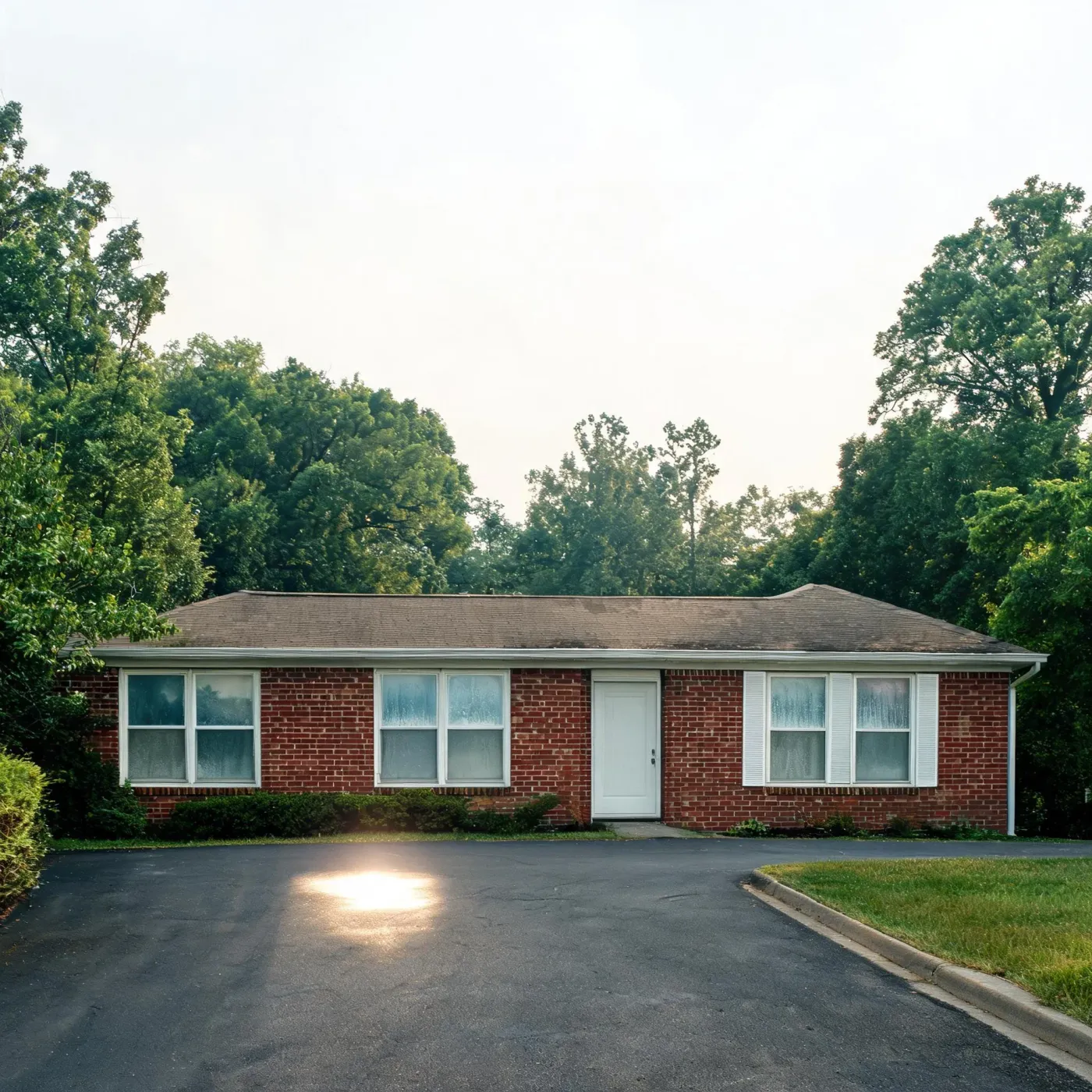
A single-story red brick ranch house with a white door, white-trimmed windows and a shingled hip roof, fronted by a wide asphalt driveway with sunlight glare, surrounded by green deciduous trees under a pale sky.

A summer dew point of 69°F is the figure that decides how heavy the air feels on your porch, and it's also what your AC is up against every time it runs. Air that wet holds onto its moisture, so the indoor coil has to work through more of it before the house actually feels dry. You'll notice the thermostat hit its number while the air inside still feels damp, almost clammy, and that's not the AC falling short. It's the coil still catching up on moisture the dew point keeps resupplying. Source: regional climate averages for South Carolina.

NASA POWER T2MDEW county cells weighted by homes

A healthy AC in South Carolina should bring a house down to temperature within a reasonable stretch, even with the dew point working against it. When that stretch keeps growing, the cause is almost always something mechanical, not the weather. A clean coil, the right charge, and good airflow are what keep the pull-down time where it should be, and maintenance is how those stay in shape before a hot stretch finds the weak point for you. A local contractor who services this kind of equipment all summer has seen which part usually gives out first in a house like yours, whether that's a coil losing its grip or a charge that's drifted low, and knows where to look first instead of working through every possibility from scratch. You'd be matched with one licensed contractor local to your part of South Carolina, not a handful of companies competing for your call. Your house will still get warm on a July afternoon. How fast it recovers once the AC kicks on is the part worth having checked.

An outdoor air conditioner condenser unit sits on a concrete pad beside a house with horizontal siding and stone veneer, next to mulch, shrubs, and grass.

It's off your list after this

Tune-up, service, or cleaningCentral ACSouth Carolina
Step 1 of 2

What ZIP code is the job in?