Mini Split Installation in Spartanburg, SC
A new system here will heat from October through April and cool from May through September every year. Tell us about the house, and a licensed contractor who covers Spartanburg County will get in touch.
Tell us about the job
It takes about a minute.
Spartanburg asks a mini-split to run nearly every month of the year
Winter nights here average 33°F, and homes need heat from October through April. Summer afternoons average 88°F, with cooling season running May through September. That leaves almost no month where a mini-split sits idle, so it has to handle a real cold snap and a real heat wave in the same year.
Any mini-split installed new has to clear 14.3 SEER2 for cooling and 7.5 HSPF2 for heating, the federal minimum for split-system heat pumps. With storms knocking out power often enough in this state that 45% of households lost it for a full day at some point in 2024, it's also worth knowing that a mini-split heat pump comes back on by itself once power returns.
- 7 months
- October through April, your system heats
- 5 months
- May through September, it cools
- 33°F
- the average winter night it heats against
- 88°F
- the average summer afternoon it cools against
NOAA nClimDiv, 1991–2020 normals
- Is a mini split worth it?
- For most homes here, yes, especially in a room that never seems to hold heat or stays warm all summer. Heat is needed October through April and cooling May through September here, so the unit works nearly the whole year round. It also skips ductwork, so if the room you're fixing doesn't already have ducts running to it, a mini split can get heat and cooling there without cutting into walls.
- How many rooms can a mini split cover?
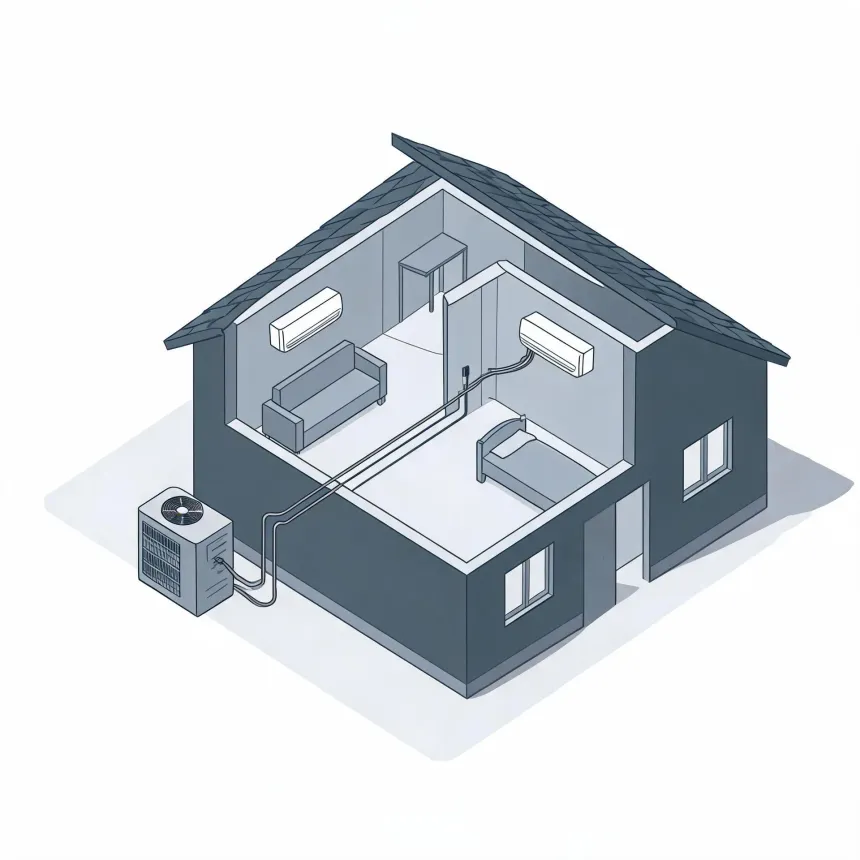
- A single-zone system heats and cools one room or open area. If you need several rooms covered, a multi-zone system connects several indoor units to one outdoor unit, and each indoor unit gets its own thermostat. A contractor will size the number of zones and the outdoor unit to the rooms you're trying to cover.
- Can a mini split heat a whole house?
- A multi-zone mini split can heat a whole house if there's an indoor unit in enough of the rooms, but a single indoor unit won't heat much past the room it's in. Winter nights here average 33°F, so the system also needs to be sized for that cold, not just for a mild day. A contractor can work out whether whole-house coverage means one large multi-zone setup or pairing the mini split with existing heating in some rooms.