Mini Split Installation in Hartsville, SC
A new system here will heat from November through March and cool from May through September every year. Tell us about the house, and a licensed contractor who covers Darlington County will get in touch.
Tell us about the job
It takes about a minute.
What a mini-split in Hartsville has to handle
Ten months of the year, your mini-split is either heating or cooling this house. Winter nights average 35°F from December through February, and summer afternoons average 90°F. That is a long stretch of run time in both directions, and the unit you install needs to hold up to it.
Any mini-split manufactured now has to clear federal minimums either way, 14.3 SEER2 for cooling and 7.5 HSPF2 for heating. That is the floor, not a feature to look for. What matters more here is the power behind it. Almost 9 in 10 homes in this area heat with electricity, and South Carolina saw 45% of households lose power for a day or more in 2024. Hartsville has also logged 129 damaging wind events over the past ten years. A mini-split that goes down with the power goes down at the same time your backup options do.
- 5 months
- November through March, your system heats
- 5 months
- May through September, it cools
- 35°F
- the average winter night it heats against
- 90°F
- the average summer afternoon it cools against
NOAA nClimDiv, 1991–2020 normals
- Is a mini split worth it?
- For most homes here, yes, especially in a room your main system does not reach well. Hartsville needs heat five months a year and cooling five months a year, so a mini split earns its keep most of the year rather than sitting idle. It also runs on electricity, which is already how most homes here heat, so it fits into what is already installed. A contractor can tell you whether a mini split makes more sense than extending ductwork for your specific space.
- How many rooms can a mini split cover?
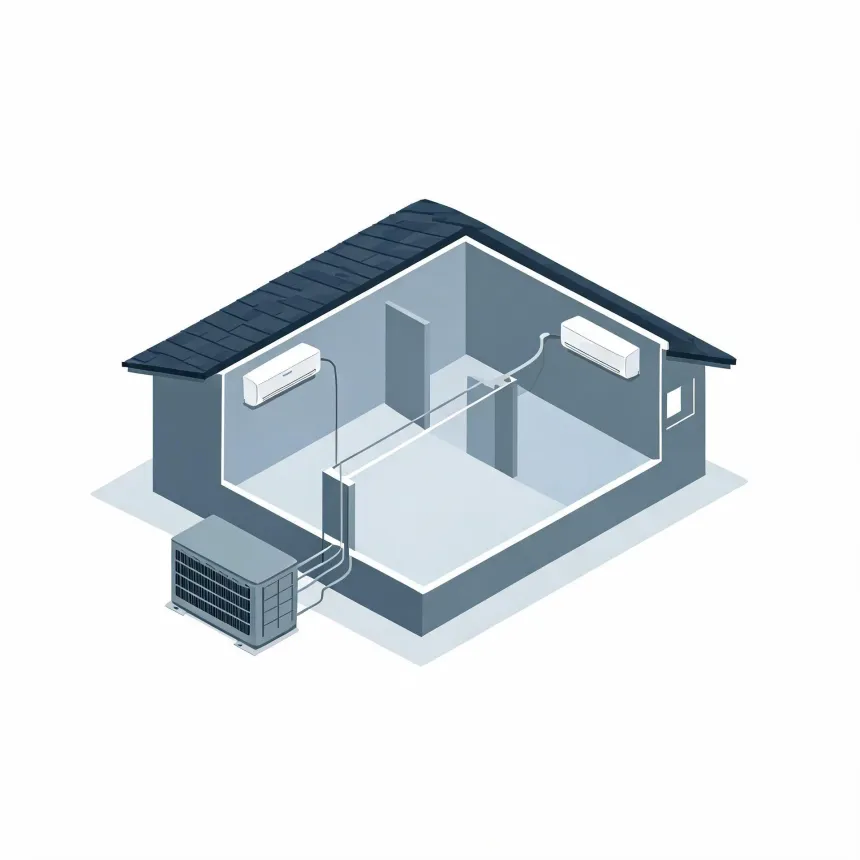
- One outdoor unit can run a single indoor head or several, so it can cover one room or a handful of them depending on the system. Each indoor head is matched to the room or open area it serves, so a den and two bedrooms would typically mean three heads, not one head trying to cover all three. The right count depends on the size and layout of the space, and a contractor will size it room by room.
- Can a mini split heat a whole house?
- It can, if enough indoor heads are placed to cover every room, but that takes real planning. Hartsville winter nights average 35°F, so the system needs to be sized for that low, not just for a mild evening. A single head warms the room it is in well but will not push heat down a hallway or through a closed door, so whole-house coverage usually means a head in each room or zone. A contractor can lay out how many heads your house would need and where.