Mini Split Installation in Florence, SC
A new system here will heat from November through March and cool from May through September every year. Tell us about the house, and a licensed contractor who covers Florence County will get in touch.
Tell us about the job
It takes about a minute.
Ten months a year, this system doesn't get a break
Florence County asks for heat from November through March and cooling from May through September. Only two months sit outside one job or the other. Winter nights average 36°F, mild enough that a heat pump can carry the heating load on its own, and summer afternoons average 90°F, which keeps the compressor working hard most days all summer.
Most homes here heat with electricity, so the mini-split going in is likely doing both jobs, not just cooling. Any new one has to meet 14.3 SEER2 for cooling and 7.5 HSPF2 for heating, the federal minimum for split-system heat pumps built from 2023 on. Storms matter here too. Florence County has logged 97 damaging wind events over the past ten years, and in 2024, 45% of South Carolina households lost power for at least a day. When a mini-split is the only heat in the house, the outdoor unit needs to be set and wired with that in mind.
- 5 months
- November through March, your system heats
- 5 months
- May through September, it cools
- 36°F
- the average winter night it heats against
- 90°F
- the average summer afternoon it cools against
NOAA nClimDiv, 1991–2020 normals
- Is a mini split worth it?
- For most homes here, yes. Florence needs heat five months a year and cooling five months a year, so a system that does both from one unit is working most of the year, not sitting idle half the time. A mini split also keeps working room by room if part of your ductwork or your main system is down, and with 97 damaging wind events recorded here over the past ten years, that backup matters. The one thing to check with a contractor is whether it fits your layout, since a mini split is sized by room, not by square footage of the whole house.
- How many rooms can a mini split cover?
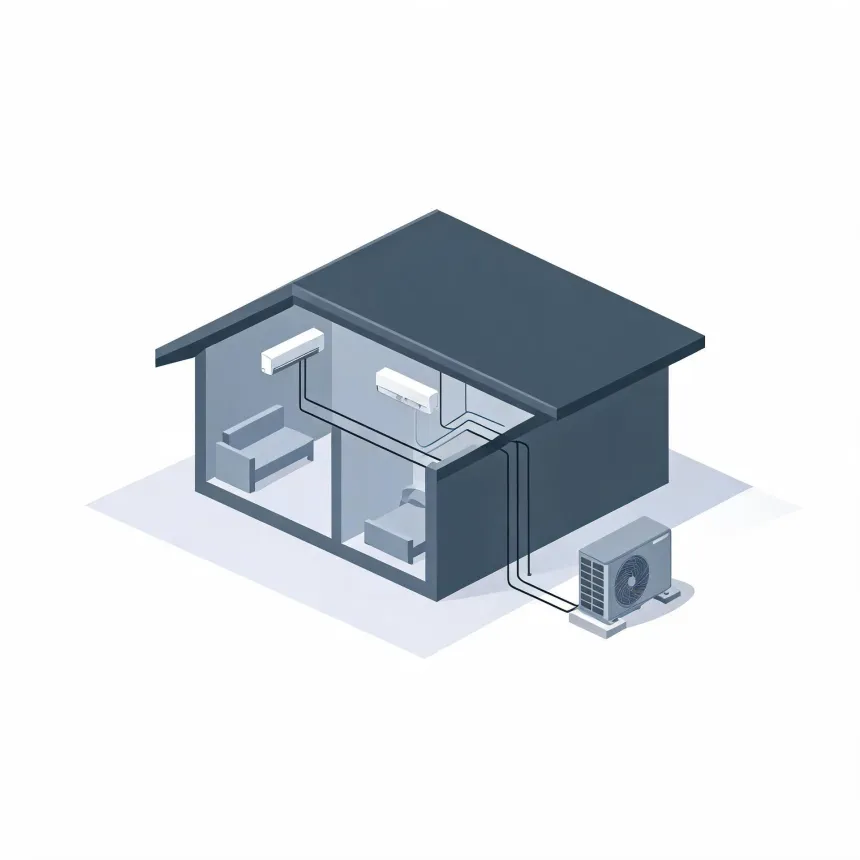
- A single outdoor unit can run one indoor head or several, depending on the system. Single-zone systems cover one room. Multi-zone systems run several indoor heads off one outdoor condenser, each with its own thermostat. A contractor sizes the outdoor unit to the combined load of every room you want covered, so the right number depends on how those rooms are laid out and how much heat they lose or gain, not just their count.
- Can a mini split heat a whole house?
- It can, if enough zones are installed to reach every room, but a single indoor head only heats the space it's mounted in. Winter lows here average 36°F, so the heat pump has real work to do all season, and a whole-house setup means running enough indoor units, sized to each room, off one or more outdoor condensers. A contractor can lay out how many zones your house needs based on its rooms.