Heat Pump Repair in Sumter, SC
Homes here need heat from November through March and cooling from May through September. If your system quits, tell us what it's doing and a licensed contractor who covers Sumter County will get in touch.
Tell us about the job
It takes about a minute.
Ten months of work in Sumter County
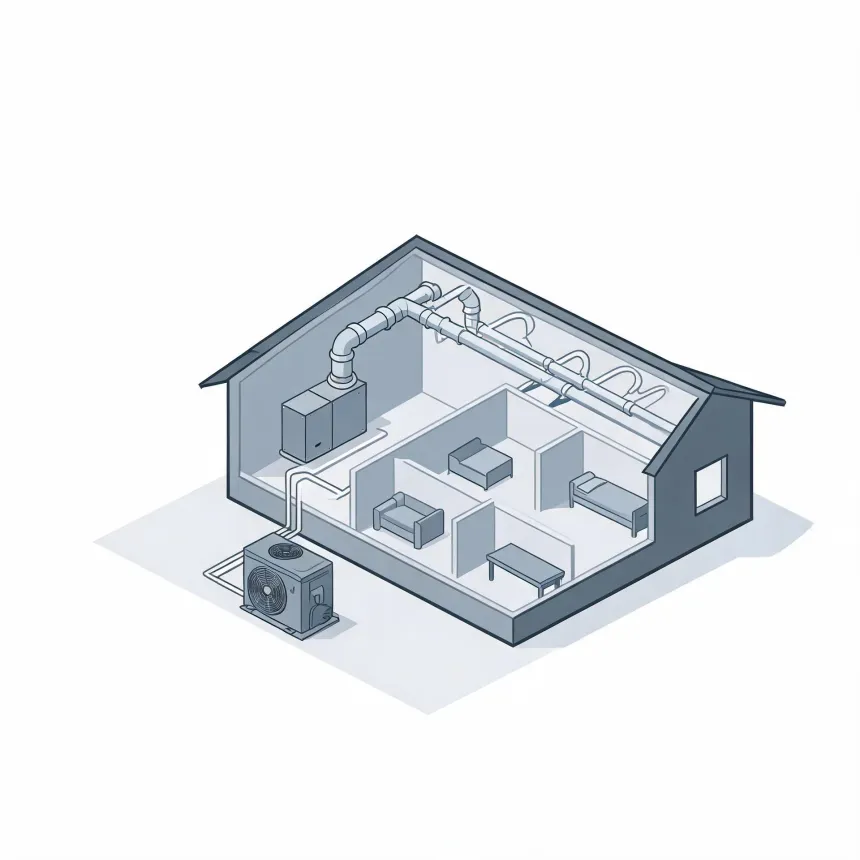
Your heat pump runs from November through March to keep the house warm, then switches over and runs May through September to keep it cool. That is ten months a year with barely a break, and most homes here lean on it for heat instead of a furnace, so when it stops working there is nothing else to fall back on.
Summer afternoons averaging 90°F push the outdoor unit hard for hours at a stretch, and winter nights near 36°F mean it is running the defrost cycle often to keep the coil clear. That much cycling wears on the compressor and the reversing valve that switches the system between heat and cooling. Storms add another risk. Sumter County has seen 182 damaging wind events and 8 winter storms over the past ten years, and with 45% of South Carolina households losing power for at least a day in 2024, an outage can leave a heat pump needing a reset or a repair before it runs again.
- 5 months
- November through March, your system heats
- 5 months
- May through September, it cools
- 36°F
- the average winter night it heats against
- 90°F
- the average summer afternoon it cools against
NOAA nClimDiv, 1991–2020 normals
- Why is my heat pump blowing cold air?
- In heating mode, a heat pump does not put out air as hot as a furnace does, so it can feel cold to the touch even when it is working right. If the air feels closer to room temperature than warm, check that the thermostat is set to heat and not fan only, since fan only just moves air without running the system. If the outdoor unit is covered in ice or not running at all, that points to a real problem, and a contractor should look at it before it gets worse on a cold night.
- Why is there ice on my heat pump?
- Some frost on the outdoor unit during a cold snap is normal, and the system defrosts itself on a timer by briefly reversing and blowing warm air outside. If the coil is covered in thick ice, or ice is building up faster than the defrost cycle clears it, something is stopping proper airflow or the refrigerant charge is off. Check that nothing is blocking the outdoor unit, no leaves, no snow piled against it, and that the air filter inside is not clogged. If the ice keeps coming back, a contractor needs to find out why the defrost cycle isn't keeping up.
- Why is my heat pump running but not cooling?
- If the outdoor unit is running but the air coming out of your vents is not cold, start with the filter and the outdoor coil. A clogged filter or a coil packed with leaves and dirt blocks the airflow the system needs to move heat out of your home. Check the thermostat is set to cool and the temperature is actually below room temperature. If the filter is clean and the outdoor unit is clear but you still get no cooling, especially on a 90°F afternoon, the refrigerant charge or a component inside the system likely needs a contractor's attention.