Heat Pump Repair in Columbia, SC
Homes here need heat from November through March and cooling from May through September. If your system quits, tell us what it's doing and a licensed contractor who covers Richland County will get in touch.
Tell us about the job
It takes about a minute.
Ten months of work a year in Columbia
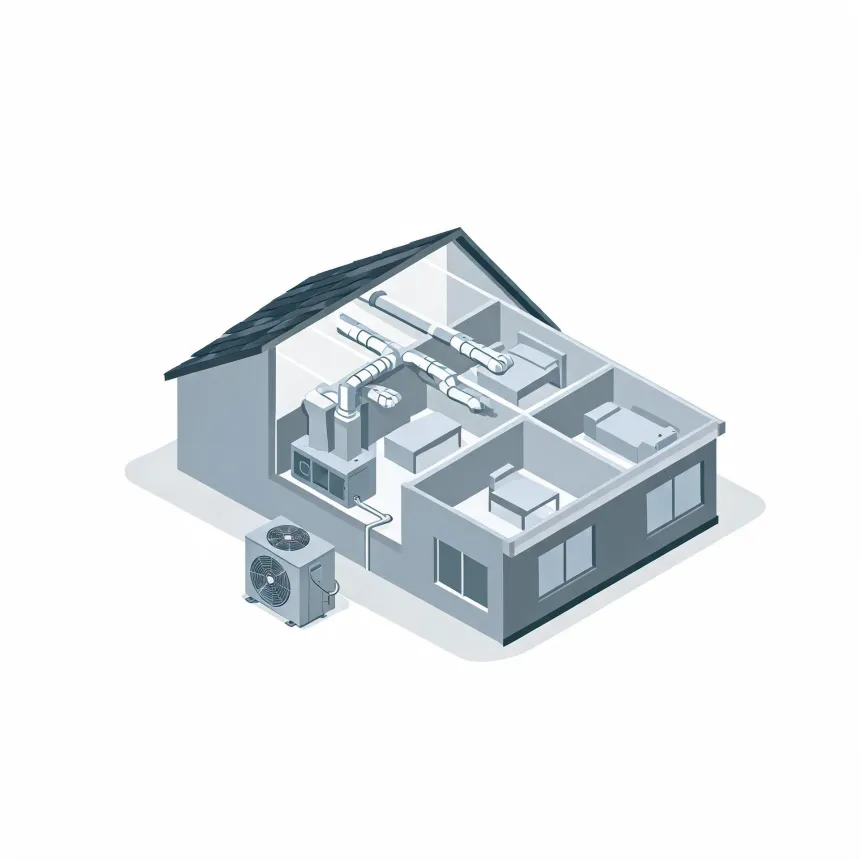
Your heat pump runs almost year round here. Heat from November through March, cooling from May through September, only a couple of months off in between. That kind of run time adds up on the compressor and the reversing valve, the parts that switch the system between heating and cooling.
Columbia summers push it hard too, with afternoons averaging 91°F. On top of that, most homes here heat with electricity, so when the unit struggles, there is no backup keeping the house comfortable. Wind is the bigger risk to watch for. Richland County has logged 360 damaging wind events over the past ten years, and outages follow. Almost half of South Carolina households lost power for at least a day in 2024. A heat pump that will not come back on after the power returns, or one that trips off during a storm, is one of the more common calls.
- 5 months
- November through March, your system heats
- 5 months
- May through September, it cools
- 36°F
- the average winter night it heats against
- 91°F
- the average summer afternoon it cools against
NOAA nClimDiv, 1991–2020 normals
- Why is my heat pump blowing cold air?
- In heating mode, air from the vents is naturally cooler than your body temperature, so it can feel cold even when the system is working fine. If it feels truly cold, the unit may be in a defrost cycle, which pulls warm air off the indoor coil for a few minutes to clear frost from the outdoor unit, then switches back on its own. If the air stays cold well past that, or the outdoor unit never seems to run, have a contractor check the reversing valve and refrigerant charge.
- Why is there ice on my heat pump?
- Some frost on the outdoor coil is normal in cold weather, and the system runs a defrost cycle on its own to clear it. Ice that is heavy, covers the whole unit, or does not melt off during a normal defrost points to a problem, like a stuck defrost control, a failed sensor, or low refrigerant charge. Winter lows here average 36°F, so some frost through the season is expected, but ice that builds up and stays is not.
- Why is my heat pump running but not cooling?
- If both units are running but the air is not cooling, check the filter first, since a clogged one restricts airflow across the indoor coil. Ice on the outdoor unit, a thermostat set wrong, or low refrigerant can also keep it from cooling even while it runs. Summer afternoons here reach 91°F, so a system that is struggling falls behind fast, and a contractor should check refrigerant charge and airflow before the next hot stretch.