Heat Pump Repair in Seneca, SC
Homes here need heat from October through April and cooling from May through September. If your system quits, tell us what it's doing and a licensed contractor who covers Oconee County will get in touch.
Tell us about the job
It takes about a minute.
Your heat pump doesn't get a season off in Seneca
Almost seven in ten homes here heat with electricity, and that means the heat pump. From October to April it's pulling heat out of air that drops to 33°F on winter nights, then come May it switches over and fights afternoons near 87°F. There's no long rest between the two jobs, just a short changeover in spring and fall.
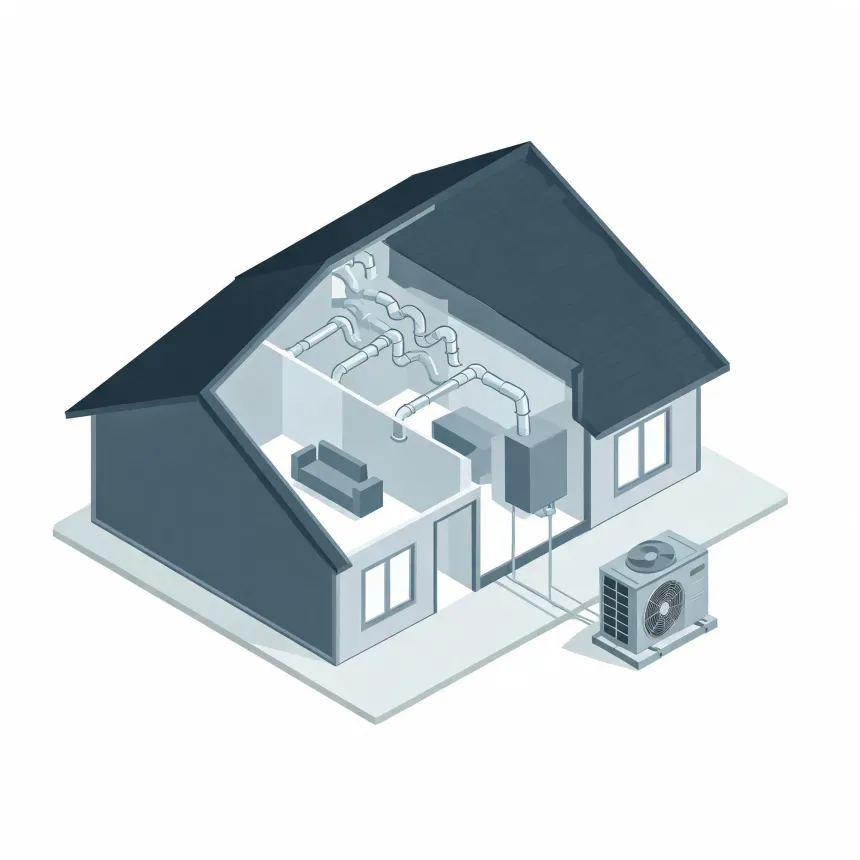
That back and forth wears on the reversing valve, the part that switches the system between heating and cooling. When it sticks, the unit blows cold air when you've called for heat, or it won't get out of one mode at all. Seneca also sees its share of rough weather, 92 damaging wind events over the past ten years, and with 45% of South Carolina households losing power for a day or more in 2024, the outdoor unit's capacitor and control board take a hit every time the power drops and comes back. A heat pump that won't start after an outage, or one stuck in the wrong mode, is often telling you exactly which part gave out.
- 7 months
- October through April, your system heats
- 5 months
- May through September, it cools
- 33°F
- the average winter night it heats against
- 87°F
- the average summer afternoon it cools against
NOAA nClimDiv, 1991–2020 normals
- Why is my heat pump blowing cold air?
- In heating mode, a heat pump puts out air that feels cooler than a furnace would, often around body temperature, and that can feel cold even when it is working right. If the air coming out is truly cold, not just cool, check that the thermostat is set to heat and not fan only, since the fan will run continuously without warming the air. If the setting is correct and the air still is not warm, the system may be stuck in defrost mode or low on refrigerant, and a contractor should look at it.
- Why is there ice on my heat pump?
- Some frost on the outdoor unit in winter is normal, and the system clears it on its own with a defrost cycle every so often. A heavy coat of ice that does not go away is different. That usually points to a fan that has stopped turning, a refrigerant leak, or airflow blocked by leaves or snow around the unit. With winter nights here averaging 33°F, the outdoor coil runs cold enough that any of these problems will ice over fast, so it is worth having a contractor check it before the coil is damaged.
- Why is my heat pump running but not cooling?
- Start with the air filter. A clogged filter chokes off airflow across the indoor coil and the system will run without cooling the house. If the filter is clean, check the outdoor unit for leaves, grass clippings or anything blocking the coil, since summer afternoons here can hit 87°F and the unit needs full airflow to keep up. If both of those look fine and the house still is not cooling, the refrigerant charge is likely low, and that calls for a contractor with gauges to find and fix the leak.