Profile view of a bearded man wearing a black baseball cap and a dark gray T-shirt against a plain light background.

Does a heat pump handle humidity in South Carolina

New system or replacementHeat PumpSouth Carolina
Step 1 of 2

What ZIP code is the job in?

Can a heat pump keep up with South Carolina humidity?

A heat pump cools your home, but cooling and drying the air aren't the same job, and South Carolina air stays heavy long after the temperature drops. You want to know if the system sitting outside your house is actually built to pull that moisture out, or if you're going to be stuck with a thermostat that says 72 while everything still feels damp.

Yes, a properly sized heat pump pulls humidity out as it cools

A heat pump removes humidity the same way a central air conditioner does. As it runs, warm air passes over a cold coil, and moisture condenses out of it and drains away. That happens every time the system runs in cooling mode, not as a separate step. The part that matters is sizing. A heat pump that's too large for the house cools the air fast, shuts off, and never runs long enough to pull much moisture out. That leaves rooms cold but still sticky. One sized correctly for the square footage runs longer, steadier cycles through a muggy South Carolina summer, and that longer runtime is what actually dries the air out.

A gray outdoor heat pump unit with a large fan grille sits on a concrete pad beside a house with horizontal lap siding, next to a green shrub, mulch bed, and lawn.

Running Right

A heat pump sized and set up correctly pulls moisture out steadily as it cools, cycling long enough to dry the air, not just drop the temperature. The house feels right at 74 instead of clammy. The outdoor unit stays clean and the airflow around it stays open.


An outdoor air conditioning condenser unit with a top fan grille sits on a concrete pad beside a house with horizontal siding and a concrete step.

Struggling With Humidity

A dirty coil like this one can't move heat the way it should, so the system short cycles, cooling the air fast without running long enough to wring the moisture out. The house feels cold and damp at the same time, and the unit works harder for less relief.

A smiling man in a dark navy sweater sits on a light sofa in a living room, with a glass bowl of popcorn on a wooden coffee table and bookshelves behind him.
A smiling man in a dark green sweater sits on a tan leather sofa in a dimly lit living room, with a bowl of popcorn in the foreground and a kitchen area blurred behind him.
A smiling middle-aged man in a dark shirt sits on a gray sofa in a living room, with a bowl of popcorn on a side table and shelves, a window and kitchen area behind him.
A smiling bearded man in a dark gray t-shirt sits on a gray couch in a living room, with a large glass bowl of popcorn on a wooden table in the foreground.

Why Short Cycles Leave Air Wet

A heat pump pulls moisture out of the air only while it's running. If the system is too big for the house, it cools the air fast, hits the thermostat setting, and shuts off before it's run long enough to wring the humidity out. You get a house that reads 72 on the thermostat but still feels damp on your skin. Sizing has to match the house, not just the square footage on paper. A unit that's oversized by even one ton can cycle too fast to do the drying part of the job, no matter how well it cools.

What A Two-Stage System Does

Some heat pumps run at a lower stage most of the time instead of switching between full blast and off. That lower stage moves less air but runs longer, and the longer runtime is what pulls moisture out of the house. It only shifts to the higher stage on the hottest afternoons. For South Carolina summers, where the heat sticks around for months, that longer low-stage runtime does more for comfort than a bigger jump in cooling power would. It's the runtime that dries the air, not the strength of the cooling.

An outdoor air conditioner condenser unit on a concrete pad beside a house with horizontal lap siding, with a shrub to the left, bare dirt in front, and conduit and a metal disconnect box on the wall.
Before you get your heat pump installation
A gray outdoor condenser unit on a concrete pad beside a white horizontal-siding house, with refrigerant lines and conduit running to a wall-mounted disconnect box, bare soil in front and a green shrub at left.
After you get your heat pump installation

Cooling and drying happen on the same piece of metal. The indoor coil chills the air below its dew point, and the water that was riding along in the air lets go right there, before anything reaches your vents. That water runs off the coil into a drain pan, down a drain line, and out of the house. In cooling mode, the reversing valve is what makes that coil cold, sending the hot refrigerant outside instead. None of this depends on the air getting especially cold. It depends on the air sitting on that cold coil long enough for the water to come out, which is why the blower matters so much. A compressor that can throttle down and run longer stretches wrings out more moisture than one that blasts cold air and shuts off. Some thermostats add a dehumidify setting that keeps the blower on the coil a bit longer each cycle, pulling more water out without chilling the room past where you set it.

How Your Heat Pump Pulls Out Moisture

  • A heat pump moves heat and moisture in one motion, using the indoor coil to chill air below its dew point so water drops out before the air ever reaches your vents.
  • That condensate runs off the coil into a drain pan and out a drain line, which is why a clogged line can cause water around the indoor unit even when cooling works fine.
  • In cooling mode the reversing valve sends hot refrigerant outside and cold refrigerant through the indoor coil, and that cold coil is the part actually doing the drying.
  • The blower moves air across the coil at a fixed speed on most systems, and how long that blower runs matters more for humidity than how cold the air gets.
  • A two stage or variable speed compressor can run at a lower output for longer stretches, pulling moisture out steadily instead of in short bursts.
  • Thermostats with a dehumidify setting can hold the blower on the coil a little longer per cycle, squeezing out more water without overcooling the room.
A gray outdoor condenser unit on a concrete pad beside a beige vinyl-sided house, with a wall-mounted disconnect box, flexible conduit, mulch bed, shrubs and a concrete walkway in front.
A heat pump running a long, steady cycle pulls the moisture down with the temperature, so the house actually feels dry.
An outdoor air conditioning condenser unit on a concrete pad beside a house with horizontal siding above a brick foundation, with a flexible conduit running to a wall-mounted disconnect box.
A unit caked in dust and grime like this one has to work harder to move air, which cuts into how much moisture it pulls out.

What is your house telling you right now

Walk through in the evening and pay attention. Does the air feel sticky even though the thermostat reads 72? Is there a musty smell in the closets or the basement? Check the windows for fog on the inside, or look for dark spots forming in corners or along the ceiling. Wood floors that feel tacky underfoot, or doors that have started sticking in their frames, point the same direction. These are signs the system is cooling the air without drying it. Left alone, that moisture gives mold and mildew a place to take hold, and it keeps working on the house long after the thermostat says the job is done.

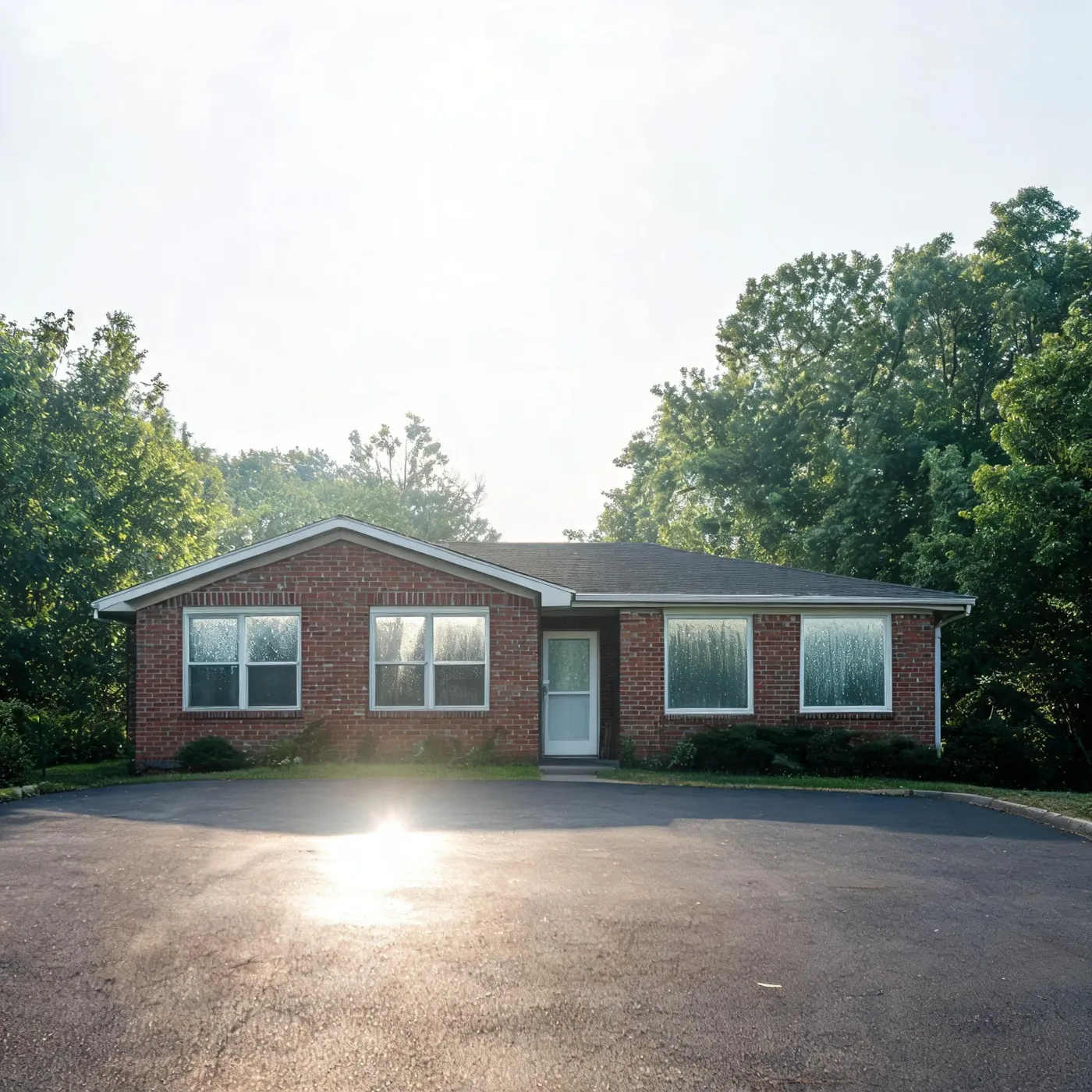
A single-story red brick ranch house with white-framed windows and a white storm door, fronted by a large asphalt parking area and backed by leafy green trees under a bright hazy sky.

Summer air here averages a dew point of 69°F across June, July and August, according to NOAA climate data. That's thick, sticky air, the kind that sits on your skin even in the shade. For a heat pump, that means more work pulling moisture out of every cubic foot of air it moves, not just more hours of running. If the system installed in your home was sized and set up for a drier climate, or sized wrong from the start, you'll feel it on nights like these, air that's cool but still clings. Getting the sizing and setup right for this air is what a heat pump installation here needs to account for, and it's worth having someone look at what your home actually needs before it's installed.

NASA POWER T2MDEW county cells weighted by homes

A pro who works on heat pumps

A heat pump can absolutely handle South Carolina humidity, but only when it's sized and installed to run the long, steady cycles that pull moisture out of the air, not the short bursts that just cool it. That's an installation decision, made before the unit ever goes in the yard. Get it wrong and you're stuck with a system that drops the temperature and leaves the air sticky anyway, a problem no thermostat setting fixes. Get it right and the house feels dry at a normal setting through every muggy month here. If you're replacing a unit that's never kept up, or putting one in for the first time, the sizing and setup matter more than the brand on the box. A contractor who works through this with your house, not a generic load calculation, is what separates a system that controls humidity from one that just moves air around it.

An oversized heat pump still cools the house fast, so the thermostat reads satisfied while the air inside stays damp and the closets smell musty.

A heat pump matched to the house runs longer, lower cycles that pull the moisture down along with the temperature, so 72 actually feels like 72.

A woman with dark hair in a bun reclines on a sofa with her eyes closed, wrapped in a cream fleece blanket, a closed blue hardcover book resting in front of her, with a lit lamp and a vase of dried flowers in the background.
A smiling bearded man in a navy sweater sits at a candlelit dinner table with a glass of red wine, a bowl of salad, and plates of food in the foreground.

One size, picked right

A heat pump sized to your house and your ducts runs the long cycles that pull humidity down with the temperature. You get cooling and dry air from the same unit, the same cycle.

Hand off the search

One size, picked wrong

A heat pump sized off a chart instead of your house cools fast and shuts off early. The air stays damp, the thermostat looks satisfied, and you're still reaching for a dehumidifier.

Hand off the search

Sized Right or Just Installed

Already installed

  • If a heat pump came with your house, nobody sized it against your ducts or your square footage. It was whatever fit the budget at the time.
  • A system installed for the last homeowner may run short, hard cycles that cool fast but never pull the humidity down with it.
  • You can't change how it was sized after the fact. The ductwork and the equipment are already matched to each other, right or wrong.
  • Dirty coils, a clogged filter, or a drain line that backs up all make an existing system work harder for the same result.
  • Evenings feel sticky at 72 because the air inside never got wrung out, even though the thermostat says the job is done.

Installed for your house

  • Sizing starts with your square footage and your ducts, not a chart matched to the last house on the block.
  • A unit sized to run longer, lower cycles pulls moisture out steadily instead of shutting off the second the temperature drops.
  • The ductwork gets checked against the equipment before anything goes in, so airflow matches what the system is built to move.
  • Correct sizing means the system earns its stop, cooling and drying the air on the same cycle instead of racing to a number.
  • You get a contractor who looks at your house specifically, not a one-size unit dropped in to hit a square footage range.
A gray outdoor condenser unit on a concrete pad beside a house with horizontal lap siding, a conduit and disconnect box on the wall, a shrub with white flowers at right and evergreen foliage at left.

Clean fins, steady draw

The lines and the pad are clear, the fins open, and the unit can pull the air through at the rate it was built for. Grass and shrubs are a few feet back. Nothing is blocking the airflow it needs to run its full cycle.

A gray outdoor air conditioning condenser unit on a concrete pad beside a house with light vinyl siding, with a gray electrical disconnect box and conduit on the wall to the right.

Caked fins, choked airflow

Dirt and weather have packed the fins solid here. The unit has to strain to move the same amount of air through, which shortens how long it runs and cuts into how much moisture it pulls out before the thermostat shuts it off.

Power costs 15.12 cents per kilowatt-hour statewide

Since your home heats with electricity, your heat pump is already running most months of the year, and at 15.12 cents per kilowatt-hour, long cycles cost real money. Getting the size right the first time keeps those hours working to dry the air, not wasted on short bursts that just cool it.

EIA-861 2025 statewide residential average

A heat pump can handle South Carolina humidity, but only when it's sized and installed right, so it runs long enough to pull the moisture out instead of just cooling the air and shutting off. Short cycles leave the house cold and damp. Long, steady ones leave it dry and comfortable at a normal setting. If your closets smell musty or the windows fog up even when the thermostat says it's cool enough, that's the system telling you it's not sized for your house. Getting that right is a decision made at installation, not something you can fix after with the thermostat. You don't have to work out whether your ducts, your square footage, and your unit all match up on your own. Once you send the form, that part isn't yours to carry anymore. A contractor who knows how to size a system for this kind of air takes it from there.

A house roofline with a stone chimney rises above trees, with a tall pine, Spanish-moss-draped oak branches, and misty hills in the background.

The right pro for this job

Send my request

Asking costs nothing, and the choice to hire stays yours.

A heat pump sized right the first time means one less thing to watch all summer. Send the request and a contractor who installs them takes it from here, checking your ducts and square footage before anything gets set outside your home.