Heat Pump Repair in Hilton Head Island, SC
Homes here need heat from November through March and cooling from May through October. If your system quits, tell us what it's doing and a licensed contractor who covers Beaufort County will get in touch.
Tell us about the job
It takes about a minute.
Your heat pump works almost all year here
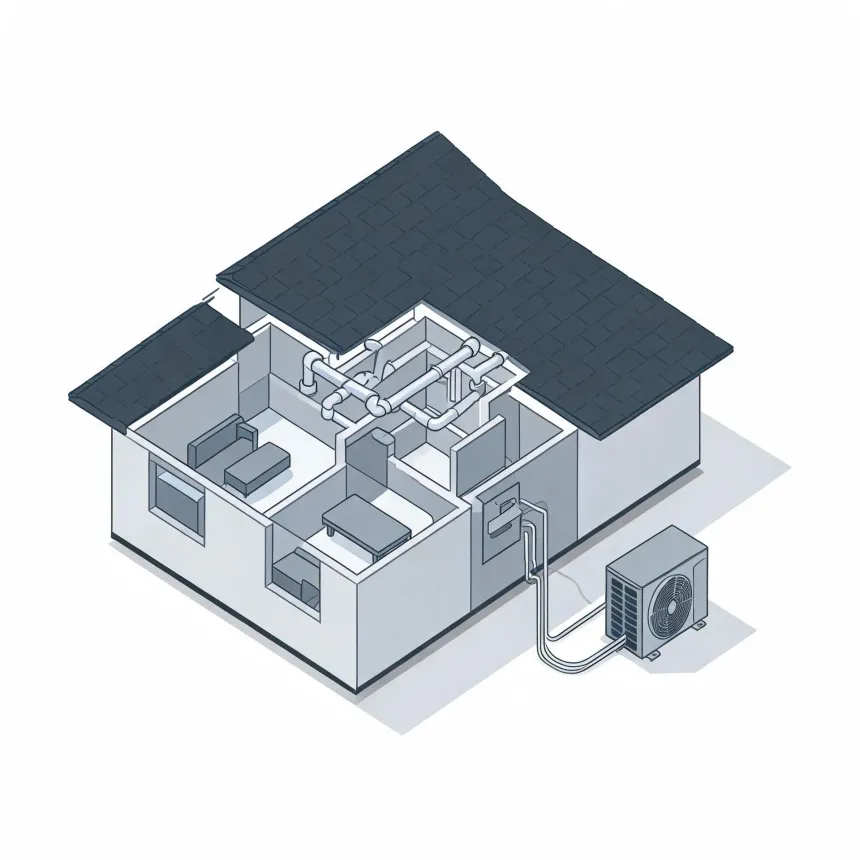
Eleven months out of the year, your heat pump is either heating the house or cooling it. Heat runs from November through March, then it switches over and cools from May through October. That leaves almost no season where it just sits idle.
Summer afternoons averaging 89°F keep the compressor working hard for six straight months, and winter nights near 42°F keep the system cycling on the heating side for five more. That much run time wears on the compressor and on the reversing valve, the part that switches the system between heat and cooling. When it starts to stick, the unit runs but won't switch modes, so you get cold air when you asked for heat, or the reverse. Beaufort County also sees a lot of wind, 304 damaging wind events recorded over the past ten years, and the outdoor unit sits outside through all of it, exposed to debris and the power blips that come with storms.
- 5 months
- November through March, your system heats
- 6 months
- May through October, it cools
- 42°F
- the average winter night it heats against
- 89°F
- the average summer afternoon it cools against
NOAA nClimDiv, 1991–2020 normals
- Why is my heat pump blowing cold air?
- A heat pump moves warm air from outside into your home, so the air from the vents runs cooler than what a furnace puts out even when it's working right. If the air feels cold rather than mild, the system may have switched into defrost mode, be low on refrigerant, or have a problem with the reversing valve that keeps it stuck in cooling mode. Check your thermostat is set to heat and the temperature is set above room temperature first. If it still blows cold, a contractor will need to check the refrigerant charge and the reversing valve.
- Why is there ice on my heat pump?
- Some frost on the outdoor unit during cold weather is normal, and the system will run a defrost cycle to clear it on its own. Heavy ice that builds up and does not clear points to a real problem, often low refrigerant, a failing defrost control, or a fan that has stopped moving air across the coil. With winter lows here averaging 42°F, most nights are not cold enough to explain heavy icing on their own, so if you see it, something in the system needs a look. Turn the unit off rather than trying to chip the ice away, and have a contractor check the refrigerant level and the defrost board.
- Why is my heat pump running but not cooling?
- If the unit is running but the air is not cold, the most common causes are a dirty filter restricting airflow, a low refrigerant charge, or ice built up on the outdoor coil. A refrigerant leak will not fix itself and gets worse over time, so the system works harder while cooling less. On afternoons that hit 89°F here, a struggling heat pump falls behind fast and may not keep up at all. Check the filter first, since that's something you can do yourself, and if the air still is not cooling, a contractor will need to check the refrigerant charge and the coil.