Heat Pump Repair in Greenwood, SC
Homes here need heat from November through March and cooling from May through September. If your system quits, tell us what it's doing and a licensed contractor who covers Greenwood County will get in touch.
Tell us about the job
It takes about a minute.
Ten months of work a year wears on a heat pump
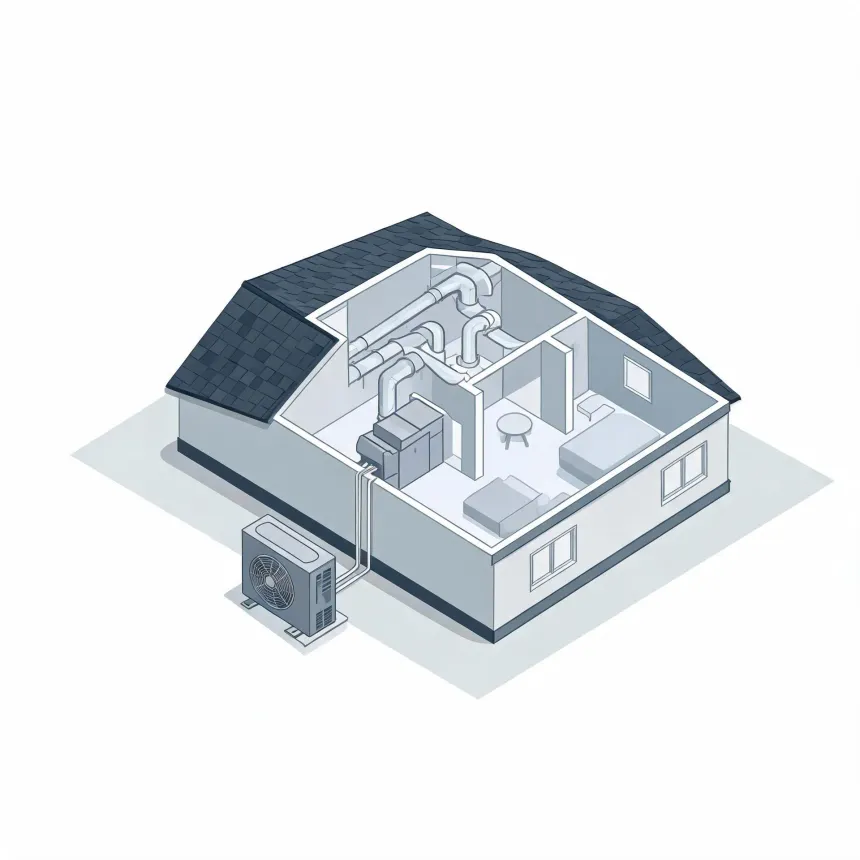
Your heat pump runs November through March to keep the house warm, then switches over and runs May through September to keep it cool. That is ten months a year it has to work, with only a short break in spring and another in fall.
Winter nights averaging 35°F send it into defrost cycles again and again, and each one is a stop and restart for the compressor. Summer afternoons near 90°F work it the other way, running the compressor long and hard to keep the house cool. The reversing valve is what switches the system between heating and cooling, and with that much switching it is often the first thing to give out. You will notice it as a system that runs but stops keeping up, blowing air that is not quite warm enough in winter or not quite cool enough in summer.
- 5 months
- November through March, your system heats
- 5 months
- May through September, it cools
- 35°F
- the average winter night it heats against
- 90°F
- the average summer afternoon it cools against
NOAA nClimDiv, 1991–2020 normals
- Why is my heat pump blowing cold air?
- In heating mode, a heat pump moves warm air through the house at a lower temperature than a furnace does, so it can feel cool against your skin even when it's working right. If the air feels cold rather than just cool, check that the thermostat is set to heat and not fan only. A unit stuck in defrost mode will also blow cold air for a few minutes at a time, and that's normal on a cold night. If the air stays cold the whole time it runs, the system may be low on refrigerant or the reversing valve may be stuck, and a contractor will need to check it.
- Why is there ice on my heat pump?
- A heat pump builds a light coat of frost on the outdoor coil during cold weather, and it melts that off on its own through a defrost cycle a few times a day. Thick ice that doesn't clear on its own is different. That usually means airflow across the outdoor coil is blocked, by leaves, snow, or something planted too close to the unit, or the defrost control isn't cycling the way it should. With winter lows here averaging 35°F, some frost through the coldest months is expected, but heavy buildup means it needs a look.
- Why is my heat pump running but not cooling?
- If the unit is running but the air coming out isn't cold, the most common cause is a dirty filter or blocked return choking off airflow across the indoor coil. Check the filter first since that's something you can do yourself. If the filter is clean, the outdoor unit could be low on refrigerant or the outdoor coil could be caked with dirt and unable to shed heat, and on afternoons here pushing 90°F that shows up fast as warm air at the vents. Either of those needs a contractor to check pressures and clean the coil properly.